
Ketogenic diet facts for kids

The ketogenic diet is a special eating plan. It is high in fat, has enough protein, and is very low in carbohydrates. Doctors mainly use it to help children with epilepsy that is hard to control. This diet makes your body use fats for energy instead of carbohydrates.
Normally, your body turns carbohydrates from food into glucose. Glucose is the main fuel for your brain. But on a ketogenic diet, you eat very few carbohydrates. So, your liver starts turning fat into special energy molecules called ketone bodies. These ketone bodies can then fuel your brain.
When there are many ketone bodies in your blood, it's called ketosis. This state can help reduce how often someone has epileptic seizures. About half of children and teens with epilepsy who try this diet see their seizures cut by at least half. The good effects can even last after they stop the diet. Adults with epilepsy might also find it helpful.
Like any treatment, the ketogenic diet can have side effects. These might include constipation, high cholesterol, slower growth, and kidney stones.
Contents
Understanding Epilepsy
Epilepsy is a common brain condition. It affects about 50 million people around the world. Someone has epilepsy if they have repeated, unexpected seizures.
Seizures happen when brain cells, called neurons, send out too many signals at once. This can temporarily disrupt how the brain works. A seizure might affect your muscles, senses, or even your awareness.
Some seizures are focal, meaning they start in one part of the brain. Others are generalised, spreading across the whole brain and causing a loss of consciousness. Epilepsy can have many causes, and some types start in childhood.
When epilepsy is "refractory," it means medicines haven't worked well. About 30% of people with epilepsy don't get full control from medicines. For these cases, doctors might consider epilepsy surgery, vagus nerve stimulation, or the ketogenic diet.
A Look Back: History of the Ketogenic Diet
The ketogenic diet is a recognized medical treatment. It was created to offer the benefits of fasting for epilepsy, but in a way that could be kept up long-term.
Early Ideas: Fasting for Health
Doctors in ancient Greece thought diet could help with diseases like epilepsy. They even suggested fasting. In the early 1900s, some doctors in France and the US tried using fasting to treat epilepsy. They saw some good results, especially in children.

Developing the Diet
In 1921, a doctor named Rollin Turner Woodyatt studied how the body uses energy. He found that when people fasted or ate very few carbohydrates and lots of fat, their bodies made ketone bodies.
Building on this, Dr. Russell Morse Wilder at the Mayo Clinic created the "ketogenic diet." He wanted to get the benefits of fasting without having to fast forever. His trials in 1921 were the first time the ketogenic diet was used for epilepsy.
Later, pediatrician Mynie Gustav Peterman helped create the classic ketogenic diet. This diet carefully balanced fat, protein, and carbohydrates. It was very successful for children in the 1920s, with many seeing fewer seizures or becoming seizure-free.
Decline and Revival
The diet was popular in the 1920s and 1930s. But then, new and effective anticonvulsant medicines were discovered. Doctors started using these drugs more, and the ketogenic diet became less common.
However, for the 25-30% of people whose seizures aren't controlled by medicines, the diet remained an option. In 1994, Hollywood producer Jim Abrahams helped bring the diet back into the spotlight. His son, Charlie, had severe epilepsy that the diet successfully controlled. Abrahams started the Charlie Foundation to promote the diet and support research. This led to new scientific interest and studies.
In 1997, a TV movie starring Meryl Streep, called ...First Do No Harm, also raised awareness about the diet. By 2007, the ketogenic diet was available in many countries, and less strict versions were also being used.
How Well Does the Diet Work?
The ketogenic diet can be very helpful for many people with epilepsy. It reduces how often seizures happen by more than half in about half of the patients who try it. For about a third of patients, seizures drop by more than 90%.
Many children who benefit from the diet see improvements within two weeks. Doctors usually recommend trying the diet for at least three months to see its full effect. For children with hard-to-treat epilepsy, the ketogenic diet often works better than trying another medicine. Teens and adults can also benefit, though sticking to the diet can be challenging.
Study Results
Studies have shown positive results for the ketogenic diet. For example, a study from Johns Hopkins Hospital looked at 150 children. After three months, many children were still on the diet and had fewer seizures. Some even became seizure-free.
Over time, some children stopped the diet because it wasn't working or was too strict. But many stopped because they were doing much better or were seizure-free! After four years, a good number of the original children still had fewer seizures, even if they were no longer on the diet.
A large review in 2018 combined results from many studies. It found that nearly 38% of children and young people on the ketogenic diet had half or fewer seizures. This was much higher than those not on the diet. Similar good results were seen with the Modified Atkins Diet. Studies also suggest the diet can help adults, with similar benefits to children.
When is the Diet Used?
The ketogenic diet is often used for children and young people whose epilepsy hasn't responded to medicines. Doctors might suggest it after two or more medicines haven't worked.
It's also a main treatment for some rare genetic conditions. These conditions prevent the body from using carbohydrates for fuel. In these cases, the body needs ketone bodies for energy.
However, the diet is not safe for everyone. It can be very harmful for people with certain rare genetic disorders of fat metabolism. For these individuals, the diet could lead to very serious health problems. Always talk to a doctor to see if this diet is right for you.
Possible Side Effects
The ketogenic diet is a serious medical treatment. It can have side effects, though they are usually less severe than those from some medicines or surgery.
Short-Term Effects
Common short-term side effects include constipation, mild acidosis (too much acid in the blood), and low blood sugar if a fast is done at the start. Many children also experience higher levels of fats and cholesterol in their blood. Doctors can adjust the diet or give supplements to help with these issues.
It's important to take vitamin and mineral supplements. The diet doesn't provide enough of some key nutrients, like B vitamins, calcium, and vitamin D.
Long-Term Effects
Over a longer time, the diet can increase the risk of slower growth and kidney stones. About 1 in 20 children on the diet develop kidney stones. These stones are usually treatable. Doctors might give medicine like potassium citrate to help prevent them.
Kidney stones can form for a few reasons:
- More calcium in the urine due to changes in bones.
- Lower levels of a substance called citrate, which helps dissolve calcium.
- Lower pH in the urine, which can lead to crystals.
- In the past, some doctors limited water intake, but this is no longer recommended.
Teens and adults might also experience weight loss and dysmenorrhea (painful periods) in women.
How the Diet is Managed
Managing the ketogenic diet requires a team effort. This team usually includes a special children's dietitian, a children's neurologist experienced with the diet, and a registered nurse. Sometimes, a social worker and a pharmacist also help. Parents and caregivers must learn a lot about the diet to make sure it's followed safely.
The diet can be challenging because it requires careful measuring and planning of all meals. Eating anything unplanned can upset the balance. Because of these difficulties, some people stop the diet or switch to a less strict version.
Starting the Diet
Many hospitals follow a plan similar to the one from Johns Hopkins Hospital. This often involves a short stay in the hospital to start the diet safely.
Before starting, doctors check for any health conditions that might make the diet unsafe. They also plan the diet's specific details, like the fat-to-carb-and-protein ratio and calorie needs.
During the hospital stay, blood sugar levels are checked often. Parents learn how to manage the diet, prepare meals, and handle any issues. The commitment from parents is very important.
Sometimes, the diet can be started at home without a hospital stay or a fast. This can reduce the risk of some side effects.
Keeping Up with the Diet
After starting, children regularly visit the hospital clinic. The dietitian and neurologist check on their progress. Small adjustments are often made to keep the diet working well.
Parents usually check ketone levels in urine daily using special test strips. This helps confirm the diet is being followed. However, the exact level of ketones doesn't always show how well seizures are controlled.
Illness or changes in ketone levels can sometimes cause a temporary increase in seizures. Even "sugar-free" foods or some skin products can contain hidden carbohydrates that might affect the diet.
Stopping the Diet
About 20% of children on the ketogenic diet become seizure-free. Many can also reduce or stop their epilepsy medicines.
Usually, after about two years on the diet, or after six months of being seizure-free, the diet can be slowly stopped. This is done by gradually lowering the fat ratio. This process is similar to how children stop epilepsy medicines. For some specific metabolic diseases, the diet might be needed for much longer.
If the diet is stopped after seizures are controlled, there's about a 20% chance seizures might return. If they do, over half of these children can become seizure-free again by going back on the diet or using medicines.
Different Types of Ketogenic Diets
There are several versions of the ketogenic diet. They all aim to create ketosis but have different rules.

Classic Ketogenic Diet
A dietitian carefully plans this diet for each child. They consider age, weight, activity, and food preferences. The diet usually has a 4:1 ratio of fat to combined protein and carbohydrate. This means for every 4 grams of fat, there's 1 gram of protein and carbohydrate together.
Because fat has more calories, portions on this diet are smaller. The diet includes foods high in fat like cream, butter, and nuts, while limiting high-carb foods like bread, pasta, and starchy vegetables. Parents must precisely weigh all food.
This diet is not a balanced diet on its own. Children need to take vitamin and mineral supplements, especially for B vitamins, calcium, and vitamin D.
MCT Oil Diet
Most fats in our diet are long-chain triglycerides (LCTs). But medium-chain triglycerides (MCTs), found in things like coconut oil, produce more ketone bodies.
The MCT oil diet uses MCT oil to provide a lot of the fat. This allows for more protein and carbohydrates, giving more food choices and larger portions. While effective, too much MCT oil can cause stomach upset. This diet is less common in the US, partly because MCT oil can be expensive.
Modified Atkins Diet (MAD)
The Modified Atkins Diet (MAD) was first reported in 2003. It's less strict than the classic ketogenic diet. It doesn't limit calories or protein, and the fat-to-carb-and-protein ratio is lower (about 1:1).
The MAD doesn't require a fast or hospital stay to begin. Carbohydrates are limited to 10-20 grams per day at first, then might be increased. Like the classic diet, it requires vitamin and mineral supplements. Studies show it can be very effective, with similar results to the traditional ketogenic diet. It's often easier for teens and adults to stick to.
Low Glycemic Index Treatment (LGIT)
The Low Glycemic Index Treatment (LGIT) is another less strict option. It aims to keep blood sugar levels stable. It's also a high-fat diet (about 60% of calories from fat) but allows more carbohydrates than the classic or Modified Atkins diets (40-60 grams per day).
The key is that only carbohydrates with a glycaemic index lower than 50 are allowed. This diet is also started and managed in outpatient clinics. It's often used for teens and adults because it's easier to follow and has fewer side effects.
Liquid Formulas

Babies and patients who are tube-fed can use special liquid ketogenic formulas, like KetoCal. These formulas are nutritionally complete and make it easier to give the diet. They can be very effective and well-tolerated.
Worldwide Use
The ketogenic diet can be used anywhere, and it can be cheaper than some modern medicines. However, cultural and religious beliefs about food can affect how it's used. For example, in some cultures, families share meals, making it hard to prepare a separate diet. Food labeling and access to specific ingredients can also vary by country.
In Asia, where rice and noodles are staple foods, the MCT oil diet (which allows more carbs) has been helpful. In India, religious beliefs affect food choices, so specific adaptations are made. The diet is often started without a fast in India due to cultural reasons.
How the Diet Works in the Body
Even though the ketogenic diet has been used for a long time, scientists are still learning exactly how it stops seizures. Many ideas have been suggested, but the full picture is still a mystery.
When you're on the ketogenic diet, you eat very few carbohydrates. So, your body switches to using fats as its main fuel. Your liver turns these fats into ketone bodies. These ketone bodies can then cross into your brain and become an energy source, partly replacing glucose.
Scientists believe these ketone bodies might have a direct anti-seizure effect. The diet also seems to make brain cells stronger and more able to handle the energy demands of a seizure. It might even protect brain cells.
Studies in animals have shown that the ketogenic diet can protect against seizures in many ways. It seems to work differently from other epilepsy medicines. This suggests it has a unique way of helping the brain.
Other Medical Uses
The ketogenic diet is being studied for its possible use in other brain conditions besides epilepsy. These include Alzheimer's disease, amyotrophic lateral sclerosis, headaches, Parkinson's disease, and sleep disorders. However, as of 2026, there is no strong evidence that it works for conditions like cancer.
Images for kids
-
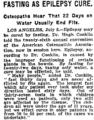
A news report from 1922 about Dr. Hugh Conklin's "water diet" treatment.
See also
 In Spanish: Dieta cetogénica para niños
