
List of watermills in Lincolnshire facts for kids
Watermills are amazing old buildings that use the power of flowing water to turn big wheels. These wheels then power machines inside the mill. For hundreds of years, watermills were super important! They helped people grind grain into flour for bread, saw wood, and even make cloth.
Lincolnshire, a county in England, used to have many watermills. This was because it has lots of rivers and streams, perfect for building mills. These mills were vital for local communities, helping them produce food and other goods.
Contents
How Watermills Work
Imagine a river flowing past a building. A watermill has a large wheel, often made of wood or metal, that sits in the river. As the water pushes against the paddles or buckets on the wheel, it makes the wheel spin. This spinning motion is then transferred inside the mill using gears and shafts.
Inside the mill, the turning power from the waterwheel can operate heavy grinding stones to crush wheat into flour. It could also power saws to cut timber or machines to process wool. It was a very clever way to use natural energy before electricity was invented!
Exploring Lincolnshire's Watermills
Many watermills in Lincolnshire have disappeared over time. Some were replaced by newer technologies, while others simply fell into disrepair. However, a few still stand, and some are even open for you to visit!
Cogglesford Mill: A Working Museum
One of the best examples is Cogglesford Mill in Sleaford. This mill is really special because it's still working! It's now a free visitor centre where you can see how a watermill operates. You can even buy flour that was ground right there. It’s a fantastic place to learn about history and technology.

Other Mills You Can See
While not all mills are open to the public, some still exist as buildings, often as private homes.
- Alvingham Mill on the River Lud in Alvingham is still intact. It shows how strong these old buildings were.
- Londonthorpe Mill (also known as Manthorpe Mill) on the River Witham is also intact. It's a beautiful example of 18th-century mill architecture.
- Kirkby on Bain Mill has been turned into a private home, but its original waterwheel is still there! It's now called The Old Watermill.
- Harrowby Mill in Manthorpe has only its millhouse left, which is now a private residence.
- Victoria Mill in Horncastle has been changed into business premises, showing how old buildings can find new uses.
Mills That Are No Longer There
Many watermills in Lincolnshire have sadly vanished. Places like Fulsby Mill, Manthorpe Mill, Partney Mill, Slate Mill, and Tattershall Mill no longer exist. This shows how much our landscape and technology have changed over the years.
Images for kids
-
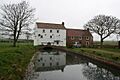
Alvingham Mill, still standing today.
-
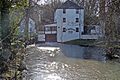
Claythorpe Mill, a historic building.
-
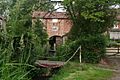
Tealby Mill, located on the River Rase.


.jpg)
