
Liu Yichang facts for kids
Quick facts for kids
Liu Yichang
BBS, MH
|
|||||||||||||||||||||||||
|---|---|---|---|---|---|---|---|---|---|---|---|---|---|---|---|---|---|---|---|---|---|---|---|---|---|
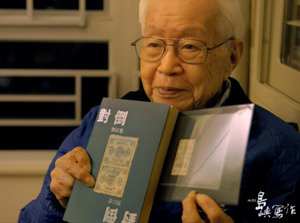
Liu holding a copy of his novel Intersection
|
|||||||||||||||||||||||||
| Born | Liu Tongyi 7 December 1918 Shanghai |
||||||||||||||||||||||||
| Died | 8 June 2018 (aged 99) Chai Wan, Hong Kong |
||||||||||||||||||||||||
| Occupation | Novelist, editor, publisher | ||||||||||||||||||||||||
| Language | Chinese | ||||||||||||||||||||||||
| Alma mater | St. John's University, Shanghai | ||||||||||||||||||||||||
| Period | 1942–2018 | ||||||||||||||||||||||||
| Literary movement | Modernism | ||||||||||||||||||||||||
| Notable works | The Drunkard (1963), Intersection (1993) | ||||||||||||||||||||||||
| Spouse |
Lo Pai-wun
(m. 1957) |
||||||||||||||||||||||||
| Parents | Liu Huaizheng | ||||||||||||||||||||||||
| Chinese name | |||||||||||||||||||||||||
| Traditional Chinese | 劉以鬯 | ||||||||||||||||||||||||
| Simplified Chinese | 刘以鬯 | ||||||||||||||||||||||||
| Hanyu Pinyin | Liú Yǐchàng | ||||||||||||||||||||||||
|
|||||||||||||||||||||||||
| Liu Tongyi | |||||||||||||||||||||||||
| Traditional Chinese | 劉同繹 | ||||||||||||||||||||||||
| Simplified Chinese | 刘同绎 | ||||||||||||||||||||||||
| Hanyu Pinyin | Liú Tóngyì | ||||||||||||||||||||||||
|
|||||||||||||||||||||||||
Liu Yichang (born Liu Tongyi) was a famous writer, editor, and publisher. He was born in Shanghai, China, and later lived in Hong Kong. Many people see him as the person who started modern literature in Hong Kong.
His most famous books are The Drunkard (1963) and Intersection (1993). The Drunkard is thought to be the first Chinese novel to use a special writing style called stream of consciousness. This style shows a character's thoughts and feelings as they happen. His books even inspired famous movies like 2046 and In the Mood for Love by director Wong Kar-wai. Liu Yichang was also a very busy writer for newspapers, often writing many thousands of Chinese characters every day!
Contents
Early Life and Work in China
Liu Yichang was born on December 7, 1918, in Shanghai, China. His birth name was Liu Tongyi. He grew up in a family with his father, Liu Hao, and an older brother.
In 1941, Liu finished his studies at St. John's University, Shanghai. Soon after, the Pacific War began, and Japan took control of parts of Shanghai. Because of worries about the war, Liu's father sent him to Chongqing, which was then the capital of China during the war. Liu traveled for months through war zones to reach Chongqing in 1942. There, he worked as an editor for important newspapers. He was the first person in Chongqing to report on the death of a Japanese admiral.
After the war ended in 1945, Liu went back to Shanghai. He was offered a chance to report on the surrender ceremony on a ship called USS Missouri. But he wanted to go home so much that he turned down this big opportunity. He kept working for the same newspaper, which was then called Peace Daily.
In 1946, he started his own publishing company called Huaizheng Cultural Society. He named it after his father, who had passed away during the war. Even though it was a new company, Huaizheng was able to publish books by well-known writers of the time.
Career in Hong Kong and Southeast Asia
As China faced problems like civil war and economic difficulties, Liu moved to British Hong Kong in 1948. He hoped to continue his publishing business there. However, he found that Hong Kong did not have a big market for serious literature. So, he worked as an editor for several newspapers instead.
In 1952, Liu moved to Singapore to work as an editor. Later, he became the chief editor for a newspaper in Kuala Lumpur, Malaysia. It was in Malaysia that he met and married his wife, Lo Pai-wun, in 1957.
Liu and his wife returned to Hong Kong in 1957 and made it their home. He became the chief editor for newspaper sections of the Hong Kong Times and the Sing Tao Daily. In 1985, he started a monthly magazine called Hong Kong Literature and was its chief editor until 2000. During his many years as an editor, he helped many new writers become famous.
His Important Books
In 1963, Liu published his novel Jiutu, also known as The Drunkard. This book was one of the first Chinese novels to use modern writing styles. It is known as China's first stream of consciousness novel. This means it explores the inner thoughts and feelings of a character. Liu said he wrote it to "entertain himself," thinking that only popular stories would do well in Hong Kong. But the book became very popular and important. It even inspired director Wong Kar-wai's movie 2046.
Another of Liu's novels, Intersection, was first published as part of a collection of his works. The book tells two connected stories, one about an old man and one about a young girl. They are linked like special postal stamps arranged "head-to-tail." This novel inspired Wong Kar-wai's 2000 film In the Mood for Love. After the movie came out, Intersection was published as its own book.
Liu Yichang is seen as the founder of modern Hong Kong literature. He wrote over 30 books during his career, which lasted more than 60 years. He also wrote many articles for the 13 newspapers he edited, often writing a huge amount each day.
Awards and Recognitions
Liu Yichang received many awards and honors for his contributions to literature:
- Medal of Honour (2001) from the Government of Hong Kong.
- Bronze Bauhinia Star (2011) from the Government of Hong Kong.
- Honorary Doctorate in Literature (2011) from Lingnan University.
- Honorary Doctorate in Literature (2011) from Open University of Hong Kong.
- Award for Outstanding Contribution in Arts (2012) from the Hong Kong Arts Development Council.
- Life Achievement Award (2014) from the Hong Kong Arts Development Council.
Death
Liu Yichang passed away on June 8, 2018, in Hong Kong. He was 99 years old.
See also
 In Spanish: Liu Yichang para niños
