
Matthew W. Bullock facts for kids
Quick facts for kids
Matthew W. Bullock
|
|
|---|---|

Bullock while coach at Massachusetts Agricultural and Mechanical School
|
|
| Born | September 11, 1881 |
| Died | December 17, 1972 (aged 91) Detroit, Michigan, U.S
|
| Nationality | American |
| Occupation | American football coach (1904–1908), lawyer (from 1912), college professor/dean (1908–1917), Boston Urban League (from 1919), assistant to the Massachusetts Attorney General (1924–1927), State Parole Board (1927–1937), State Department of Corrections (1937–1943) and regional board of the Massachusetts Bar Association (from 1937), State Parole Board (1943–1949) (chair from 1944), national board of the Urban League, (from 1945) National Spiritual Assembly of the Bahá'ís of the United States: 1952–1953; 1953–1954 (resigned 1953 to pioneer to Curaçao), and Zoning Commission Board (1965–1966) |
| Spouse(s) | Katherine Wright Bullock |
| Children | Matthew W. Bullock Jr., Julia Bullock Gaddy |
| Parent(s) | Jesse Bullock and Amanda Sneed Bullock |
Matthew Washington Bullock (September 11, 1881 – December 17, 1972) was an amazing American who achieved great things in many different areas. He faced a lot of racism and unfairness throughout his life, but he always kept going. He became a pioneer for justice and equality for everyone.
He started his career playing and coaching American football. He earned degrees from Dartmouth (1904) and Harvard Law School (1907). He also worked at colleges for Black students in Georgia and served during World War I.
Matthew Bullock held important jobs in the Massachusetts government for about 26 years. His most famous role was on the State Parole Board, where he was the chairman for five years. He was also well-known as a leader in the National Urban League and the Massachusetts Bar Association.
Later in his life, he joined the Bahá'í Faith, after being a leader in different Christian churches. He served on the Boston Bahá'í Spiritual Assembly and was elected to the National Spiritual Assembly of the Bahá'ís of the United States. He even traveled to Africa and helped dedicate the Bahá'í House of Worship in Wilmette, Illinois. He then chose to move to Curaçao to help spread the Bahá'í Faith, which earned him the title of Knight of Bahá'u'lláh.
After returning home, he gave talks about the Bahá'í Faith across the United States. He also worked one more year for the state government. He received two special honorary degrees, one from Harvard Law School and another from Dartmouth College, recognizing his incredible life and service.
Contents
Early Life and Challenges
Matthew Bullock grew up during a time of Jim Crow laws and widespread racism in America. His parents were born into slavery in the South. They moved to the Boston area when he was a child, hoping for a better life. Sadly, one of Bullock's grandfathers was killed by the Ku Klux Klan in North Carolina.
Childhood and School Days
Matthew Washington Bullock was born on September 11, 1881, in Dabney, North Carolina. His parents, Jesse and Amanda Bullock, had been enslaved. In 1889, his family moved to Boston with their seven children.
Matthew went to public schools in Boston. In 1896, he graduated from Everett Center Grammar School. He then attended Everett High School, where he was a star athlete. He was the first African-American captain of the high school football team. He also captained the hockey (called "ice polo" back then) and baseball teams.
Dartmouth College and Football
In 1901, Bullock started at Dartmouth College. His father gave him $50 to help with tuition, which was a lot of money back then. Matthew earned more money by singing and doing other jobs. He was elected to the Glee Club for his singing and was on the track team for all four years.
Bullock was the first African American to play football at Dartmouth. In his second year, he became a defensive end and played very well. He also won first place in the broad jump.
In his senior year, Bullock became nationally recognized in football. His team even beat Harvard at the dedication of Dartmouth's new stadium. However, during a game against Princeton University, he faced unfair treatment. He was refused a place to stay, and during the first play of the game, his collarbone was broken. Many believed he was targeted because he was Black. Despite his amazing skills, he was not named to the All-American list of players, even though many felt he deserved it.
Coaching and Law School
Matthew Bullock paid for his tuition at Dartmouth and Harvard Law School by coaching football. He coached at Malden High School and the Massachusetts Agricultural and Mechanical School. He was the first Black football coach of an integrated college team and had a winning record.
After finishing Harvard Law School in 1907, he coached more seasons. By 1909, he moved South. He accepted a job at Morehouse College (then Atlanta Baptist College) as an athletic director and teacher. He taught Latin, History, and Social Sciences for four years. From 1912 to 1915, he worked as a lawyer in Atlanta. He even helped change the college's name to Morehouse College.
From 1915 to 1917, he served as dean of The State Agricultural and Mechanical College for Negroes, now known as Alabama A&M University.
Service and Public Life
World War I and YMCA
In 1917, Bullock became a lawyer in Massachusetts. He tried to join the military for World War I but was told he was "too old" at 36 and had a heart murmur. Instead, he worked with the YMCA's war efforts.
He served as an Educational Secretary at Fort George G. Meade in Maryland, coaching sports and teaching French. Later, he went to France with the 369th US Infantry Regiment. He was praised for his bravery and support for the soldiers during battles. He was even recommended for the Croix de Guerre medal for his leadership, but it was unfairly denied by a white colonel.
After the war, he returned to America. He was disappointed that the military had been somewhat integrated, but society back home was still very segregated.
Fighting for Justice in Boston
In 1919, Bullock helped start the Boston chapter of the National Urban League. He became its first executive officer, working to improve life for African Americans. He was known for his "high humanitarian idealism" and for "constantly pioneering for social justice and human dignity."
He tried to run for state office, but race was an issue in the campaign. He even proposed a bill to make joining or starting the KKK in Massachusetts a crime. Soon after, he was appointed as an assistant to the Massachusetts Attorney General.
Serving on the State Parole Board
In 1927, Bullock began serving on the Massachusetts State Parole Board. He was re-appointed in 1943 and became the chairman in 1944. This made him the first African-American head of a state government department.
During his time on the board, he faced challenges. Once, he was denied access to a hotel hosting an anti-crime conference because he was Black. At age 65, while he was chairman, a convict seeking parole physically attacked him.
Outside of his state job, he was also president of the Boston Community Church. He gave talks about race issues, celebrating the achievements of the Black community and those who supported it.
Joining the Bahá'í Faith
In 1940, Matthew Bullock joined the Bahá'í Faith. He had met a Bahá'í person years earlier and was thankful to find a religion that had no clergy (religious leaders) and focused on the unity of all people. He visited Green Acre Bahá'í School, which was known for its Race Amity Conventions promoting racial harmony.
He gave talks about the Bahá'í Faith even while he was chairman of the Massachusetts Parole Board. He spoke about prison issues and the importance of justice.
After his time on the Parole Board ended, Bullock became a "pioneer" for the Bahá'í Faith. He traveled to Haiti and then to Curaçao in the Dutch West Indies to help spread the religion. Because Curaçao was a new place for the Bahá'í Faith, he was named a Knight of Bahá'u'lláh.
Later Years and Recognition
After returning to America, he continued to travel and give talks about the Bahá'í Faith in both the North and South. His health began to decline in the 1960s.
In his final years, he received special honors. Harvard University gave him an honorary degree in 1970. Dartmouth College followed in 1971 with an honorary law degree, where he received a standing ovation. The award recognized his deep belief in universal justice and freedom, and his efforts to bring about a "spiritual and moral awakening of all people."
Matthew Bullock passed away on December 17, 1972, at his daughter's home in Detroit. The Universal House of Justice, the head of the Bahá'í Faith, sent a special message honoring him as a "Knight of Bahá'u'lláh" and a "distinguished promoter of the Faith." A memorial meeting was held for him at the Bahá'í House of Worship in Wilmette, Illinois. He was buried in Mt. Hope Cemetery in Mattapan, Massachusetts.
Remembrance
Matthew Bullock is remembered for many things. He spoke out against mixing young offenders with hardened criminals in prisons. People also recall how he bravely subdued a prisoner who attacked him in 1946 when he was 65 years old.
In 1974, the Bahá'ís remembered him as part of the national assembly who chose to leave their service to become pioneers. His role in the dedication of the Bahá'í Temple was also highlighted. His life story has been featured in various articles and historical reviews, alongside other important Black Bahá'ís and leaders.
His achievements as a Black coach at Massachusetts Agricultural and Mechanical College (now the University of Massachusetts at Amherst) were remembered in 2006. It was noted that it took 71 years for another Black coach to achieve similar success there, showing how much Bullock had to overcome. More recently, in 2017 and 2020, biographical articles and podcasts continued to share his inspiring story.
Head Coaching Record
College Football
| Year | Team | Overall | Conference | Standing | Bowl/playoffs | ||||
|---|---|---|---|---|---|---|---|---|---|
| Massachusetts Aggies (Independent) (1904) | |||||||||
| 1904 | Massachusetts | 5–2–1 | |||||||
| Massachusetts Aggies (Independent) (1907–1908) | |||||||||
| 1907 | Massachusetts | 5–3–1 | |||||||
| 1908 | Massachusetts | 3–3–3 | |||||||
| Massachusetts: | 13–8–5 | ||||||||
| Morehouse Maroon Tigers (Independent) (1909–1911) | |||||||||
| 1909 | Morehouse | 5–0–1 | |||||||
| 1910 | Morehouse | 4–1 | |||||||
| 1911 | Morehouse | 4–1 | |||||||
| Morehouse: | 12–2–1 | ||||||||
| Alabama A&M Bulldogs (Independent) (1924–1926) | |||||||||
| 1924 | Alabama A&M | 0–2 | |||||||
| 1925 | Alabama A&M | 0–1 | |||||||
| 1926 | Alabama A&M | 0–1 | |||||||
| Alabama A&M: | 0–4 | ||||||||
| Total: | 26–14–6 | ||||||||
Images for kids
-
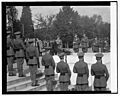
Queen Marie at Tomb of the Unknown Soldier, October 19, 1926
-
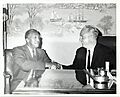
Bullock (left) shaking hands with Boston mayor John F. Collins after being appointed to the Boston Zoning Board

.jpg)
See also
- List of college football head coaches with non-consecutive tenure
