
Mount Shasta City Park facts for kids
Mount Shasta City Park is a fun urban park located in the city of Mount Shasta, California. It's one of two parks managed by the Mt. Shasta Recreation and Parks District and is also where their main office is located. This large park covers 26 acres, offering many ways to have fun outdoors.
You can enjoy activities like hiking, picnicking, and biking here. Many community events also take place in the park's buildings and on its open land. A very special part of the park is that it's home to the starting point, or headwaters, of the Upper Sacramento River.
Contents
Fun Things to Do

Mt. Shasta City Park has lots of great features for visitors. You'll find picnic tables, benches, and playground equipment for younger kids. There are also nature trails for exploring and biking trails for adventure. A special bridge, called the Headwaters Bridge, crosses over the spring. The park also has a big open field and several community buildings.
Some of the buildings can be rented for events throughout the year. The Upper Lodge Recreation Center is quite large, with a stage and a kitchen. It can hold over 185 people for big gatherings. The Lower Lodge is smaller but also offers space for activities, with a view of the headwaters spring.

The historic Rod and Gun Building is available to rent from spring to fall. The Dance Hall is perfect for wedding parties and dances. It used to be the home of a square dance club called the Dudes and Daisies.
Since 1974, the park has also helped the community by offering dinners for senior citizens. These meals happen every Tuesday through Friday as part of the Mt. Shasta Senior Nutrition Program.
Sacramento River's Start


Mount Shasta City Park is famous for its "Big Springs" headwaters. This is where the Upper Sacramento River officially begins! The water here is very old. It started as glacial melt from long ago. For over 50 years, this water has slowly filtered through volcanic rock deep underground.

The water comes from the Big Springs Aquifer, which is like a huge underground water storage area beneath the Mount Shasta region. It flows out directly from the side of Big Springs Hill. This fresh spring water then gathers in a shallow pool before flowing downstream into Stream Creek. From there, it continues its long journey to the main Sacramento River.
Many locals and travelers come to "Big Springs" to drink the natural water. It's a great place to take a break, meet new people, and enjoy the beautiful scenery. However, it's important to know that swimming or wading is not allowed in the springs or the stream.
Water's Journey
The Big Springs Aquifer produces a lot of water every day. About 12,274,000 gallons of water flow into the Upper Sacramento River each day. This water comes out of Big Springs Hill in Mount Shasta City Park. It then flows into Spring Creek and passes through the Mount Shasta Fish Hatchery.
After that, it joins with Wagon Creek and flows into Lake Siskiyou and Box Canyon Dam. Finally, it enters the Sacramento River. The water then goes into Shasta Lake and becomes part of the Central Valley Water Project (CVP) system. This system helps distribute water throughout California's Central Valley. The Upper Sacramento River provides about 15 percent of the water that flows into Shasta Lake. This water is important for people and for the many plants and animals that live in the aquatic habitats.
Park History
Before Mt. Shasta City Park was built, this land was used for hunting by Native American tribes. These included the Wintun, Okwanuchu, and Maidu tribes. This continued until 1841, when explorers from other countries arrived.
In 1901, a water wheel was installed at "Big Springs." This wheel created Mount Shasta City's first source of energy. It produced a small amount of electricity, which was used to power street lights. From 1920 to 1943, the park property was used by California State University, Chico. It served as their summer campus for the Teacher's College. The park buildings you see today were originally built during this time.
In 1947, California State University, Chico, gave the park property to Mt. Shasta City. Then, in 2005, the city gave the property to the Mt. Shasta Recreation and Parks District. The Recreation Center building, which is used for many community events now, was once the local National Guard Armory.
Water Quality
The water that comes out of the Big Springs headwaters flows from the Big Springs aquifer. This aquifer has a steady flow of water and a cool average temperature of about 6.8 degrees Celsius. The water's pH is around 6.71, which is slightly acidic. It also contains small amounts of minerals like silicon dioxide, calcium, and magnesium.

Many locals and travelers visit Mt. Shasta City Park specifically for the "Big Springs" headwaters. The water has been naturally filtered through volcanic rock for a very long time. For many people, the Headwaters is a favorite meeting spot. Neighbors and friends often gather there to chat while filling up large containers of water. They use this water for cooking and drinking at home. Some people even prefer this spring water over their own tap or well water.
Even though the water is not treated like city tap water, it is generally considered safe to drink. However, there is a sign near the headwaters that warns visitors. It states that the water has not been tested and might not be safe to drink. It also reminds everyone that wading is not allowed in the spring.
Park Improvements

The Mt. Shasta Recreation and Parks District works hard to keep Mt. Shasta City Park healthy and beautiful. Many different kinds of flowers and other plants are planted around the park. They are even labeled so you can learn about them. During the warmer months, you'll often see flowers blooming. Pollinators like hummingbirds, butterflies, and bees visit the area frequently.
Over time, too many people walking in certain areas caused concerns about the health of the ecosystem around the spring. Because of this, restoration projects began. In 2007, a non-profit group called The River Exchange started working on improvements at Mt. Shasta City Park.
One important change was adding a concrete slab next to the spring. This makes it easier for people to access the water without stepping on the rocks in the pool. This project also helped make the base of Spring Hill more stable, which reduces erosion. They also added more walking paths throughout the park, along with benches and tables. Plus, more native plants were introduced to help the local environment.
Images for kids
-
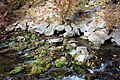
Mount Shasta "Big Springs", headwaters of the Sacramento River.
-
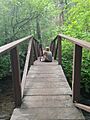
The bridge at Mount Shasta City Park separating the meadow from the hiking trails.
-
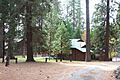
A park building present within Mount Shasta City Park.
-
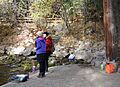
Locals or travelers filling up their water bottles with "Big Springs" water.
-
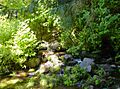
Vegetation and water present at Mount Shasta City Park.
-
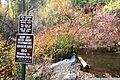
Despite this sign's presence, visitors continue to drink from the springs.
-
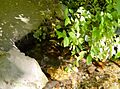
The headwaters of the Sacramento River emerge directly from the side of Big Springs Hill in Mount Shasta City Park.
-
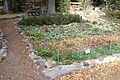
A restoration project occurring at Mount Shasta City Park.

