
Musca (fly) facts for kids
Quick facts for kids Musca (fly) |
|
|---|---|
 |
|
| A common housefly (Musca domestica) | |
Scientific classification  |
|
| Unrecognized taxon (fix): | Musca |
| Type species | |
| M. domestica Linnaeus, 1758
|
|
| Species | |
|
See text |
|
| Synonyms | |
|
|
The Musca genus is a group of common flies found all over the world. You probably know the most famous member of this group: the housefly (scientific name: Musca domestica). Another well-known species is the face fly, sometimes called the autumn housefly. These flies belong to a larger family of insects called Muscidae.
Contents
Exploring the World of Musca Flies
The word "Musca" comes from Latin and simply means "fly." This group of flies is very diverse, with many different species living in various environments. They are a fascinating part of the insect world, playing different roles in nature.
What is a Genus?
In biology, a genus is a way to group together living things that are very similar. Think of it like a family name. For example, all houseflies and face flies share the "Musca" genus name because they have many common features. This helps scientists organize and understand the millions of different species on Earth.
Famous Musca Flies: The Housefly and Face Fly
The housefly (Musca domestica) is probably the most familiar fly to most people. It's found almost everywhere humans live, from cities to farms. Houseflies are known for buzzing around our homes, especially near food. They are attracted to decaying matter, which is where they lay their eggs.
The face fly (Musca autumnalis) is another common Musca species. These flies are often seen around farm animals, gathering around their faces, especially near their eyes and noses. They feed on animal secretions. While they can be a nuisance to livestock, they are an important part of the ecosystem.
The Life Cycle of a Musca Fly
Like many insects, Musca flies go through a complete metamorphosis, meaning they change a lot during their lives. Their life cycle has four main stages:
- Egg: Female flies lay tiny, white eggs, often in decaying organic matter like garbage, manure, or compost. A single female can lay hundreds of eggs!
- Larva (Maggot): The eggs hatch into larvae, which are often called maggots. These small, worm-like creatures spend their time eating and growing rapidly. They don't have legs and move by wiggling.
- Pupa: After growing enough, the larva changes into a pupa. This is a resting stage, usually inside a hard, dark case. Inside the pupa, the fly transforms from a maggot into an adult fly.
- Adult: Finally, a fully formed adult fly emerges from the pupal case. The adult fly has wings, six legs, and compound eyes. Its main job is to find a mate and lay eggs, continuing the life cycle. The entire process, from egg to adult, can take as little as a week in warm conditions.
Where Do Musca Flies Live?
Musca flies are found across the globe, from tropical regions to cooler climates. Their ability to adapt to different environments is one reason they are so widespread. Houseflies, in particular, thrive wherever humans are, as our activities often provide them with food and breeding sites. Face flies are more common in rural areas where livestock are present.
Why Are Musca Flies Important?
Even though flies can sometimes be annoying, they play important roles in nature.
- Decomposers: Many Musca species, especially in their larval stage, help break down decaying organic matter. This process is vital for recycling nutrients back into the environment.
- Food Source: Flies and their larvae are a food source for many other animals, including birds, spiders, and other insects.
- Pollinators: Some flies can also act as pollinators, helping plants reproduce by carrying pollen from one flower to another, though they are not as famous for this as bees or butterflies.
While they are part of nature's cleanup crew, some Musca flies, like the housefly, can also be a nuisance around homes and farms. They can pick up tiny particles and germs from their breeding sites and transfer them to surfaces, including food. This is why it's important to keep food covered and maintain cleanliness.
How Scientists Classify Flies
Scientists use a system called biological classification to organize all living things. This system helps us understand how different species are related to each other. Flies, including the Musca genus, belong to the order Diptera, which means "two wings." Within this order, they are part of the suborder Brachycera, which includes flies with shorter antennae. The Musca genus is then placed within the Muscidae family, which is part of a larger group called Muscoidea. This hierarchical system helps scientists trace the evolutionary history and relationships of all insects.
Images for kids
-
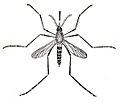
A mosquito, part of the Nematocera group.
-
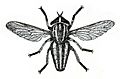
A horse fly, belonging to the Tabanomorpha.
-
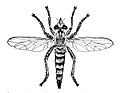
A robber fly, an example of other Muscomorpha.
-
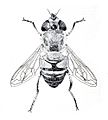
A hoverfly, part of the Syrphoidea group.
-
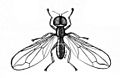
A big-headed fly, from the Acalyptratae group.
-
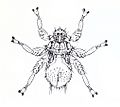
A bat fly, belonging to the Hippoboscoidea.
-
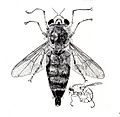
A botfly, part of the Oestroidea group.
-
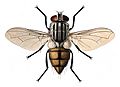
A female housefly, a member of the Musca genus.


See also
 In Spanish: Musca (animal) para niños
