
Peninsular myotis facts for kids
Quick facts for kids Peninsular myotisMyotis peninsularis |
|
|---|---|
 |
|
| Conservation status | |
Scientific classification  |
|
| Kingdom: | Animalia |
| Phylum: | Chordata |
| Class: | Mammalia |
| Order: | Chiroptera |
| Family: | Vespertilionidae |
| Genus: | Myotis |
| Species: |
M. peninsularis
|
| Binomial name | |
| Myotis peninsularis Miller, 1898
|
|
 |
|
| Script error: The function "autoWithCaption" does not exist. | |
Script error: No such module "Check for conflicting parameters".
The peninsular myotis (scientific name: Myotis peninsularis) is a type of vesper bat. This special bat lives only in northwestern Mexico. You can find it in the Baja California Sur state, which is on the southern part of the Baja California Peninsula. It makes its home in the southern Peninsular Ranges and desert areas.
About Its Name and Discovery
Scientists first found the peninsular myotis in August 1896. A person named Loye H. Miller discovered it. Later, in 1898, Gerrit Smith Miller Jr. officially described this bat as a new species. For a while, some thought it was just a type of cave myotis. But now we know it is its own unique species. The bat's scientific name, peninsularis, comes from Latin. It means "of or connected with a peninsula." This makes sense because it lives on the Baja California Peninsula!
What Does It Look Like?
The peninsular myotis is about 91 mm (3.6 in) long. That's about the length of a credit card! Its tail is about 34 mm (1.3 in) long. This tail does not stick out past the membrane between its legs. Its forearm, which is part of its wing, is about 39 mm (1.5 in) long.
Where It Lives
This bat species is only found in the southern part of the Baja California Peninsula in Mexico. It lives in specific areas like the southern Peninsular Ranges and desert habitats.
Protecting This Bat
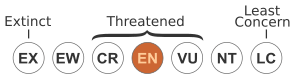
The peninsular myotis is currently listed as an endangered species. This means it is at high risk of disappearing forever. The IUCN has listed it as endangered. It is endangered because it lives in only three or four known places. Also, the area where it lives is quite small, less than 4,000 km2 (1,500 sq mi). Scientists expect that its habitat will get smaller and worse in the future. One of the main dangers to this bat comes from tourist activities in its habitat.
