
Pristimantis devillei facts for kids
Quick facts for kids Pristimantis devillei |
|
|---|---|
| Conservation status | |
Scientific classification  |
|
| Kingdom: | Animalia |
| Phylum: | Chordata |
| Class: | Amphibia |
| Order: | Anura |
| Family: | Strabomantidae |
| Genus: | Pristimantis |
| Species: |
P. devillei
|
| Binomial name | |
| Pristimantis devillei (Boulenger, 1880)
|
|
| Script error: The function "autoWithCaption" does not exist. | |
| Synonyms | |
|
|
Script error: No such module "Check for conflicting parameters".
The Pristimantis devillei is a special kind of frog. It belongs to a group of frogs called the Strabomantidae family. This frog is quite unique because it is endemic to Ecuador. This means it lives naturally only in Ecuador and nowhere else in the world!
Contents
What is the Deville's Rain Frog?
The Pristimantis devillei is often called the Deville's Rain Frog. It's a small amphibian, which means it can live both in water and on land. Like all frogs, it starts its life as a tadpole, usually in water, before changing into an adult frog. These frogs are an important part of their ecosystem, helping to control insect populations and serving as food for other animals.
Where Does It Live? (Habitat)
This unique frog lives in specific places in Ecuador. Its natural habitats are cool, wet areas high up in the mountains. You can find it in:
- Tropical moist montane forests: These are forests found on the sides of mountains in tropical regions. They are usually very misty and rainy.
- High-altitude shrubland: This is land covered with small bushes and shrubs, found at very high elevations where trees might not grow well.
- Tundra: Even higher up, the frog can be found in tundra-like areas. Tundra is a cold, treeless biome where the ground might be frozen for much of the year, but it can still support certain plants and animals.
Why Is It Endangered? (Threats)
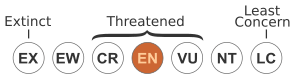
Sadly, the Pristimantis devillei is an endangered species. This means there are not many of them left, and they are at risk of disappearing forever. The biggest danger to these frogs is habitat loss.
- Habitat loss happens when the places where animals live are destroyed or changed. For the Deville's Rain Frog, this means their mountain forests, shrublands, and tundras are shrinking.
- This can happen because of human activities like farming, building new roads or towns, or even climate change. When their homes are destroyed, these frogs lose their food sources, places to hide, and areas to lay their eggs. This makes it very hard for them to survive and reproduce.
See also
 In Spanish: Pristimantis devillei para niños
