
Quartzite facts for kids
| Metamorphic rock | |

Quartzite, containing darker bands of phengite and chlorite, from Maurienne Valley in the French Alps
|
|
| Composition | |
|---|---|
| Quartz | |
| Physical Characteristics | |
| Fabric | Non-foliated |
| Relationships | |
| Protoliths | Quartz Sandstone |

Quartzite is a super hard, non-foliated metamorphic rock. It started out as pure quartz sandstone. Sandstone changes into quartzite when it's squeezed and heated deep inside the Earth. This usually happens during mountain-building events.
Pure quartzite is often white or grey. But you can also find it in shades of pink and red. This is because of tiny bits of hematite (a type of iron oxide). Other minerals can give it colors like yellow, green, blue, and orange.
Sometimes, the word quartzite is also used for very hard sandstones that haven't been fully metamorphosed. These sandstones have quartz grains strongly glued together with more quartz. Geologists call these orthoquartzite to tell them apart from true metamorphic quartzite, which is sometimes called metaquartzite.
Quartzite is very tough against erosion by chemicals. This is why it often forms tall ridges and hilltops that stand out. Since it's almost pure silica, it doesn't provide much material for soil. So, quartzite ridges often look bare or have only a very thin layer of soil and few plants. However, some quartzites have just enough other minerals, like carbonates and chlorite, to create a somewhat fertile, though shallow and stony, soil.
People have used quartzite for stone tools since ancient times. Today, it's used as a beautiful stone for decorating, as crushed rock for building roads, and as a source of silica for making silicon and other silicon products.
Contents
What is Quartzite and How Does it Form?
Quartzite is a very hard rock made mostly of tightly connected quartz crystals. Its surface can feel grainy, like sandpaper, but it also looks glassy. Small amounts of other materials, like iron oxide or clay, often move around during the rock's formation. This can create streaks and patterns within the quartzite. To be called a quartzite by experts, a metamorphic rock must contain at least 80% quartz.
Most geologists agree that quartzite forms through metamorphism. When sandstone is put under immense heat and pressure, like during mountain formation, the individual quartz grains and the material holding them together recrystallize. This process usually erases most of the original look and features of the sandstone. The new quartz grains are typically similar in size and fit together very tightly. When quartzite breaks, it usually fractures right through the quartz grains, creating a rough or shell-like break.
By 1941, geologists realized that some rocks look like quartzite but haven't gone through extreme heat and pressure. These rocks have only experienced lower temperatures and pressures during the formation of sedimentary rock. However, this process cemented the rock so well that it's hard to tell it apart from metamorphic quartzite without a microscope. The term orthoquartzite helps distinguish this sedimentary rock from metaquartzite, which is formed by metamorphism. Orthoquartzite is often nearly 99% pure silica, with only tiny amounts of iron oxide and other tough minerals. Even though few fossils are usually found, the original texture and sedimentary structures of the sandstone are often still visible.
A simple way to tell a true orthoquartzite from a regular quartz sandstone is how it breaks. An orthoquartzite is so strongly cemented that it will break *through* the quartz grains, not around them. This is something you can often see when studying rocks in the field. The main difference between an orthoquartzite and a metaquartzite is when the existing grains start to recrystallize.
Where Can You Find Quartzite?
Quartzite in North America

In the United States, you can find quartzite formations in parts of Pennsylvania, near Washington D.C., eastern South Dakota, Central Texas, and southwest Minnesota. It's also found in Devil's Lake State Park in Wisconsin, the Wasatch Range in Utah, and as strong ridges in the Appalachians and other mountain areas. Quartzite is also present in the Morenci Copper Mine in Arizona. The town of Quartzsite in western Arizona gets its name from the quartzite in the nearby mountains. A special glassy type of quartzite has been found in northern Idaho.
In Canada, the La Cloche Mountains in Ontario are mostly made of white quartzite. Large areas of Nova Scotia also have quartzite beneath them.
Ancient quartzite and rhyolite rock layers are common in the very old Precambrian bedrock of western North America. These quartzites are thought to be old sediments laid down on top of even older greenstone belts. These rock layers might show how back-arc basins formed along the edge of Laurentia, the ancient core of North America, during times when continents were coming together. These quartzites are often almost pure quartz, which is interesting for rocks that came from eroded igneous rock. Their purity might be due to unusual chemical weathering conditions when Earth's atmosphere was just starting to get oxygen.
Quartzite in Europe
In Ireland, quartzite areas are found across the west and northwest. Errigal in County Donegal is a very famous example. A good place to see quartzite is on the Corraun Peninsula in County Mayo, which has a thin layer of bog covering it.
In the United Kingdom, a rocky ridge of quartzite called the Stiperstones (formed about 500 million years ago) runs parallel to a fault line in south Shropshire. You can also find the Cambrian "Wrekin quartzite" in Shropshire and the "Hartshill quartzite" near Nuneaton. In Wales, Holyhead Mountain and most of Holy Island off Anglesey have impressive Precambrian quartzite cliffs. In the Scottish Highlands, several mountains like Foinaven and Arkle are made of Cambrian quartzite. These are found in a narrow band in the far north-west.
In continental Europe, various quartzite deposits are found from the Rhenish Massif and the German Central Highlands into the Western Czech Republic. Examples include the Taunus and Harz mountains. In Poland, quartzite deposits are found in the Świętokrzyskie Mountains. In Norway, quartzite is quarried near Austertana, which is one of the largest quarries in the world, producing 850,000 tons each year. Another quarry is at Mårnes near Sandhornøya, producing 150,000 tons annually. Other deposits are quarried in Kragerø Municipality.
Quartzite Around the World
The highest mountain in Mozambique, Monte Binga (2,436 meters), and the surrounding Chimanimani Plateau are made of very hard, pale grey, Precambrian quartzite. Quartzite is also mined in Brazil and used for things like kitchen countertops.
How Do People Use Quartzite?


Quartzite is a beautiful stone used for many decorative purposes. It can cover walls, be used as roofing tiles, for flooring, and for stair steps. Its use for kitchen countertops is becoming very popular. It is harder and more resistant to stains than granite. Crushed quartzite is sometimes used in building roads. Very pure quartzite is used to make special metals like ferrosilicon, industrial silica sand, silicon, and silicon carbide.
During the Paleolithic Age (ancient Stone Age), people used quartzite, along with flint, quartz, and other strong rocks, to make stone tools. Prehistoric people in the southeastern United States often made grinding tools (mortars) from quartzite stones.
Working Safely with Quartzite
Since quartzite is a form of silica, it's important to be careful when working with it. When people cut, grind, chip, sand, drill, or polish natural stone products like quartzite, tiny dust particles of crystalline silica can be released into the air. If workers breathe in too much of this dust, it can be harmful to their lungs. It's very important for anyone working with quartzite to wear proper safety gear, like masks, to protect their lungs from this dust.
The Name Quartzite
The word quartzite comes from the German word Quarzit.
Images for kids
-
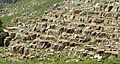
Swan Peak Quartzite (from the Ordovician period) seen north of Tony Grove Lake, Cache County, Utah
-
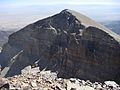
The quartzite of the Prospect Mountain Formation at the top of Doso Doyabi in White Pine County, Nevada
-
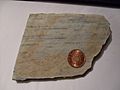
Quartzite from Salangen Municipality, Troms county, Norway, showing stretched crystals from strong forces
-
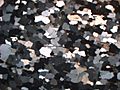
A very thin slice of quartzite from Salangen, Norway, seen under a microscope, showing stretched crystals
-
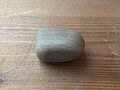
A quartzite pebble found in Ontario, Canada


See also
 In Spanish: Cuarcita para niños
- Neomorphism
