
Stanhopea pozoi facts for kids
Quick facts for kids Stanhopea pozoi |
|
|---|---|
 |
|
| Stanhopea pozoi flower | |
Scientific classification  |
|
| Kingdom: | Plantae |
| Clade: | Tracheophytes |
| Clade: | Angiosperms |
| Clade: | Monocots |
| Order: | Asparagales |
| Family: | Orchidaceae |
| Subfamily: | Epidendroideae |
| Genus: | Stanhopea |
| Species: |
S. pozoi
|
| Binomial name | |
| Stanhopea pozoi Dodson & D.E.Benn.
|
|
| Script error: The function "autoWithCaption" does not exist. | |
Script error: No such module "Check for conflicting parameters".
Stanhopea pozoi is a special type of orchid that grows only in Colombia. This beautiful flower is known for its unique shape and often strong, pleasant smell. It's part of a group of orchids called Stanhopea, which are famous for their amazing hanging flowers.
Contents
What is Stanhopea pozoi?
Stanhopea pozoi is a fascinating plant. It's an epiphyte, which means it grows on other plants, like trees, but it doesn't harm them. It uses the trees for support to reach sunlight. This orchid gets its water and nutrients from the air and rain.
Where does it grow?
This orchid is endemic to Colombia. This means you can only find it growing naturally in Colombia. It usually lives in humid, tropical forests. These forests provide the perfect conditions for the orchid to thrive, with plenty of moisture and warmth.
How does it look?
The flowers of Stanhopea pozoi are truly remarkable. They often have a complex structure with different parts that are shaped in interesting ways. The colors can vary, but they often include shades of yellow, orange, and brown, sometimes with spots or patterns.
The amazing flower structure
Stanhopea orchids, including Stanhopea pozoi, have a unique way their flowers open. They hang downwards from the plant. This special design helps them attract specific pollinators. The flowers usually only last for a few days, but they are very showy during that time.
What about its smell?
Many Stanhopea orchids are known for their strong fragrances. These smells can be sweet, spicy, or even fruity. The scent helps to attract the right insects to pollinate the flower. Each species has its own special perfume.
Life cycle and reproduction
Like most flowering plants, Stanhopea pozoi goes through a life cycle that involves reproduction. Orchids have a unique way of being pollinated, which is how they make seeds.
How it reproduces
Stanhopea pozoi relies on specific insects, often male Euglossine bees (also known as orchid bees), for pollination. These bees are attracted to the orchid's scent. When a bee visits the flower, pollen sticks to its body. The bee then carries this pollen to another flower, helping the orchid make seeds.
Growing new plants
After pollination, the orchid produces a seed pod. Inside the pod are tiny, dust-like seeds. These seeds are very small and need special conditions to grow. In nature, they often need a specific type of fungus to help them sprout and grow into new orchid plants.
Conservation efforts
Because Stanhopea pozoi only grows in Colombia, it's important to protect its natural habitat. Many orchid species are facing threats due to deforestation and habitat loss.
Why protect orchids?
Orchids are a vital part of the biodiversity of tropical forests. They play a role in their ecosystems. Protecting orchids means protecting the forests where they live, which helps countless other plants and animals too.
How can we help?
Conservation groups and scientists work to study and protect orchids like Stanhopea pozoi. This includes setting up protected areas and educating people about the importance of these unique plants. You can help by learning more about plants and supporting efforts to protect natural places.
See also
 In Spanish: Stanhopea pozoi para niños
Images for kids
-
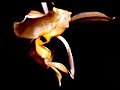
Stanhopea pozoi flower
