
Was-sceptre facts for kids

The was sceptre was a very important symbol in ancient Egypt. It looked like a long staff with a unique animal head at the top and a forked end at the bottom. This special staff represented power, control, and good fortune. You can find it often in ancient Egyptian art, carvings, and even in their hieroglyphic writing. The word was itself meant "power" or "dominion" in ancient Egyptian.
Contents
The Was Sceptre: A Symbol of Ancient Egyptian Power
The was sceptre was a powerful symbol connected to the ancient Egyptian religion. It was a sign of authority and strength. Many ancient Egyptian gods, like Set and Anubis, were shown holding this sceptre. Even the pharaohs, who were the rulers of Egypt, carried it to show their power.
What Did the Was Sceptre Look Like?
Imagine a tall, straight stick. At the very top, it had a carved head of a mysterious animal. This animal is often called the "Set animal" or sometimes linked to Khnum. At the bottom of the staff, it split into two parts, like a fork. This unique design made the was sceptre easy to recognize.
Who Used the Was Sceptre and What Did It Mean?
The was sceptre was a symbol of power and dominion. It showed that someone had control and authority. For the ancient Egyptians, it also represented control over powerful forces, including those that might cause chaos. It was a way to show order and protection.
Was Sceptres in Tombs and Temples
The was sceptre was not just for the living. It was also important for the afterlife. Egyptians believed it helped protect people who had passed away. Because of this, you might find was sceptres placed inside tombs. They were also often painted or carved on the walls of tombs and on coffins. People even wore small was sceptres as amulets, believing they brought good luck and protection.
Ancient Egyptians also thought the sky was held up by four pillars. Sometimes, these pillars were shown in the shape of the was sceptre. This shows how important and fundamental the symbol was to their view of the world. The sceptre was also the symbol for a region in Upper Egypt called Thebes.
Finding Real Was Sceptres Today
We can see was sceptres in many ancient Egyptian artworks. They appear in paintings, drawings, and carvings of gods, pharaohs, and priests. Often, they are shown alongside other famous Egyptian symbols like the ankh (the symbol of life) and the djed-pillar (a symbol of stability).
Archaeologists have even found real was sceptres! These ancient staffs were made from materials like Egyptian faience (a type of glazed pottery) or wood. You can clearly see the animal head and the forked tail on these ancient objects. The oldest examples of was sceptres date back to the First Dynasty of Egypt, which was thousands of years ago.
The Was Hieroglyph
The word Was (wꜣs) was also an Egyptian hieroglyph character. This hieroglyph looked like the sceptre and meant "power" or "dominion." It was a simple way to write about strength and authority in their ancient language.
Images for kids
-
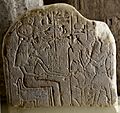
This ancient stone slab, called a stela, shows the goddess Isis holding a was-sceptre. A worker from the necropolis (burial ground) is shown honoring her. This piece is from the Middle Kingdom of Egypt.
-
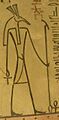
Here, the god Set is shown carrying a was sceptre. This image is from the tomb of Thutmose III, a famous pharaoh.
-
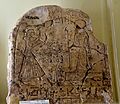
This part of a stela shows a man worshipping Ra-Horakhty, a sun god, who also holds a was-sceptre. This artwork is from the Nineteenth Dynasty of Egypt.
-
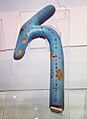
This is the top part of a real was sceptre, made from faience. It belonged to Pharaoh Thutmose III.
-
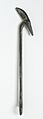
A small was-shaped amulet with the animal head and forked tail.


.jpg)

See also
- Sekhem scepter
