
White rhinoceros facts for kids
Quick facts for kids White rhinoceros |
|
|---|---|
 |
|
| A white rhinoceros in South Africa | |
| Conservation status | |
Scientific classification  |
|
| Kingdom: | Animalia |
| Phylum: | Chordata |
| Class: | Mammalia |
| Order: | Perissodactyla |
| Family: | Rhinocerotidae |
| Genus: | Ceratotherium |
| Species: |
C. simum
|
| Binomial name | |
| Ceratotherium simum (Burchell, 1817)
|
|
| Subspecies | |
|
Ceratotherium simum cottoni (northern) |
|
 |
|
| White rhinoceros original range.
Northern (C. s. cottoni) Southern (C. s. simum) |
|
 |
|
| Northern white rhino distribution according to the IUCN (as of 2020).
Extant and assisted colonisation (resident) Extinct Possibly extinct |
|
 |
|
| Southern white rhino distribution according to the IUCN (as of 2020).
Extant (resident) Extant and reintroduced (resident) Extant and assisted colonisation (resident) Presence uncertain and assisted colonisation |
|
| Script error: The function "autoWithCaption" does not exist. | |
| Synonyms | |
|
|

Script error: No such module "Check for conflicting parameters".
The white rhinoceros (Ceratotherium simum), often called the white rhino, is the largest type of rhinoceros alive today. It is also one of the biggest land animals on Earth, second only to the elephant. These massive animals are famous for their wide, square-shaped mouths, which help them eat grass like a lawnmower.
White rhinos are very social animals. Unlike other rhinos that prefer to be alone, white rhinos often live in groups. There are two main types, or subspecies, of white rhinos: the southern white rhinoceros and the northern white rhinoceros.
The southern white rhino is a great conservation success story. There are over 17,000 of them living in the wild, mostly in South Africa. However, the northern white rhino is in serious trouble. As of late 2025, there are only two females left in the entire world, and they live under special protection in Kenya.
Contents
Why is it Called "White"?

You might notice that the white rhino is actually grey, not white! So, where did the name come from?
There is a popular story that the name is a mistake. Some people believe that early Dutch settlers in South Africa called the animal "wijd" (which sounds like "white"), meaning "wide." This referred to the rhino's wide mouth. English speakers might have misunderstood this word and started calling it the "white" rhino.
However, experts have looked at old documents and found that Dutch writers didn't really use the word "wijd" for rhinos. It is possible the name just became popular over time to tell it apart from the black rhinoceros. Another name for this animal is the square-lipped rhinoceros, which describes its mouth perfectly.
The scientific name, Ceratotherium simum, comes from Ancient Greek. It means "flat-nosed horn beast."
Physical Features and Size

.jpg)

The white rhino is a true giant of the animal kingdom. It has a huge, barrel-shaped body and a large head.
- Weight: Males (bulls) can weigh between 2,000 kg (4,400 lb) and 2,300 kg (5,100 lb). That is as heavy as a large car! Females (cows) are a bit smaller, weighing around 1,600 kg (3,500 lb).
- Height: They stand about 1.7 to 1.86 m (5 ft 7 in to 6 ft 1 in) tall at the shoulder.
- Horns: They have two horns on their snout. The front horn is longer and can grow up to 60 cm (24 in) or more. These horns are not made of bone. They are made of keratin, the same stuff that makes up your hair and fingernails.
- Skin: Their skin is thick and grey. It looks like armor plating. They have a hump of muscle on their neck to help hold up their heavy head.
Despite their heavy bodies, white rhinos can run surprisingly fast. They can reach speeds of up to 50 km/h (31 mph) for short distances!
Habitat

White rhinos live in the grassy plains and savannas of Africa. They are specialized grazers, which means they mostly eat grass. Their wide, flat lips allow them to bite off large amounts of grass at once. They spend about half of their day eating.
Diet
White rhinos are herbivores that eat only grass. They prefer to eat the shortest grass. They spend about half their day eating and a third of it resting.
Vocalizations
They use different sounds to talk to each other. They make panting sounds to stay in touch. They grunt and snort when looking for a mate. They squeal if they are scared. If they feel threatened, they might bellow or growl.
Social Groups
White rhinos are the most social of all rhino species. Females and their calves often live together in groups called a crash. A crash can have up to 14 rhinos. Adult males usually live alone and mark their territory to keep other males away. They use piles of dung (poop) to mark the boundaries of their home.
Reproduction and Life Cycle
.jpg)

Female rhinos are ready to have babies when they are about six or seven years old. Males take a bit longer and are usually ready around 10 to 12 years old.
When a mother rhino is pregnant, she carries the baby for about 16 months. That is almost a year and a half! She usually gives birth to a single calf. A newborn calf weighs between 40 kg (88 lb) and 65 kg (143 lb).
The baby rhino can stand up within an hour of being born, but it is a bit wobbly for the first few days. The mother is very protective. If she senses any danger, the calf will run in front of her, and she will defend it fiercely. The calf drinks its mother's milk for over a year. White rhinos can live to be 40 or 50 years old.
Where Do They Live?

There are two distinct groups of white rhinos living in Africa.
Southern White Rhinoceros
The southern white rhino lives mostly in Southern Africa. Countries like South Africa, Namibia, Botswana, and Zimbabwe are home to most of them.
A long time ago, there were very few southern white rhinos left because of hunting. But thanks to amazing conservation work, their numbers have grown. Today, they are the most common type of rhino in the world.
Northern White Rhinoceros

The northern white rhino used to live in East and Central Africa. Sadly, this subspecies is now critically endangered.
In March 2018, the last male northern white rhino, named Sudan, died of old age. Now, only two females remain: Najin and her daughter Fatu. They live at the Ol Pejeta Conservancy in Kenya, where armed guards protect them 24 hours a day. Because there are no males left, these two females cannot have babies naturally.
Threats and Conservation
The biggest threat to white rhinos is illegal hunting, known as poaching. Poachers kill rhinos to take their horns.
Some people in Asia believe that rhino horn can be used as medicine to cure sicknesses. However, science has proven that rhino horn has no medicinal value. It is made of keratin, just like human fingernails. Chewing on fingernails does not cure a fever, and neither does rhino horn. Despite this, the horns are sold for a lot of money, which encourages criminals to hunt these beautiful animals.
Protecting the Rhinos

Many brave people are working hard to save the white rhino.
- Rangers: In national parks, rangers patrol the land to stop poachers. They use technology like drones and night-vision cameras to keep the rhinos safe.
- Science: For the northern white rhino, scientists are trying something amazing. They have collected cells from northern white rhinos before they died. They are using advanced science to create rhino embryos in a lab. They hope that one day, a southern white rhino female can act as a surrogate mother to give birth to a northern white rhino calf. This is a difficult process, but it gives hope that the subspecies might not disappear forever.
- Zoos: Zoos around the world take care of southern white rhinos. They help breed them and teach people why it is important to protect nature.
Interesting facts about white rhinos
- White rhinos love to roll in mud. This mud bath helps them stay cool and protects their skin from sunburn and insects.
- Their large, tube-shaped ears can move all around. This helps them hear even quiet sounds and spot danger. However, their eyesight is not very good.
- They have an amazing sense of smell. Their nose passages are even bigger than their brain!
- White rhinos can go four or five days without water in dry places.
Images for kids
-
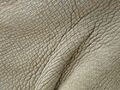
The thick, folded skin of a white rhino.
-
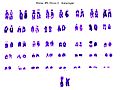
Scientists study rhino cells to help save them.
-
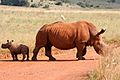
A southern white rhino mother and calf.
-
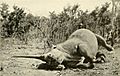
A historical photo of a northern white rhino.


See also
 In Spanish: Rinoceronte blanco para niños
