
Chewing gum facts for kids

An unwrapped stick of chewing gum
|
|
| Type | Confectionery |
|---|---|
| Main ingredients | Gum base, sweeteners, plasticizers, flavors, colors, polyols |
Chewing gum is a soft, chewy treat that you chew but don't swallow. It's made from a special base, sweeteners, softeners, flavors, and colors. Chewing gum feels a bit like rubber because of its unique mix of ingredients. These ingredients make it stretchy, sticky, and fun to chew.
Contents
The Long History of Chewing Gum


People have been chewing things for thousands of years! This habit started in different places around the world. Early chewers used natural things found nearby. They didn't chew for food. Instead, they liked the taste, wanted to clean their teeth, or just enjoyed the chewing feeling.
The oldest chewing gum found is 5,000 years old. It was made from birch bark tar in Finland. This tar might have helped clean teeth. The Mayans and Aztecs in ancient times used chicle. Chicle is a natural gum from trees. They used it for chewing and to stick things together. The Ancient Greeks chewed mastic gum. This came from the mastic tree. It also had properties that might have helped with oral health. Many other cultures chewed plant saps and resins.
| Ancient Civilization | What They Chewed |
|---|---|
| Ancient Greece | Mastic gum |
| Ancient Maya | Chicle |
| Ancient Horn of Africa and Yemen | Khat |
| Chinese | Ginseng plant roots |
| Inuit | Blubber (animal fat) |
| Native Americans | Sugar pine and spruce tree sap |
| South Americans | Coca leaves |
| South Asia (India) | Betel nuts |
| Tropical West Africa | Kola nuts |
| United States (early settlers) | Tobacco leaves |
Chewing gum became popular and modern in the United States. Native Americans chewed sap from spruce trees. Early settlers in New England learned this practice. In 1848, John B. Curtis sold the first commercial chewing gum. It was called The State of Maine Pure Spruce Gum. Later, around 1850, gum made from paraffin wax became popular. People often dipped these early gums in powdered sugar to make them sweet. In 1869, William F. Semple, a dentist, got a patent for chewing gum. His gum was meant to clean teeth and strengthen jaws, not to be a sweet treat.

The first flavored chewing gum appeared in the 1860s. John Colgan, a pharmacist, mixed powdered sugar with tolu. Tolu is a fragrant powder from a balsam tree. He made small sticks of this flavored gum called "Taffy Tolu." Colgan also helped make and package chicle-based gum.
Modern chewing gum started in the 1860s. Mexico's former president, General Antonio Lopez de Santa Anna, brought chicle to New York. He gave it to Thomas Adams to try as a rubber substitute. Chicle didn't work for rubber. But Adams cut it into strips and sold it as Adams New York Chewing Gum in 1871. Early popular gums like Black Jack (1884), Chiclets (1899), and Wrigley's Spearmint Gum quickly became market leaders. These are still around today! American soldiers helped chewing gum become popular worldwide during WWII. They received gum as part of their supplies and traded it with people in other countries.
Later, synthetic gums were created. Natural chicle couldn't meet the demand. By the 1960s, U.S. makers switched to cheaper synthetic rubber. In the early 2000s, chewing gum's popularity in the U.S. decreased. Some thought smartphones reduced impulse buys at checkout counters. Demand also dropped during the COVID-19 pandemic. People were less worried about bad breath. By 2023, sales in dollars were back to pre-pandemic levels. However, this was due to inflation, as the price per pack had increased.
What's Inside Chewing Gum?
The exact recipe for gum base is a secret for each company. But other ingredients are well-known. They are listed in the table below.
Table 2: Common Ingredients in Modern Chewing Gum
| Ingredient | Amount (by weight) | What It Does | Examples | |
|---|---|---|---|---|
| Gum Base | 25–35% | This is the main chewy part. It has resins for chewiness, wax for softness, and elastomers for flexibility. It's similar to plastics and rubbers. | Natural or man-made ingredients (See Table 3) | |
| Sweeteners | Sugar alcohols: 40–50%
Artificial Sweeteners: 0.05–0.5% |
Give the gum its initial sweet taste. Some sweeteners are added to make the sweetness last longer. | Bulk sweeteners:
sugar, dextrose, glucose, xylitol, sorbitol |
Intense sweeteners:
aspartame, sucralose |
| Glycerine | 2–15% | Keeps the gum moist. | ||
| Softeners | 1–2% | Makes the gum softer and more flexible. It stops the gum from becoming brittle. | lecithin, vegetable oils | |
| Flavors | 1.5–3.0% | Gives the gum its taste and smell. Flavors can be liquid or tiny capsules. Oil-based flavors last longer because the gum base attracts them. | Natural or man-made. Peppermint and spearmint are very popular. Fruit acids add sourness. | |
| Colors | Variable | Makes the gum look appealing. | Natural or man-made | |
| Polyol coating | Variable | Gives pellet gum its hard, crunchy outer shell. It can also keep the gum fresh longer by absorbing water. | Sorbitol, Maltitol, Starch | |
The Gum Base: The Heart of the Chew
The gum base is made of polymers, softeners, and resins. Polymers make gum stretchy and sticky. Plasticizers (softeners) make it flexible and less brittle. Resins give it its chewiness. Each brand keeps its exact gum base recipe a secret. However, the U.S. Food and Drug Administration (FDA) approves all ingredients. Table 3 shows some of these approved ingredients.
Table 3: Gum Base Ingredients Approved by the U.S. FDA (2016)
| Natural Ingredients | Synthetic (Man-made) Ingredients |
|---|---|
| From the Sapotaceae family of trees
Chicle Chiquibul Crown gum Gutta hang kang Massaranduba balata Massaranduba chocolate Nispero Rosidinha Venezuelan chicle |
Butadiene-styrene rubber
Isobutylene-isoprene copolymer (butyl rubber) Paraffin (from oil) Petroleum wax Petroleum wax synthetic Polyisobutylene Polyvinyl acetate |
| From the Apocynaceae family of trees
Jelutong Leche caspi (sorva) Pendare Perillo |
|
| From the Moraceae family of trees
Leche de vaca Niger gutta Tunu (tuno) |
|
| From the Euphorbiaceae family of trees
Chilte |
How Chewing Gum is Made
First, the gum base is melted and filtered. Then, other ingredients like sweeteners and flavors are added. This warm mixture is stirred until it becomes thick like dough. Heating helps all the ingredients mix evenly. Next, machines shape the gum. This can be done by pushing it through a mold (extrusion).
Different Kinds of Gum

Chewing gum comes in many shapes and sizes. Pieces can weigh from about 1.4 to 6.9 grams. Gums are also different depending on if they are for blowing bubbles or if they contain sugar.
Common gum shapes include tablets, coated pellets, and sticks or slabs. Bubble gum often comes as tablets, hollow balls, or cubes. Stick gums are usually in packs of 5 to 17. They are softer. Pellet gums are pillow-shaped and almost always coated. Their coating allows for different flavor layers. Cube or chunk gums are often for bubble blowing. They are cut from long strands of gum and packaged.
-
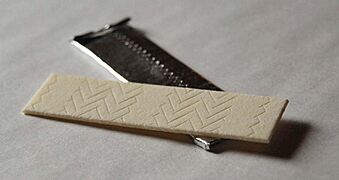
Stick gum
-
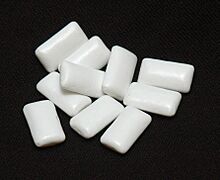
Coated pellet gums
-
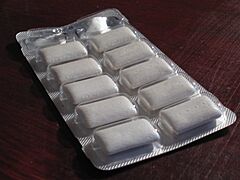
Uncoated gum


Gum Quality and Safety
Chewing gum stays fresh for a long time. This is because it doesn't react much and has little moisture. Most countries don't even require an expiration date on gum. If kept in a good place, gum might become a bit brittle or lose some flavor over time. But it will still be safe to chew. If gum gets wet, it might become soggy.
How Chewing Gum Works
The way chewing gum feels and tastes depends on its physical and chemical traits.
Why Gum Stays Chewy
The main parts of gum base are hydrophobic. This means they don't mix with water. This is important because your saliva is water-based. Your saliva dissolves the sugars and flavors in the gum. But it doesn't break down the gum base itself. This is why you can chew gum for a long time without it dissolving like other foods.
Why Gum is Sticky
Because gum base doesn't mix with water, it attracts oil. This is why gum can stick to oily surfaces like sidewalks, hair, or the bottom of your shoe. It's hard to remove because the long parts of the gum base stretch instead of breaking. To prevent gum from sticking to machines during making, a powder or coating is added to the outside. This makes the gum stick to the added substance instead of other surfaces.
Blowing Bubbles with Gum

Bubblegum bubbles form because the gum is stretchy and elastic. When you blow air into the gum, the air pushes evenly on all sides. The gum stretches out. As the bubble gets bigger, the gum gets thinner. When the air pressure is too much for the gum to handle, the bubble pops! Because gum is elastic, the deflated bubble shrinks back. Then you can keep chewing.
Gums made for blowing big bubbles usually have a gum base with longer polymers. These longer polymers can stretch more. This helps make bigger bubbles that last longer.
How Gum Flavors Last
Gum flavors are released over time as you chew. In the first few minutes, sweeteners like sugar dissolve quickly in your saliva. They go away first. Next, intense sweeteners and some acids dissolve. These last a bit longer. Then, special "encapsulated" flavors are released. These are tiny flavor capsules that stay in the gum longer. They can last for 10 to 45 minutes. Finally, softeners dissolve. This makes the gum firmer, signaling the end of the chew.
Studies show that flavors taste better when sweeteners are present. Companies now design gum so that sweeteners and flavors release together.
The Cooling Feeling
Some chewing gums give a cool feeling. This happens because of certain sweeteners, like sugar alcohols. When these sweeteners dissolve in your saliva, they absorb heat. This process makes your mouth feel cool.
Chewing Gum and Your Health
How Gum Affects Your Brain
Some studies suggest that chewing gum can help your brain. It might improve your working memory (remembering things for a short time) and how fast you notice things. These improvements seem to happen if you chew gum before doing a mental task. Scientists are still learning exactly how this works. The effects usually last about 15-20 minutes after you stop chewing.
Good for Your Teeth
Sugar-free gum with xylitol can help reduce plaque and cavities. The sweetener sorbitol also helps, but not as much as xylitol. Other sugar substitutes don't cause tooth decay. Xylitol is special because it stops certain bacteria, Streptococcus mutans, which cause cavities. Xylitol is safe and helps your teeth and saliva. This is because it doesn't turn into acid like most sugars. Chewing gum also makes more saliva. Saliva washes away bacteria and can help strengthen tooth enamel.
Chewing sugar-free gum for 20 minutes after eating can help prevent tooth decay. This is because the chewing makes saliva. Saliva helps clean your mouth and protect your teeth. Gum can also help if you have a dry mouth by making more saliva.
Helping After Surgery
Chewing gum can help patients recover faster after some stomach or pelvic surgeries. It's like a "fake meal" that gets the digestive system working again. Chewing gum for about 15 minutes, four times a day, can reduce recovery time by about a day and a half. It helps the body return to normal functions sooner.
For Heart Health
Chewing gum has been shown to help people with heart problems feel less thirsty.
Your Stomach and Gum
Chewing gum can sometimes help with gastroesophageal reflux disease (GERD), which is when stomach acid comes up into your esophagus. Chewing gum makes you produce more saliva, which helps neutralize the acid. However, chewing gum can sometimes make your stomach produce acids and enzymes that aren't needed, which might upset it. Also, if you chew a lot of gum with sorbitol, it might cause gas or diarrhea.
Tiny Plastics in Gum
Chewing gum can release tiny plastic particles, called microplastics, into your saliva as you chew. When you swallow your saliva, these particles enter your body. Scientists are still studying what effects these microplastics might have on human health.
Giving Gum a Second Life: Recycling

In 2018, a British designer named Anna Bullus found a way to recycle chewing gum into plastic. Used chewing gum is the second most common type of litter, after cigarette butts. Her company, Gum-tec, turns old gum into new plastic materials. These materials are then used to make things like shoe soles, rubber boots, and even new collection bins for more chewing gum! They also make pencils, coffee mugs, guitar picks, and other useful items. Gum-tec is known as the first company in the world to recycle chewing gum into new products.
See also
 In Spanish: Goma de mascar para niños
