
Diana Mosley facts for kids
Quick facts for kids
Diana Mosley
|
|
|---|---|
 |
|
| Born |
Diana Freeman Mitford
17 June 1910 London, England
|
| Died | 11 August 2003 (aged 93) Paris, France
|
| Occupation | Author, reviewer |
| Known for | Mitford sister who married Sir Oswald Mosley, 6th Baronet, leader of the British Union of Fascists, association with Adolf Hitler, and literary critic and author |
| Spouse(s) |
The Hon. Bryan Guinness
(m. 1929; div. 1932) |
| Children | Jonathan Guinness, 3rd Baron Moyne The Hon. Desmond Guinness Alexander Mosley Max Mosley |
| Parents |
|
| Relatives | See Mitford family |
Diana, Lady Mosley (born Diana Mitford on June 17, 1910, in London, England) was a British writer and editor. She was known for her connections to important political figures and her role in society. Diana was one of the famous Mitford sisters, a group of six girls from an aristocratic family. She married Oswald Mosley, who led a political group called the British Union of Fascists. Her life was full of interesting events, including being held by the government during World War II. She later became a successful writer in Paris. Diana passed away on August 11, 2003, in Paris, France, at the age of 93.
Contents
Who Was Diana Mosley?
Diana Mitford was a well-known figure in British society. She was part of a famous family and lived a life connected to politics and writing. Her story shows how people's lives can be shaped by major historical events.
Her Family and Early Life
.jpg)
Diana Mitford was the third daughter of David Freeman-Mitford, 2nd Baron Redesdale, and his wife Sydney. She was born into an aristocratic family. She grew up in large country homes in Gloucestershire and Oxfordshire, England. Diana was educated at home by private teachers. For a short time in 1926, she attended a day school in Paris. Her younger sisters, Jessica and Deborah, were very close to her as children. At 18, she became secretly engaged to Bryan Guinness.
First Marriage and Social Life

Diana married Bryan Guinness on January 30, 1929. He was an Irish writer and came from a wealthy family. Her parents were initially worried about them marrying so young. The couple lived in grand houses in London, Dublin, and Wiltshire. They were known for hosting lively social events. Their group of young friends in 1920s London was called the "bright young things."
Diana had two sons with Bryan: Jonathan (born 1930) and Desmond (born 1931). However, Diana wanted to travel more and meet new people. Bryan preferred to stay home with his family. This caused some tension in their marriage.
Meeting Oswald Mosley and Political Connections
In February 1932, Diana met Oswald Mosley. He was soon to become the leader of a new political group. Diana was very interested in him. She left Bryan Guinness, and they divorced in June 1933. Her parents and some of her sisters were not happy about this decision. Her sister Jessica strongly disagreed with Mosley's political ideas. This caused problems in their family relationships for a time.
In 1934, Diana visited Germany with her sister Unity. They attended a large political gathering there. Unity later became friends with Adolf Hitler. She introduced Diana to him in March 1935. Diana and Unity were guests at another gathering later that year. In 1936, Hitler provided a car for Diana to attend the Berlin Olympic games. She also became acquainted with other important German figures.
Diana and Oswald Mosley married secretly on October 6, 1936. The wedding took place at the home of Joseph Goebbels, a German government minister. Adolf Hitler was one of the guests. Their marriage was kept private until their first son, Alexander, was born in 1938. Their second son, Max, was born in 1940.
Life During World War II
During World War II, Britain was fighting against Germany. Because of their political views, Diana and Oswald Mosley were held by the British government. This was under a special rule called Defence Regulation 18B. Diana was arrested in June 1940, shortly after Max was born. She was taken to a cell in Holloway Prison for women in London. Her husband was held separately at first. Later, they were allowed to be together in the prison.
After more than three years, they were both released in November 1943. This was due to Oswald's poor health. They remained under house arrest until the war ended. They were not allowed to have passports until 1949. Diana later said she felt well-treated during her time in prison.
Life After the War
After the war, Diana and Oswald Mosley lived in Ireland for a time. They later moved permanently to France in 1950. They lived in a beautiful house near Paris. They became friends with the Duke and Duchess of Windsor, who lived nearby. They held another marriage ceremony in France. This was because their original marriage license was lost during the war.
Diana remained loyal to her past political beliefs. She faced criticism for her views.
Her Career as a Writer
After the war, Diana and her husband started their own publishing company. It was called Euphorion Books. This allowed Oswald to publish his writings. Diana also helped choose books for the company. She translated a famous German book, Faust, by Goethe. She also edited some of her husband's books.
Diana edited a cultural magazine called The European for six years. She wrote articles, book reviews, and diary entries for it. In 1965, she started writing a regular column for Tatler magazine. She often shared her own experiences in her reviews. She also wrote regularly for Books and Bookmen. Later, in the 1990s, she became a main book reviewer for the London Evening Standard newspaper. However, her reviews sometimes caused controversy.
Diana wrote two books about her own life: A Life of Contrasts (1977) and Loved Ones (1985). Loved Ones was a collection of short descriptions of her family and friends. In 1980, she wrote a biography about the Duchess of Windsor. After her death, many of her letters, articles, and diaries were published in collections. These include The Mitfords: Letters Between Six Sisters (2007) and The Pursuit of Laughter (2008).
Later Years and Public Discussion
In 1998, due to her advancing age, Diana moved into an apartment in Paris. She had suffered from regular migraines throughout much of her life. In 1981, she had surgery to remove a brain tumour. She also received treatment for skin cancer in the early 1990s. In her later life, she also suffered from deafness.
Diana Mosley passed away in Paris in August 2003. She was 93 years old. Her death was due to complications from a stroke. She was buried at St Mary's Churchyard, Swinbrook, Oxfordshire, alongside her sisters. She was survived by her four sons: Jonathan, Desmond, Alexander, and Max. Her stepson, Nicholas Mosley, wrote a book about his father. Diana reportedly never forgave him for it.
After her death, journalists and historians continued to discuss her life and political views. Some, like Andrew Roberts, described her as "unrepentant" about her past associations. Others, including her son Jonathan Guinness, argued that she was never a threat to wartime Britain. Her life remains a topic of historical interest and debate.
Images for kids
-
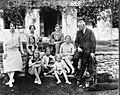
The Mitford family in 1928. From left to right: Sydney Bowles (mother), Unity, Jessica, Deborah, David Freeman-Mitford (father). In the second row: Diana and Pamela. In the back row: Nancy and Tom.
-
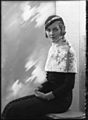
Diana on 27 January 1932.
-
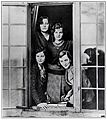
Nancy, Diana, Unity and Jessica Mitford.
-
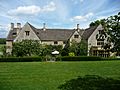
Rear view of Asthall Manor, the Mitford family home in Oxfordshire.
-
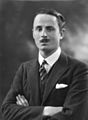
Oswald Mosley, Diana's second husband.
-
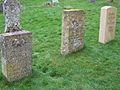
Diana's grave at far right, next to those of her sisters, Unity and Nancy, at St Mary's Church, Swinbrook in Oxfordshire.
-
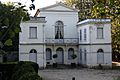
Temple de la Gloire, Orsay, Paris: Diana's long-term home after the war.


.JPG)

.jpg)

See also
 In Spanish: Diana Mitford para niños
