
Goldtail facts for kids
Quick facts for kids Goldtail |
|
|---|---|
 |
|
| Conservation status | |
Scientific classification  |
|
| Kingdom: | Animalia |
| Phylum: | Arthropoda |
| Class: | Insecta |
| Order: | Odonata |
| Suborder: | Zygoptera |
| Family: | Platycnemididae |
| Genus: | Allocnemis |
| Species: |
A. leucosticta
|
| Binomial name | |
| Allocnemis leucosticta Selys, 1863
|
|
| Script error: The function "autoWithCaption" does not exist. | |

Script error: No such module "Check for conflicting parameters".
The goldtail (scientific name: Allocnemis leucosticta) is a type of damselfly. It's also known as goudstertjie in some places. This cool insect belongs to the Platycnemididae family. You can only find goldtails in South Africa and Eswatini. They love to live near streams and rivers in areas with lots of trees.
Contents
What Does a Goldtail Look Like?
This damselfly is pretty easy to spot! It's a medium-sized insect, about 50 millimeters (2 inches) wide when its wings are spread out.
- Face: It has a bright blue face that goes down below its eyes.
- Body: Its body is long and thin, and it's dark with thin white stripes on each part.
- Wings: The wings are a smoky yellow-brown color. They have special white spots near the tips called pterostigmata. These spots look like wide white marks on the wings. When a goldtail flies, its white spots and yellowish wings really stand out, making it easy to identify.
Male and female goldtails look very much alike. The only small difference is the tip of their body (thorax). In males, this part is gold. In females, it can be gold, light blue, or white.
Where Do Goldtails Live?
Goldtails are mostly found in the mid to high mountain areas of South Africa and Eswatini. However, you can also find them at sea level in some parts of KwaZulu-Natal and the Southern Cape. Their home range stretches from Table Mountain in the Western Cape all the way to the Soutpansberg mountains in Limpopo. They are common in these areas but only in specific spots because they need a special kind of home.
This damselfly prefers streams with clear, shallow water. Baby goldtails, called nymphs, live under stones in the quiet parts of these streams. These quiet spots are called backwaters, where the water current is not strong. Goldtails are most often found in shady places. This includes streams and rivers that are in forests or have many trees around them. They also like wooded ravines. Sometimes, they can be found near streams that have less shade. These streams might be surrounded by grass and bushes, especially in areas with fynbos plants or mountain grasslands.
Goldtail Life and Habits
Goldtails are most active from October to April. This is during the spring to early autumn seasons. They almost always rest on small branches, plant stems, or other plants. They like to perch right over or very close to the water.
Male goldtails are quite easy to see. They sit in open spots over the stream where sunlight shines through the trees. Female goldtails are often found near the males. However, there are usually fewer females, and they are not as easy to spot.
Reproduction
After mating, the male goldtail holds onto the female behind her head. The female then hangs straight down, and her body goes into the water. This allows her to lay her eggs inside rotten twigs that are under the water.
Protecting Goldtails
The IUCN lists the goldtail as a least concern species. This means they are not currently in danger of disappearing. However, goldtails are quite sensitive to changes in their habitat. They do not like dirty water, so keeping streams clean is important for them. They can still live in streams that have some non-native (alien) plants around.
Gallery
-
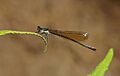
Female goldtail near Impendle, KwaZulu-Natal
-
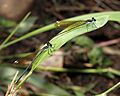
Mating pair, Pietermaritzburg


