
Grigore Vieru facts for kids
Quick facts for kids
Grigore Vieru
OR
|
|
|---|---|

Vieru in 1990
|
|
| Personal details | |
| Born | 14 February 1935 Pererîta, Kingdom of Romania (now Moldova) |
| Died | 18 January 2009 (aged 73) Chișinău, Moldova |
| Resting place | Chișinău |
| Political party | Popular Front of Moldova |
| Spouse |
Raisa Vieru
(m. 1957–2009) |
| Relations | Igor Vieru (brother) |
| Children | Teodor and Călin Vieru |
| Profession | Writer |
| Parents | Eudochia and Pavel Vieru |
Grigore Vieru was a famous Moldovan poet and writer. He was born on February 14, 1935, and passed away on January 18, 2009. He is especially known for his wonderful poems and books written for children. His poems often talked about nature, love for his country, and the special role of mothers. He wrote all his works in the Romanian language. In 1993, he became a special member of the Romanian Academy, which is a big honor for writers.
Contents
Early Life
Grigore Vieru was born in a village called Pererîta. This village was part of Romania back then, but today it's in Briceni district, Moldova. His parents, Pavel and Eudochia, were farmers.
He finished his first school in his village in 1950. Later, he went to middle school in Lipcani and finished there in 1953.
Personal Life
Grigore Vieru was married to Raisa Vieru. They got married in 1959. They had two sons named Teodor and Călin Vieru.
Creative Work
Grigore Vieru's first book was published in 1957. It was a small book of poems for children called «Alarma» («Alarm»). People who read books for a living really liked it.
The next year, Vieru finished university in Chișinău. He studied history and language. After that, he started working as an editor for a children's magazine called «Scînteia Leninistă» («The Leninist Spark»). This magazine is now called «Noi» («We»). He also worked for a newspaper called «Tînărul leninist» («The Young Leninist»), which is now «Florile Dalbe» («Glowing Flowers»).
From 1960 to 1963, he was the main editor at a publishing house called «Cartea Moldovenească» («Moldavian book»).
In 1967, Vieru won an award for his book «Poetry for Readers of All Ages». This book was published in 1965. The next year, his book «Your Name» became a part of what students learned in universities in Moldova.
He also wrote a children's storybook called «Bread and Dew». It's about a young boy named Doru who lives in Chișinău.
Many Moldovan music writers were inspired by Grigore Vieru's poems. He even wrote some songs himself, like «Să crești mare» («Grow Big»). From 1964, he started working with the composer Yulia Tsibulskaya on many songs.
He often visited the «Poetry House» in Cociulia village. He wrote his famous book for young children, «Albinuța» («The Little Bee»), there.
The year 1968 was very important for the poet. His book of poems called «Numele Tău» («Your Name») came out. It was seen as a very special and new kind of poetry. It even became a book studied in universities. In this book, he wrote poems for famous Romanian artists and writers. This was the first time such poems appeared in Bessarabian writing after the war.
Political Activities
In 1973, Grigore Vieru visited Romania with other writers. He met with editors of a magazine and visited famous monasteries like Putna and Voroneț. He brought many books back to Chișinău. He once said that his dream was to cross the Prut River, which separates Moldova and Romania.
He visited Bucharest and other Romanian cities in 1974 and 1977. In 1978, his first book was published in Romania. It was called «The Friday Star».
In 1989, he was chosen to be a member of Moldova's Parliament. He worked to help Moldova and Romania become closer. The next year, he became an honorary member of the Romanian Academy. In 1992, the Romanian Academy even suggested him for the Nobel Peace Prize.
In 1995, he joined the board of the Romanian Radio Broadcasting Company. He won several Romanian writing awards in 1996. In 2000, the Romanian government gave him the «Eminescu» Medal.
Role in the National Movement

In the late 1980s, Grigore Vieru was a leader in the movement for national freedom in Bessarabia (Moldova). His writings and songs helped people in Bessarabia remember their national identity. He helped start the People's Front of Moldova. He also helped organize a big meeting in 1989.
He played a key role in the discussions where the Romanian language was made the official language of Moldova. They also decided to start using the Latin alphabet again.
Death
On January 16, 2009, Grigore Vieru was in a serious car accident. He was taken to the hospital in Chișinău. He had many injuries and was in very bad condition. The accident happened early in the morning on January 16. The driver of the car was Gheorghe Munteanu, a famous artist. They had been out celebrating the birthday of Mihai Eminescu, a famous Romanian poet.
Grigore Vieru passed away on January 18, 2009, two days after the accident. He died because his heart stopped.
His funeral was held on January 20, 2009, in Chișinău. Tens of thousands of people came to say goodbye. It was one of the biggest funerals Chișinău had seen in a long time. January 20, 2009, was declared a day of mourning in Moldova. Everyone observed a moment of silence at 10:00 AM. His funeral was also shown live on TV.
Legacy

Many schools in Moldova are named after Grigore Vieru. A big street in Chișinău and a street in Iași, Romania, also carry his name. On February 11, 2010, a statue of him was placed in the Alley of Classics. This was just before his birthday. There is also a street named after him in Buzău, Romania.
Awards
In 1996, he won several literary awards in Romania. On August 23 of the same year, he received the Order of the Republic (Moldova), which is a very high honor.
After he passed away, the Romanian president Traian Băsescu gave Grigore Vieru another high award, the Order of the Star of Romania, Grand Cross.
Important Moments in Vieru's Life
.jpg)
In 1970, Grigore Vieru published a children's book of poems called "Trei iezi" ("Three baby goats"). One poem in it, "Curcubeul" ("The Rainbow"), used the idea of a three-colored rainbow to praise the Romanian flag. Soon after, the book was removed from stores by the government, and Vieru was accused of causing trouble.
Also in 1970, Vieru worked with writer Spiridon Vangheli to create The Abecedarul book. This book helps young children learn the alphabet. It has been printed many times and is still used today to teach children in Moldova. In 1989, Vieru and Vangheli also made a version of The Abecedarul using the Latin alphabet.
Vieru wrote the words for songs in the cartoon film Maria, Mirabela. His poem "Dragă Otee" ("Dear Otee") was turned into a song by Iurie Sadovnic. Later, the band Zdob și Zdub also sang this song.
In 1988, the newspaper Literatura şi Arta (Literature and Art) in Chișinău printed its first text written in the Latin alphabet since World War II. Grigore Vieru was the author of this text.
In June 1989, Vieru got permission from the Soviet government to print the weekly newspaper Literatura si Arta using the Latin alphabet. The problem was that there were no typewriters with Latin letters in all of Soviet Moldova. So, Grigore Vieru and the editor-in-chief, Nicolae Dabija, went to Bucharest, Romania, to get a typewriter. A priest named Vasile Țepordei helped them. He brought them a bag with 31 metal Latin alphabet letters that he had cut from his own typewriter. In Chișinău, these Latin letters were put onto a typewriter instead of the Cyrillic ones. This way, Literatura și Arta became the first newspaper in Bessarabia to regularly be printed in the Latin alphabet.
In 1994, a new government in Moldova wanted to change the national anthem. They asked Grigore Vieru and composer Eugen Doga to create a new one. Both of them refused. Grigore Vieru wrote in the Literatura și Arta magazine that history would blame any poets or composers who dared to change the national anthem.
Works
- 1957 – "Alarma" (Alarm) (poems for children)
- 1958 – "Muzicuțe" (Musical notes) (poems for children)
- 1961 – "Făt-Frumos curcubeul și Bună ziua, fulgilor!" (Făt-Frumos the rainbow and Good morning, the flakes!)
- 1963 – "Mulțumim pentru pace" (Thanks for peace) (poems) and "Făgurași" (poems, stories, and songs)
- 1964 – The magazine "Nistru" published the poem "Legământ" (The Covenant), dedicated to poet Mihai Eminescu.
- 1965 – "Versuri pentru cititorii de toate vârstele" (The lyrics for readers of all ages). For this, he won The Comsomol Republican Prize in 1967.
- 1967 – "Poezii de seama voastră" (Poems of your age)
- 1968 – "Bărbații Moldovei" (Moldova’s Men). This book was stopped from being printed because of its content.
- 1969 – "Duminica cuvintelor" (The Words of Sunday). This book is very popular with young children and is found in many kindergartens.
- 1970 – "Abecedarul" (in collaboration with Spiridon Vangheli and painter Igor Vieru)
- 1972 – "Trei iezi" (Three baby goats)
- 1974 – "Aproape" (Nearby) (poems with colorful pictures)
- 1975 – "Mama" (The Mother) (book for little ones, with pictures by Igor Vieru)
- 1976 – "Un verde ne vede!" (A green one sees us!). For this book, he won the State Prize of the Republic of Moldova in 1978.
- 1989 – "Metafore Albastre" - Сини метафори (The Blue metaphors) (translated into Bulgarian)
- 2010 – "Mi-e dor de piatră" - Жал ми е за камъка (I miss the stone) (translated into Bulgarian)
His work is also in:
- Streiflicht – Eine Auswahl zeitgenössischer rumänischer Lyrik (Pie light) – a book with poems from 81 Romanian writers, translated into German.
- Blauen Metaphern – translated into German.
Music on Lyrics by Vieru
- Maria Mirabela
- Dragă Otee
- Pentru Ea
- Răsai
- Eminescu
- La mănăstirea Căpriana (Clopotul Învierii)
- Lăsați-ne în legea noastră
- Două lacrimi gemene (Chișinău și București)
- O serenadă
- Melancolie
- Ultima oră
- Reaprindeți candela
- Mi-e dor de tine, mamă
- Codrul e frumos cu floare
Images for kids
-
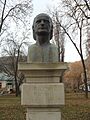
Grigore Vieru in Soroca
-
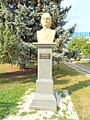
Alley of Classics, Bălți
-
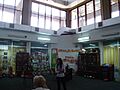
Eurostation of Galați Grigore Vieru library


See Also
- Unification of Moldova and Romania
