
Griot facts for kids


A griot is a special storyteller, historian, musician, and poet from West Africa. They are like living history books! Griots are amazing at sharing stories and history by speaking and singing, which is a very old African tradition.
Instead of writing things down, griots remember stories from the past. They pass these stories from one generation to the next in their families. When they tell a story, they use music and poetry to make it fun and interesting. This is how many stories have lasted for hundreds of years without being written down.
Griots help keep the culture and values of their people alive. For example, in Senegal, many Wolof people learn about their history and traditions from griots. Griots are also important advisors to leaders and help solve disagreements between people. Sometimes, they are called "bards," which means a poet or singer who tells stories.
Contents
- What's in a Name? Understanding Griot Terms
- The Important Role of Griots
- Women Griots: Jelimusow
- How Griots Learn: Apprenticeship and Training
- Griots in the Mali Empire
- Griots in Mande Society
- Musical Instruments Used by Griots
- Historical Changes for Griots
- Present-Day Griots
- Hip Hop and Griots
- Notable Griots
- Images for kids
- See also
What's in a Name? Understanding Griot Terms
The word "griot" might come from the French word guiriot. This word itself may have come from the Portuguese word criado, meaning 'servant'. Griots are most common in northern West Africa.
It's tricky to know the exact origin of the word "griot." That's why griots have many different names in African languages. For example, they are called jèli or jali in Manding languages. In Wolof, they are known as guewel.
The Manding word jeliya means 'musicianhood'. This shows that being a griot is often something passed down in families. The word jali or djali means 'blood'. This name is often used for griots in areas that were once part of the Mali Empire.
The Important Role of Griots
Historically, griots often came from families where storytelling was a special job. They usually married within these families. This helped them pass down their traditions from parents to children. In the past, griot families often worked with royal families. Every king had a griot, and most villages had one too.
Griots would tell stories about everything important in village life. This included births, weddings, and even big events like battles. They were responsible for keeping the history of tribes and families alive. They often used musical instruments while telling their stories.
Griots are still a key part of many West African events, like weddings. They sing and share the family history of the bride and groom. They also help solve disagreements. Because people respected griots, they could talk to everyone involved in a conflict. This helped them start peace talks.
Francis Bebey, a writer, described griots as like medieval European minstrels. He said griots know everything happening and are "living archives" of their people's traditions. He also noted that both men and women can be talented griots.
Griots had the special ability to speak honestly, even to powerful people. They could criticize leaders and wealthy families. This meant they could speak up for those who might not have a voice. Their words were very powerful and respected in society.
Skilled griots are known for using language in clever ways. They can shape their words so that a message has several meanings. This skill helps them to be even more influential. Being able to handle different viewpoints through speech is a sign of a true griot master.
Women Griots: Jelimusow
Women griots are called griottes or Jelimusow in some languages. They are very important in West African storytelling. Like male griots, they are usually born into griot families and start training from a young age.
Even though epic stories are often told by men, women griots also know these traditions well. In many performances, men tell the historical parts. Women sing praise songs and add visual elements to the show.
Jelimusow take part in many community events. These include weddings, naming ceremonies, and public celebrations. At weddings, they help dress the bride and sing songs. These songs share family history and offer advice to the bride about marriage. This helps pass down important traditions.
Some women griots become masters of verbal art. They can earn the title "ngara," which means they have great historical knowledge and performance skills. This title is usually for men, but women can also receive it based on their talent.
When performing, Jelimusow show their power through their actions. They might usually be quiet, but during a performance, they become very expressive. Their voices become loud, and they use strong gestures. This shows their special role as griots. They also wear bright clothes and jewelry to show their unique status.
Today, women griots in Mali are becoming very famous. They perform on big stages both at home and around the world. In other areas, like Senegambia, men still often lead performances. But women griots continue to play vital roles in their communities.
How Griots Learn: Apprenticeship and Training
Griot traditions are passed down through families. Children born into griot families learn from a very young age. They learn about storytelling, music, and family histories. Many believe that musical talent in griot families is inherited, not just learned.
They learn by watching, repeating, and joining in performances. This is different from learning in a classroom. Musical training involves practicing short parts of real songs. These parts are then expanded to build complex musical skills.
Learning orally means more than just memorizing. Griots also learn to interpret and adapt stories. They learn basic stories and music. At the same time, they learn how to change their performances for different audiences and situations.
The type of instrument a griot plays can also be passed down in families. It can also depend on gender. Men often play instruments like the kora, balafon, or ngoni. Women usually focus on singing and praise songs.
Griots in the Mali Empire


The Mali Empire was very powerful in the 1300s. It stretched across a large part of West Africa. Sundiata Keita founded this empire. His adventures are still celebrated in Mali today.
In the famous Epic of Sundiata, Sundiata Keita was given a griot named Balla Fasséké. Balla Fasséké was his advisor. He is seen as the founder of the Kouyaté family of griots, which still exists.
Each important family of griots worked with a higher-ranked family of warrior-kings. These kings were called jatigi. In traditional culture, a griot always had a jatigi, and a jatigi always had a griot.
Griots in Mande Society
In many Mande societies, the jeli (griot) was a historian, advisor, and storyteller. They were like living history books. They kept old stories and traditions alive through song. This tradition was passed down through generations.
The name jeli means "blood" in the Manika language. People believed griots had strong connections to spiritual and social powers. Their words were thought to be powerful enough to recreate history and relationships.
However, griots were not always seen in a positive light. Historically, they were sometimes treated differently from others. For example, in some old traditions, griots were buried in trees. This was to avoid "polluting" the earth. These traditions are changing now. But griots and their families have often faced pressure to marry within their own lines. This helped keep their special roles going.
One famous story griots love to tell is the Epic of Sundiata. It tells the story of Sundiata Keita, who founded the Mali Empire. Another character in the epic is Kamissa, a sorceress who could turn into a buffalo.
Musical Instruments Used by Griots
Griots are not just singers and storytellers. They are often skilled musicians too. They play many instruments. These include stringed instruments like the kora, the khalam (or xalam), the ngoni, the kontigi, and the goje. They also play the balafon and the junjung.
The kora is a long-necked instrument with 21 strings. It looks a bit like a lute. The xalam is similar to the kora but usually has fewer than five strings. Both have bodies made from gourds that help make the sound louder. The ngoni also has five or six strings. The balafon is a wooden xylophone. The goje is a stringed instrument played with a bow, like a fiddle.
The Encyclopædia Britannica says that West African instruments like the konting, khalam, and nkoni might have come from ancient Egypt. The khalam is even thought to be an ancestor of the banjo.
A story about the kora is told by Malian griot Toumani Diabaté. He says one of his ancestors invented the instrument. It used to have 22 strings. One day, he was chasing his fiancée, who ran into a cave. When he came out, he had a kora, but his fiancée was gone. To remember her, he played the kora with 22 strings. When he died, one string was removed in his honor.
.jpg)
Historical Changes for Griots
Traditional vs. Modern Griots
The difference between traditional and modern griots is not always clear. These terms describe different styles, not just old versus new times. "Traditional" often means older instruments and songs. "Modern" means using new technology, bigger groups, and global influences. But often, griots combine both.
In cities like Dakar and Bamako, griots often perform with both traditional instruments and new technology. They use electric guitars and sound systems. These performances happen at weddings, clubs, and international events. Musicians like Toumani Diabaté keep old song traditions alive. But they also add global music styles. For example, Toumani Diabaté's kora recordings use modern studios and technology. This shows how new ideas mix with old traditions in West African music.
Colonial and Post-Colonial Transformations
During the time of French colonial rule, griots faced more rules. Especially in cities, colonial leaders tried to control them. In Saint-Louis, griots were sometimes arrested or told to leave the city. Later, rules limited when and where wandering musicians could perform.
In 1930, colonial officials made rules for griots at weddings. These rules limited drumming and set specific payment amounts. They also banned uninvited performances. This meant that traditional royal leaders became less common as supporters of griots. Many griots then started working with modern politicians. In countries like The Gambia and Mali, politicians formed strong ties with musicians.
After colonial rule ended, griots began performing in new places. They started playing in concert halls and recording studios. This was because there were fewer shows for individual leaders. New technology like microphones and amplifiers also changed how they performed. This allowed griots to play for much larger audiences. These changes show how griots adapted their traditions to new political and global settings.
Present-Day Griots
Many griots live in West Africa today. They are found among the Mande (like the Mandinka and Bambara), Fulɓe, Hausa, Wolof, and many other groups. Some griots have moved to other countries, like the United States or France. They still continue their role as griots there.
Today, performing is one of the most common things a griot does. They have a wider audience than ever before. Many griots now travel internationally to sing and play the kora or other instruments.
An archaeological trip in Guinea-Bissau recently confirmed something griots already knew. There was a powerful kingdom called Kaabu. It existed from the 1500s to the 1800s in what is now Guinea-Bissau and Senegal.
Bakari Sumano was the head of the Association of Bamako Griots in Mali from 1994 to 2003. He was known around the world for showing how important griots are in West African society.
Pape Demba "Paco" Samb is a Senegalese griot of Wolof background. He lives in Delaware and performs in the United States. Around 2013, he performed in charity concerts for SOS Children's Villages. As of 2023, Paco leads McDaniel College's Student African Drum Ensemble. His own band is called the Super Ngewel Ensemble. Paco says that modern griots must follow their history and share their culture.
A griot can sing praises, but they can also speak out against rich or powerful people. Because of this, the respected status of griots has sometimes changed. Some people might see them as trying to get something for themselves.
Malian writer Massa Makan Diabaté came from a griot family. He believed that griots "no longer exist" in the old way. But he thought their traditions could live on through books. His stories mix traditional Mandinka storytelling with Western writing styles.
Hip Hop and Griots
Griot traditions have had a big influence on modern hip hop music. For example, the way rappers speak their songs to a rhythm comes from griot performance style. This, along with griots' storytelling, has led some to compare rappers to "modern griots." However, calling rappers "modern griots" is a topic of debate.
Some people, like sociologist Damon Sajnani, say that the history of griots in West Africa is complex. Rappers like Fadda Freddy see themselves as continuing a tradition of speaking up. But others, like Thiat, believe griots mostly spoke for the powerful. Thomas Hale notes that the term "griot" is seen more positively by Africans living outside Africa.
However, Baruti Kopano argues that rap continues African oral tradition. It celebrates this tradition and expands Black oral storytelling. This view of the griot reflects the perspective of Africans living around the world. Historian Frederick Gooding Jr. also believes rap directly continues the griot tradition. He points to its social messages and its link to African oral history.
Notable Griots


Burkina Faso
- Sotigui Kouyaté
- Dani Kouyate
- Dramane Koné
The Gambia
- Lamin Saho
- Foday Musa Suso
- Papa Susso
- Musa Ngum
- Bai Konte
- Dembo Konte
- Jaliba Kuyateh
- Jali Nyama Suso
- Sona Jobarteh
- Alhaji Dodou Nying Koliyandeh
Ghana
- Osei Korankye
Guinea
- Djanka Tassey Condé
- Sona Tata Conde
- Djeli Moussa Diawara or Jali Musa Jawara
- N'Faly Kouyate
- Sory Kandia Kouyaté
- Mory Kouyate
- Kandia Kouyate
- Djeli Fodé Kouyaté
- Djelikaba Bintou Kouyaté
- Sekouba Bambino Diabaté
- Oumou Dioubaté
- Cheick Hamala Diabaté
- Prince Diabate
- Sayon Camara
- Mamady Azaya Kamissoko
- Aminata Kamissoko
- Mory Kante
- Manamba Kante Bangoura
- Souleymane Bangoura
- Yaya Bangoura
- Mbemba Bangoura
- Yamoussa Bangoura
- Fodé Seydouba Bangoura
Guinea Bissau
- Nino Galissa
- Buli Galissa
Mali
- Abdoulaye Diabaté
- Baba Sissoko
- Ballaké Sissoko
- Lassana Hawa Cissokho
- Bako Dagnon
- Balla Tounkara
- Nainy Diabaté
- Cheick Hamala Diabaté
- Djelimady Tounkara
- Habib Koité
- Mamadou Diabaté
- Sidiki Diabaté
- Bassekou Kouyaté
- Fatou Niame Kouyate
- Toumani Diabaté
- Mamadou Diabaté
- Mamadou Diabate (Dg)
- Mariam Ba Lagaré
- Fatim Diabaté
- Babani Koné
- Bintou Soumbounou
- Oumou Sangaré
- Salif Keita
Mauritania
- Dimi Mint Abba
- Malouma
- Noura Mint Seymali
Nigeria
- Dan Maraya Jos
- Muhamman Shata
Niger
- Etran Finatawa
- Yacouba Moumouni
Senegal
- Ablaye Cissoko
- Soundioulou Kemo Cissoko
- Mansour Seck
- Youssou N'Dour
- Coumba Gawlo Seck
- Thione Seck
- Yande Codou Sene
Images for kids
-
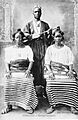
Guinea, circa 1910. A Susu griot poses with his koni (lute) behind two women.
-
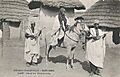
Guinea, circa 1905. Two griots accompany their lord, playing their instruments to announce his presence.
-
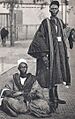
Senegal, early 20th century. A Wolof leader and his griot. The griot is holding an xalam (lute).

.jpg)
.jpg)
See also
 In Spanish: Griot para niños
- Azmari
- Bard
- Extempo
- Filí
- The Griot Museum of Black History
- Gusans
- Oriki
- Rapping
- Skald
- Sub-Saharan African music traditions
- TheGrio
