
Salta tree frog facts for kids
Quick facts for kids Salta tree frog |
|
|---|---|
| Conservation status | |
| Scientific classification | |
| Synonyms | |
|
The Salta tree frog (scientific name: Boana marianitae) is a type of frog that lives in trees. It belongs to the Hylidae family, which is a group of tree frogs. You can find these special frogs in the countries of Argentina and Bolivia in South America.
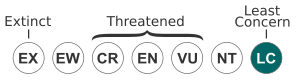
These frogs live in many different kinds of places. They like warm, wet forests, including dry forests, lowland forests, and even mountain forests. They also live near rivers and in marshes, which are like wet, grassy areas. Sadly, the Salta tree frog is facing a challenge: its home is shrinking because of habitat loss.
Contents
What is the Salta Tree Frog?
The Salta tree frog is a small amphibian, meaning it can live both on land and in water. Like all frogs, it starts its life as a tadpole in water before changing into an adult frog. Its scientific name, Boana marianitae, helps scientists around the world know exactly which frog they are talking about. It was first described by a scientist named Carrizo in 1992.
Where Does the Salta Tree Frog Live?
The Salta tree frog makes its home in specific parts of South America.
- Argentina: You can find them in the northern regions of Argentina.
- Bolivia: They also live in parts of Bolivia, especially where there are forests and wetlands.
These frogs need a mix of trees and water to survive. They often live in places where the weather is warm and there is plenty of rain, creating the perfect environment for them to thrive.
What Kind of Habitat Does It Prefer?
The Salta tree frog is quite adaptable when it comes to its home. It can be found in several types of natural places:
- Dry Forests: Forests that don't get as much rain but still have trees.
- Moist Lowland Forests: Warm, wet forests found in lower areas.
- Moist Montane Forests: Wet forests located on the sides of mountains.
- Rivers: They often live near flowing water.
- Freshwater Marshes: Wet, swampy areas with fresh water, sometimes drying up and refilling.
These different habitats provide the frog with food, shelter, and places to lay their eggs.
Why is the Salta Tree Frog Threatened?
The biggest problem for the Salta tree frog is habitat loss. This means that the natural places where they live are disappearing.
- Deforestation: Forests are cut down for farming, building, or other human activities.
- Pollution: Water and land can become polluted, making it unsafe for frogs to live there.
- Climate Change: Changes in weather patterns can affect the amount of rain and temperature, impacting their habitats.
When their homes are destroyed, these frogs have fewer places to live, find food, and reproduce, which can lead to their numbers decreasing. Protecting their habitats is very important to help these frogs survive.
See also
 In Spanish: Hypsiboas marianitae para niños
