
Inflammatory bowel disease facts for kids
Quick facts for kids Inflammatory bowel diseases |
|
|---|---|
 |
|
| Micrograph showing inflammation of the large bowel. | |
| Symptoms | Abdominal pain, diarrhea, weight loss, fatigue |
| Duration | Long-term (chronic) |
| Types | Crohn's disease, ulcerative colitis |
| Causes | Genetics, immune system, environment |
| Diagnostic method | Colonoscopy, stool tests, blood tests |
| Similar conditions | Gastroenteritis, irritable bowel syndrome, celiac disease |
| Treatment | Medication, surgery, diet changes |
| Medication | Anti-inflammatories, immunosuppressants |
| Prognosis | Manageable with treatment |
| Frequency | Common worldwide |
| Deaths | Rare |
Inflammatory bowel disease (IBD) is a term used for conditions that cause long-term inflammation in the digestive system. The digestive system is responsible for breaking down food and absorbing nutrients. The two main types of IBD are Crohn's disease and ulcerative colitis (UC).
In Crohn's disease, inflammation can happen anywhere from the mouth to the anus, but it mostly affects the small intestine. In ulcerative colitis, the inflammation is only in the colon (large intestine) and the rectum. These diseases can be painful and disruptive, but with the right treatment, people can live normal lives.
Contents
Signs and symptoms
Even though Crohn's disease and ulcerative colitis affect different parts of the body, they share many symptoms. These symptoms can come and go. When symptoms are active, it is called a "flare-up." When they go away, it is called "remission."
Common symptoms include:
- Stomach pain and cramping
- Diarrhea (frequent, loose poop)
- Blood in the stool (poop)
- Feeling very tired (fatigue)
- Weight loss without trying
- Reduced appetite
Some people may also have problems outside of the digestive system. This can include joint pain (arthritis), skin rashes, or eye irritation. Anemia (low iron in the blood) is also common because of blood loss or the body not absorbing enough iron from food.
Causes of IBD
Doctors and scientists do not know the exact cause of IBD. It is likely a combination of several factors working together. It is not caused by stress or eating the wrong foods, although these things can make symptoms worse.
The immune system
The immune system protects the body from germs. In people with IBD, the immune system makes a mistake. It attacks the healthy cells in the digestive tract as if they were harmful invaders. This attack causes inflammation, swelling, and sores (ulcers).
Genetics and family history
IBD can run in families. If a parent or sibling has the disease, a person is more likely to get it. Scientists have found over 200 changes in genes (DNA) that are linked to IBD. However, many people with these gene changes never develop the disease.
The gut microbiome
The intestines are home to trillions of tiny bacteria and other microorganisms, known as the microbiota or "gut flora." Most of these are helpful and keep the gut healthy. In people with IBD, the balance of these bacteria is often different. There might be fewer "good" bacteria and more "bad" bacteria. This imbalance is called dysbiosis.
Environmental factors
Where a person lives and their lifestyle can play a role. IBD is more common in developed countries and urban areas. Factors like diet, pollution, and exposure to certain germs might trigger the disease in people who have the genetic risk.
Diagnosing the condition
To find out if someone has IBD, doctors use several tests.
- Stool tests: Doctors check a sample of poop for signs of inflammation.
- Blood tests: These check for anemia or signs of infection.
- Endoscopy: This is the most important test. A doctor uses a thin, flexible tube with a camera to look inside the intestines.
- A colonoscopy looks at the large intestine.
- An upper endoscopy looks at the stomach and small intestine.
- Biopsy: During an endoscopy, the doctor might take a tiny piece of tissue (a biopsy) to look at under a microscope.
Types of IBD
There are two main forms of IBD.
Crohn's disease
Crohn's disease can affect any part of the gut, but it usually happens in the end of the small intestine and the start of the colon. The inflammation can go deep into the layers of the bowel wall. It can also leave healthy areas in between inflamed areas, which are called "skip lesions."
Ulcerative colitis
Ulcerative colitis only affects the colon and the rectum. The inflammation is usually continuous, meaning there are no healthy patches in the inflamed area. It only affects the inner lining of the bowel, not the deep layers.
Indeterminate colitis
Sometimes, it is hard to tell if a person has Crohn's or UC because the symptoms are very similar. In these cases, doctors might call it "indeterminate colitis."
Treatments and medicine
There is currently no cure for IBD, but treatments help reduce inflammation and stop symptoms. The goal is to achieve remission (a period with no symptoms) and keep it that way.
Medicines
Doctors prescribe different types of medicines depending on how severe the disease is.
- Anti-inflammatory drugs: These are often the first step for mild symptoms.
- Steroids: Drugs that work quickly to stop severe inflammation during a flare-up. They are usually not used for a long time because of side effects.
- Immunosuppressants: These medicines calm down the immune system to stop it from attacking the bowel.
- Biologics: These are strong medicines given by injection or IV. They target specific proteins in the immune system that cause inflammation.
Surgery
If medicines do not work, or if there are complications, surgery might be needed.
- For Ulcerative Colitis, surgery can remove the entire colon. This essentially "cures" the disease in the colon, but the person will need a new way to get rid of waste. This might involve an ileostomy (a bag worn on the stomach) or creating an internal pouch.
- For Crohn's Disease, surgery can remove damaged parts of the intestine. However, the disease can return in healthy parts of the gut later on.
Diet and nutrition
Food does not cause IBD, but certain foods can make symptoms worse during a flare-up.
- Some people feel better eating smaller meals.
- A low-fiber diet might help when the gut is very inflamed.
- Drinking plenty of water is important.
- Doctors might recommend vitamins if the body is not absorbing enough nutrients.
- Special liquid diets (enteral nutrition) are sometimes used, especially for children, to give the bowel a rest while providing nutrients.
Living with IBD
Living with a chronic illness like IBD can be challenging, especially for young people. It can affect school, sports, and social life.
Emotional well-being
It is normal to feel sad, anxious, or frustrated. The unpredictability of flare-ups can be stressful. Support from family, friends, and doctors is very important. Some people find it helpful to talk to a counselor or join a support group.
School and activities
Students with IBD might need to use the restroom frequently or urgently. Schools can make accommodations, like allowing unlimited bathroom breaks or stopping the clock during tests if a break is needed. With the right treatment, most young people can participate in sports and hobbies just like their friends.
Prognosis
IBD is a lifelong condition, but it is rarely fatal. Most people have long periods of good health (remission) mixed with times of illness (relapse). Regular check-ups are important to monitor the disease and prevent complications. People with IBD have a slightly higher risk of colon cancer, so doctors will check the colon more often as they get older.
How common is IBD?
Millions of people around the world have IBD. It is becoming more common in many countries.
- It affects men and women equally.
- It is often diagnosed in teenagers and young adults (ages 15 to 35), but it can happen at any age.
- Countries in North America and Europe have higher rates of IBD, but numbers are rising in Asia and other regions.
Future research
Scientists are working hard to find better treatments and a cure.
- Microbiome research: Researchers are studying how to fix the balance of bacteria in the gut. This includes using probiotics (good bacteria) or fecal transplants (transferring healthy bacteria to a patient).
- Stem cells: Scientists are looking at whether stem cells can help repair damaged tissue in the intestines.
- New medicines: New drugs are being developed that target specific parts of the immune system with fewer side effects.
In other species
Animals like dogs can also get IBD. Just like in humans, it is caused by a mix of genetics and the environment. Dogs with IBD might have vomiting or diarrhea. Veterinarians treat them with special diets and medicines to reduce inflammation.
See also
- Digestive system
- Autoimmune disease
- World Inflammatory Bowel Disease Day
Images for kids
-
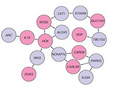
A map of genes associated with IBD.

