
Jim Crow laws facts for kids

The Jim Crow laws were a set of state and local laws, mostly in the Southern United States, that enforced racial segregation and discrimination against African Americans from the late 1800s until the mid-1960s. These laws made it legal to separate people by race in almost all public places and took away many rights from African Americans, like the right to vote. They created a system where African Americans were treated as second-class citizens, meaning they didn't have the same rights or opportunities as white Americans.
These laws started after the Civil War and a time called the Reconstruction Era. They forced Black and white people to be separate in public places. Black people were often treated much worse than white people. This separation happened in the military, schools, restaurants, on buses, and even in the types of jobs Black people could get.
In 1954, the US Supreme Court decided that separating students in state schools was against the US Constitution. This important decision is known as Brown v. Board of Education. Other Jim Crow laws were ended by the Civil Rights Act of 1964 and the Voting Rights Act of 1965. Groups like the National Association for the Advancement of Colored People (NAACP) worked hard to fight against these unfair laws.
Contents
What Does "Jim Crow" Mean?
The name "Jim Crow law" was first used in a newspaper in 1884. The term "Jim Crow" itself came from a popular song and dance from 1828. A white actor named Thomas D. Rice performed it in blackface, which was a disrespectful way of making fun of Black people. Because of this actor's fame, "Jim Crow" became a mean way to refer to Black people by 1838. When Southern states later passed laws to separate Black Americans, these laws became known as Jim Crow laws.
How Did These Laws Begin?

After the American Civil War ended slavery, there was a period called the Reconstruction Era (1865-1877) where federal laws tried to protect the civil rights of newly freed African Americans. However, after 1877, federal troops left the South, and white leaders regained control of state governments. These leaders passed new laws, the Jim Crow laws, to take away the progress African Americans had made. Groups sometimes used violence and threats to stop African Americans from voting and participating in government.
What Did Jim Crow Laws Do?
Jim Crow laws meant that African Americans and white Americans were kept separate in almost every part of life. This was called racial segregation. It included:
- Laws that stopped Black people from voting. This was called disenfranchisement. Because they could not vote, Black people also could not serve on juries.
- Laws that required racial segregation, meaning Black and white people had to be separated. For instance, Black people could not:
- Go to the same schools, restaurants, or hospitals as white people.
- Use the same bathrooms or drink from the same water fountains as white people.
- Sit in the front seats of buses.
- Laws made it illegal for people of different races to marry each other.
Important Court Cases

In 1896, the United States Supreme Court made a ruling in a case called Plessy v. Ferguson. The Court said that these segregation laws were legal. They claimed that having things "separate but equal" was acceptable. However, in the South, things were separate but never equal. Places for Black people, like schools and libraries, received much less money and were not as good as places for white people.
Many years later, the NAACP (National Association for the Advancement of Colored People) challenged segregation again. In 1954, the Supreme Court made a landmark decision Brown v. Board of Education ruling that segregation in public schools was unconstitutional. This overturned the "separate but equal" idea for schools and was a huge step forward.
Even before the Brown v. Board of Education decision, many brave individuals and groups were fighting against Jim Crow.
- NAACP: Worked tirelessly through legal challenges and public protests.
- World War II: African American soldiers returned home determined to fight for their own freedom and equality.
- Rosa Parks and the Montgomery Bus Boycott (1955): Rosa Parks famously refused to give up her seat on a bus. Her act sparked the Montgomery Bus Boycott, led by Dr. Martin Luther King Jr., which eventually led to the desegregation of buses in Montgomery.
- Civil Rights Movement: The 1950s and 1960s saw a powerful Civil Rights Movement. People like Dr. Martin Luther King Jr. organized peaceful protests and marches. These events, often shown on television, helped the rest of the country see the unfairness and brutality of Jim Crow. Protests sometimes faced violence, including bombings and tragic losses of life, which shocked many people across the nation.
How Did Jim Crow Laws End?
The widespread protests and legal challenges finally led to big changes in the law.
- Civil Rights Act of 1964: This major law, signed by President Lyndon B. Johnson, made it illegal to discriminate based on race, color, religion, sex, or national origin in public places (like restaurants, hotels, and stores) and in workplaces. It was a huge victory against Jim Crow.
- Voting Rights Act of 1965: This law, also signed by President Johnson, removed the barriers that had prevented African Americans from voting. It allowed federal officials to oversee voter registration and elections in areas where discrimination had been a problem, ensuring all eligible citizens could vote.
These two laws, along with other court decisions, effectively ended the legal system of Jim Crow.
Influence and Aftermath
The Jim Crow era had a lasting impact on American society:
- The Great Migration: Many African Americans moved to cities in the North, Midwest, and West during the first half of the 1900s, seeking better lives and more freedom.
- Sports: African American athletes faced discrimination. Jackie Robinson famously broke the "color line" in baseball in 1947, paving the way for others.
Even today, people talk about the legacy of Jim Crow. For example, some laws that take away voting rights from people convicted of certain crimes are seen by some as a modern-day echo of Jim Crow, because they historically affected minority communities more.
Remembering Jim Crow
To help people learn about this important part of history, places like the Jim Crow Museum of Racist Memorabilia at Ferris State University in Michigan collect everyday items that promoted racial segregation or negative stereotypes. These collections help educate people about the cultural influence of Jim Crow and why it's so important to fight against prejudice and discrimination.
The Jim Crow laws represent a difficult but crucial chapter in American history, reminding us of the importance of equality, justice, and standing up for what is right.
Images for kids
-
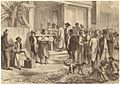
Freedmen voting in New Orleans, 1867
-
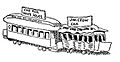
A 1904 drawing showing "White" and "Jim Crow" rail cars. Even though the law said things were "separate but equal," Black people were given worse facilities and treatment.
-
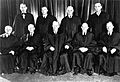
In the important case Brown v. Board of Education (1954), the U.S. Supreme Court decided that separating students in public schools was against the Constitution.


See also
 In Spanish: Leyes Jim Crow para niños
