
Malachite facts for kids
Quick facts for kids Malachite |
|
|---|---|

Malachite from the Democratic Republic of the Congo
|
|
| General | |
| Category | Carbonate mineral |
| Formula (repeating unit) |
Cu2CO3(OH)2 |
| Strunz classification | 5.BA.10 |
| Crystal symmetry | P21/a |
| Identification | |
| Formula mass | 221.1 g/mol |
| Color | Bright green, dark green, blackish green, with crystals deeper shades of green, even very dark to nearly black commonly banded in masses; green to yellowish green in transmitted light |
| Crystal habit | Massive, botryoidal, stalactitic, crystals are acicular to tabular prismatic |
| Crystal system | Monoclinic |
| Twinning | Common as contact or penetration twins on {100} and {201}. Polysynthetic twinning also present. |
| Cleavage | Perfect on {201} fair on {010} |
| Fracture | Subconchoidal to uneven |
| Tenacity | Brittle |
| Mohs scale hardness | 3.5–4 |
| Luster | Adamantine to vitreous; silky if fibrous; dull to earthy if massive |
| Streak | light green |
| Diaphaneity | Translucent to opaque |
| Specific gravity | 3.6–4 |
| Optical properties | Biaxial (–) |
| Refractive index | nα = 1.655 nβ = 1.875 nγ = 1.909 |
| Birefringence | δ = 0.254 |
Malachite is a beautiful green mineral. It is a type of copper carbonate hydroxide. Its chemical formula is Cu2CO3(OH)2. This mineral is opaque and often shows lovely green bands.
Malachite usually forms in interesting shapes. You might see it as rounded bumps, fibers, or stalactites. It grows in cracks and deep underground spaces. This happens where water and special fluids help the chemicals come together. Individual crystals are rare, but they can be slender or needle-like.
Contents
What's in a Name? The Story of Malachite

The name Malachite comes from an old Greek word. It means "mallow-green stone." This is because the mineral looks like the leaves of the mallow plant. The element copper (Cu2+) gives malachite its vibrant green color.
People started mining malachite a very long time ago. It was mined near the Isthmus of Suez and in the Sinai region as early as 4000 BCE. In Britain, people extensively mined it at the Great Orme Mines about 3,800 years ago. They used simple stone and bone tools. Mining there stopped around 600 BCE.
Archaeologists found that malachite was also mined in the Timna Valley in modern-day Israel. This happened for more than 3,000 years. People used it to get copper. Since then, malachite has been a popular stone for decoration and as a gemstone.
Malachite's green color sometimes confused early miners. They thought a similar-looking green mineral, called kupfernickel, was copper ore. But it was not! These attempts to get copper from kupfernickel always failed. Later, in 1751, a Swedish scientist named Baron Axel Fredrik Cronstedt discovered a new metal inside kupfernickel. He named this new metal nickel, after the "nickel" part of the old name.
Where Malachite Grows

Malachite often forms when other copper minerals change over time. This process is called weathering and oxidation. You often find it with azurite, which is another blue copper mineral. Malachite is more common than azurite. It is typically found near copper deposits, especially where limestone is present. Limestone provides the carbonate needed for malachite to form.
Large amounts of malachite were once mined in the Urals region of Russia. While Ural malachite is not being mined as much today, new deposits might be found. Malachite is found all over the world. This includes the Democratic Republic of the Congo, Gabon, Zambia, Namibia, Mexico, and France. You can also find it in Israel and the Southwestern United States, especially in Arizona.
Sometimes, a green layer forms on old copper statues or roofs. This layer is called patina. While it was once thought to be malachite, it's often other copper minerals. Scientists can also create malachite in a lab. This man-made version is called basic copper carbonate.
Malachite's Many Uses

Malachite was used as a green paint pigment for a very long time. People used it from ancient times until about the year 1800. This natural green pigment was sensitive to acids and varied in color. Today, synthetic green colors have mostly replaced it.
Malachite is also very popular for decorative purposes. For example, the Hermitage Museum in Russia has a famous Malachite Room. This room features a huge malachite vase. The Malachite Room in Castillo de Chapultepec in Mexico City is another beautiful example. Russian Tsars used malachite to decorate their castles. They used it for wall panels and beautiful inlaid designs. The base of the FIFA World Cup Trophy even has two layers of malachite.
Malachite's Ancient Beliefs
People in the past believed malachite had special powers. In 17th-century Spain, some thought a child wearing malachite would sleep better. They also believed it would keep bad spirits away. An old writer named Marbodus suggested malachite as a charm for young people. He said it offered protection and helped with sleep.
Historically, people wore malachite for protection from lightning and diseases. They also believed it brought good health, success, and lasting affection. In the Middle Ages, some wore it with a sun symbol. This was thought to maintain health and prevent sadness.
In ancient Egypt, the color green was very important. It was linked to new life, fertility, and even resurrection. Egyptians believed in an eternal paradise after death. They called it the "Field of Malachite." This paradise was like their lives but without any pain. Green pigment from malachite was often used for eye makeup during burial rituals.
Getting Copper from Malachite

Malachite is a copper ore, meaning it contains copper. One simple way to get copper from malachite is by heating it. This process is called smelting. It involves adding heat and a carbon source, like coal.
First, heating the malachite causes it to break down. It turns from green to black. This creates carbon dioxide gas and copper oxide.
- Copper carbonate + heat → carbon dioxide + copper oxide
Then, adding carbon to the copper oxide changes it again. The black copper oxide turns into shiny copper metal.
- Copper oxide + carbon → carbon dioxide + copper
Today, there are also newer ways to get copper from malachite. These methods use liquid solutions, like sulfuric acid. This "wet" process is called hydrometallurgy. Malachite dissolves easily in dilute acids. Using sulfuric acid helps extract copper without needing high heat.
Protecting Our Planet: Responsible Mining
Mining for malachite, whether for decoration or for copper, needs careful planning. It's important to protect natural habitats and the many different kinds of wildlife. Mining companies work hard to keep water sources clean and safe for everyone. They also manage waste properly to prevent any harm to the environment.
Both older and newer mining methods have impacts. However, modern methods like hydrometallurgy often have stricter rules. These rules help save water and manage waste better. Scientists are always researching new and greener ways to mine. They want to find even better alternatives to protect our planet.
Images for kids
-
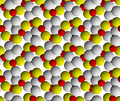
View along c axis of the crystal structure of malachite
-
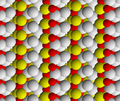
View along a axis of malachite crystal structure
-
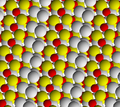
View along b axis of malachite crystal structure
-
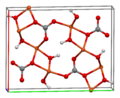
Unit cell of malachite
-
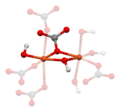
Formula unit and its coordination environment
-
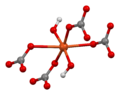
Coordination environment of copper #1
-
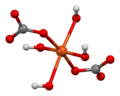
Coordination environment of copper #2
-
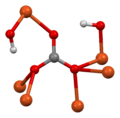
Coordination environment of carbonate
-
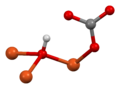
Coordination environment of hydroxide #1
-
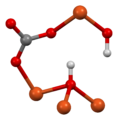
Coordination environment of hydroxide #2
-
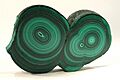
Slice through a double stalactite, from Kolwezi, Democratic Republic of the Congo. Size 5.9 × 3.9 × 0.7 cm.
-
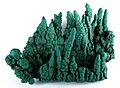
Malachite stalactites (to 9 cm height), from Kasompi Mine, Katanga Province, Democratic Republic of the Congo. Size: 21.6×16.0×11.9 cm.
-
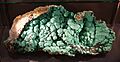
Sample of malachite found at Kaluku Luku Mine, Lubumbashi, Shaba, Congo
-
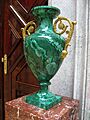
Vase in malachite in the Hermitage Museum, St Petersburg
-
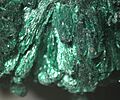
Malachite, image taken under a stereoscopic microscope
-
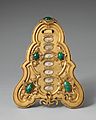
British calendar, 1851, gilt bronze and malachite, height: 20.3 cm, Metropolitan Museum of Art (New York City)
-
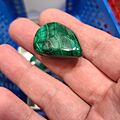
Malachite at Kaleideum Children's Museum
-
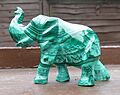
Elephant carved from malachite. Length 11 cm.
-
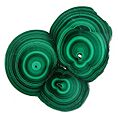
A polished slice of malachite through three intergrown stalactites with bulls-eye banding


.jpg)

_MET_DP-13486-011.jpg)


See also
- Aventurine
- Brochantite
- Chrysocolla
- Dioptase
- Green pigments
- List of inorganic pigments
- Plancheite
- Pseudomalachite
- Turquoise
- Verdigris
