
Military recruit training facts for kids

Military basic training, often called boot camp, is the first step for new members joining the armed forces. It is a challenging program where young people learn important skills. They also develop teamwork and discipline. This training helps them prepare for military life.
Contents
Learning Essential Skills for Military Service
Initial military training is a focused program. It usually lasts several weeks or months. Its goal is to teach new recruits the rules and tasks of the armed forces. Key parts of this training include marching drills, inspections, and physical exercise. Recruits also learn how to use weapons safely. The training often ends with a special graduation parade.
The training helps recruits adapt to military life. It teaches them to work together and follow instructions. This prepares them for challenging situations. Recruits learn to be part of a team. They understand that working together is key to success.
Building Team Spirit and Identity

When training begins, recruits live in a structured environment. This helps them focus on their new roles. They often receive uniforms and have their hair cut short. This helps everyone feel like part of the same team. It also helps them focus on their training.
Learning Discipline and Teamwork
Recruits follow a strict daily schedule. This teaches them discipline and order. For example, they learn how to make their beds perfectly. They also learn to keep their gear neat. Following these rules helps them work together smoothly.

Throughout training, recruits learn to follow military rules. They also learn to work as a strong team. Marching drills are a big part of this. These drills teach recruits to move together. They also learn to respond quickly to commands. This helps build a strong team spirit.
Overcoming Challenges and Building Resilience
Training includes many challenging exercises. These are designed to build mental and physical strength. Recruits learn to push themselves. They also learn to support their teammates. This helps them become resilient. It teaches them to handle tough situations.
Working together under pressure is important. It helps recruits form strong bonds. They learn to trust each other. This strong teamwork is vital for military missions. It helps everyone feel safe and supported.
Forming Strong Bonds and Pride
Recruits often form very close friendships. These bonds help them through tough training. They develop a strong "we-feeling" with their team. This feeling is often stronger than friendships they had before. It helps them rely on each other.
Recruits also learn to be proud of their military unit. They learn about its history and symbols. This pride helps them feel connected. It makes them feel part of something important.
Developing Practical Skills and Fitness
Recruits learn many practical skills. These include military tactics and first aid. They also learn how to manage equipment in the field. Safe use of weapons is a key part of this training.
Physical fitness is also a major focus. Recruits exercise daily to become strong and healthy. This prepares their bodies for the demands of military service. However, intense training can sometimes lead to injuries.
Graduation and Moving Forward

Recruits who finish their training celebrate with a graduation parade. Their families and friends often attend. After graduation, they move on to more specialized training. This prepares them for their specific jobs.
Some recruits may leave training early. This can happen for different reasons. Sometimes it's due to injuries or not meeting standards. Others might decide military life isn't for them.
Different Types of Recruit Training
Basic training can vary a lot. It depends on the country and the military branch. Some countries have volunteer forces. Others require citizens to serve.
Training also differs for each part of the military:
- Army and Marine Corps recruits learn basic marksmanship. They also learn field skills and physical fitness. First aid and survival techniques are also taught.
- Navy and Coast Guard training focuses on water survival. It also includes basic sailing skills. Shipboard firefighting and engineering are important lessons.
- Air Force and Space Force training includes physical fitness. They also have classroom lessons. Basic flying or space operations and first aid are covered.
United States Military Training Overview
In the United States, each military branch has its own basic training.
- The U.S. Army calls it Basic Combat Training (BCT). It lasts about ten weeks. Recruits learn combat skills and physical fitness.
- The U.S. Marine Corps calls it Recruit Training or "Boot Camp." This is a 13-week program. Marines learn discipline, combat skills, and teamwork.
- The U.S. Navy also calls it "Boot Camp." It takes about eight weeks. Sailors learn seamanship, water survival, and shipboard skills.
- The U.S. Air Force and U.S. Space Force call it Basic Military Training (BMT). It is about seven and a half weeks long. Airmen and Guardians learn core values, physical fitness, and basic combat skills.
- The U.S. Coast Guard also uses "Boot Camp." This training lasts eight weeks. Recruits learn seamanship, military conduct, and firefighting.
After basic training, recruits go to specialized schools. There, they learn skills for their specific jobs.
U.S. Army Basic Combat Training

U.S. Army recruits go to Basic Combat Training (BCT). This training teaches them to be soldiers. It includes learning to use rifles and navigate. They also learn first aid and how to work in a team. Physical training is a big part of BCT.
BCT has three phases. In the first phase, recruits learn basic rules. They also get their standard weapon. The second phase focuses on firing different weapons. Recruits also tackle obstacle courses. The final phase is the most challenging. It includes field exercises and night operations. After BCT, recruits become soldiers. They then go to Advanced Individual Training (AIT) for their job.
U.S. Marine Corps Recruit Training

Marine Corps Recruit Training is a 13-week program. It is divided into three phases. Recruits learn about Marine Corps life. They also do intense physical training. Marksmanship with the M16A4 rifle is a key skill. Field training teaches them teamwork and navigation. The training ends with a challenging event called the Crucible. After this, they earn the title of Marine. They then go to the School of Infantry for more training.

The U.S. Navy's boot camp is at Great Lakes, Illinois. It lasts about eight weeks. Recruits learn military drills and basic seamanship. Water survival and first aid are also taught. They learn about damage control and firefighting on ships. A final test called "Battle Stations" checks their skills. After boot camp, new sailors go to "A" Schools. There, they learn their specific Navy jobs.
U.S. Air and Space Forces Basic Military Training

Basic Military Training (BMT) for the U.S. Air and Space Forces is seven and a half weeks long. It takes place in San Antonio, Texas. Trainees learn Air Force values and discipline. They also have academic classes and field training. This includes basic marksmanship and first aid. After BMT, Airmen and Guardians go to technical school. They learn the skills for their specific roles.
U.S. Coast Guard Recruit Training

U.S. Coast Guard recruit training is in Cape May, New Jersey. It lasts eight weeks. Recruits learn basic seamanship and military conduct. They also learn firefighting skills. The Coast Guard is part of the Department of Homeland Security. However, it is also a branch of the U.S. Armed Forces. After training, recruits can choose their job. They then attend a specialized "A" school.
Images for kids
-
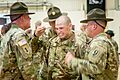
US Army drill sergeants training a recruit
-
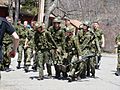
Royal Military College of Canada cadets compete in the prestigious Sandhurst Competition.


See also
- Military education and training
- Military Academy
- Officer Candidate School
- Military recruitment
- Military service
