
Borzoi facts for kids
 |
|||||||||||||||||||||||||||
| Other names |
|
||||||||||||||||||||||||||
|---|---|---|---|---|---|---|---|---|---|---|---|---|---|---|---|---|---|---|---|---|---|---|---|---|---|---|---|
| Origin | Russia | ||||||||||||||||||||||||||
|
|||||||||||||||||||||||||||
|
|||||||||||||||||||||||||||
| Domestic dog (Canis lupus familiaris) | |||||||||||||||||||||||||||
The Borzoi, also known as the Russian Hunting Sighthound, is a beautiful and elegant dog breed from Russia. These dogs are famous for their speed and graceful looks. Historically, they were used for hunting fast animals, including wolves, in Russia. Before 1936, this breed was often called the Russian Wolfhound.
Contents
What's in a Name?
The name "Borzoi" comes from an old Russian word meaning 'fast'. Russians used to call these dogs "Borzaya sobaka," which means 'fast dog'. Over time, the word "sobaka" (dog) was often dropped. The word "psovaya" in their full Russian name, "Russkaya psovaya borzaya," describes their beautiful, wavy, and silky coat. This name perfectly describes these quick and elegant dogs.
A Look Back in Time: Borzoi History
The Borzoi breed first appeared in Russia during the 1500s. They were created by mixing fast Saluki dogs and other European sighthounds with Russian breeds that had thick coats. This mix gave them both speed and protection from the cold.
Borzois were very popular with the Russian rulers, called Tsars, for many centuries. Before the Russian Revolution in 1917, you couldn't buy a Borzoi. Instead, they were given as special gifts from the Tsar. A famous Russian leader, Grand Duke Nicholas Nicolaievich, had a huge estate where he bred many Borzoi dogs.
The official international dog organization, the Fédération Cynologique Internationale, fully recognized the Russkaya Psovaya Borzaya in 1956.
-
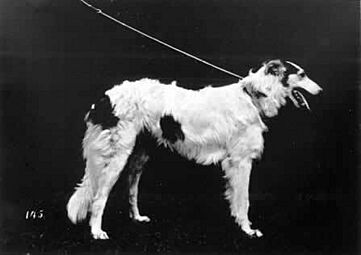
Borzoi owned by Max Hartenstein, Berlin, Germany, 1879
-
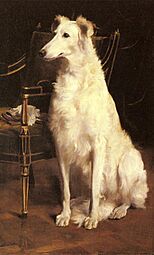
Borzoi by a Chair (St George Hare, 19th century)
-
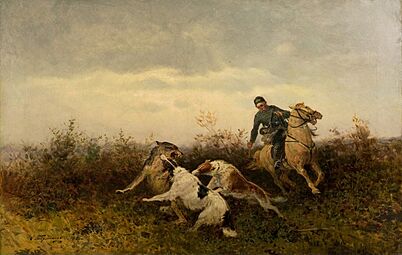
Wolf hunting with borzois (1904), Efim A. Tikhmenev
-
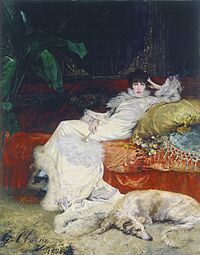
Sarah Bernhardt, portrait by Georges Clairin


_Wolf_hunt_with_borzois.jpg)

How to Spot a Borzoi: Appearance
What Does a Borzoi Look Like?
Borzois are large, elegant sighthounds. They look a bit like other breeds from Central Asia, such as the Afghan hound. These dogs come in many different colors. Their coat is silky and lies flat, often with gentle waves or slight curls.
The top layer of their coat is long and flat, with varying amounts of waviness. They have a soft undercoat that grows thicker in winter or cold places. This undercoat helps keep them warm. When the weather gets hot, they shed this extra fur to stay cool. Borzois also have a lovely frill of fur around their neck and longer hair on their back legs and tail. They are known for their very long snouts, which likely came from their Greyhound ancestors.
Borzoi Personality and Training
Borzois are known for being affectionate and calm dogs. They are also very athletic and love to run.
When it comes to learning new things, Borzois are smart but can get bored easily if tasks are repeated too much. This means their training needs to be interesting and fun! With the right kind of training, Borzois can do very well in dog sports like obedience and agility trials. They enjoy challenges and can be motivated to learn many different skills.
Coat Gallery
- Coat colours
-
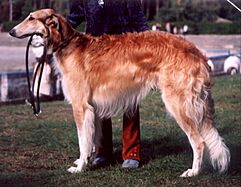
Red
-
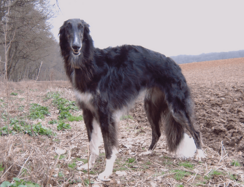
Black
-
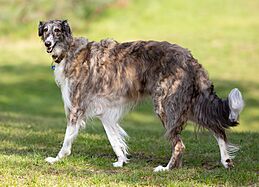
Brindle
-
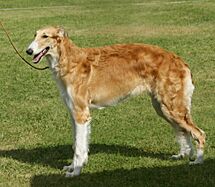
Red and white
-
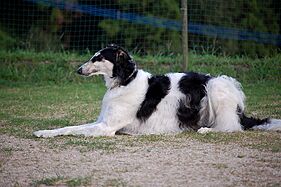
Black and white
-
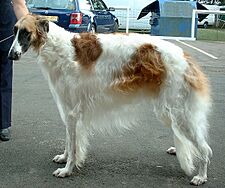
White and brown
-
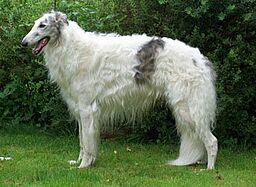
White and grey
-
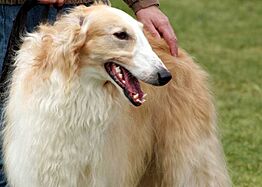
White and sandy


Lifespan
A UK study in 2024 found that Borzois typically live for about 12 years. This is similar to the average lifespan for other purebred dogs.
Keeping Borzois Healthy
Just like all dog breeds, Borzois have specific health considerations.
Some studies have shown that Borzois can sometimes have heart conditions. For example, an American study found that some healthy Borzois had heart murmurs or mild issues with their heart valves. It's important for Borzoi owners to work with their veterinarians to keep their dogs healthy and happy. Regular check-ups help ensure these beautiful dogs live long and active lives.
See also
 In Spanish: Borzoi para niños
