
Botolph Wharf facts for kids
Botolph Wharf, also known as St Botolph's Wharf, was an important dock in the City of London. It was located on the north side of the River Thames, not far from London Bridge. This wharf was positioned between Cox and Hammond's Quay and Nicholson's Wharf. You could reach it from Thames Street on the land side.
Botolph Wharf was used for over a thousand years. It was sadly destroyed during the Second World War. Today, an office building from the late 1980s stands where the old wharf used to be.
Contents
A Long History: From Roman Times to Kings

Botolph Wharf was one of London's oldest docks. Its history goes all the way back to Anglo-Saxon times. It was even part of the old Roman waterfront. By the 800s, this area became a key trading spot for the Saxon city called Lundenburh.
Around the year 1039, the wharf was likely built using planks and timbers. These materials helped to create a strong bank made of rubble and clay. The wharf might have been named after the nearby church, St Botolph, Billingsgate.
The wharf was one of twenty "Legal Quays" in the Port of London. These were special places where ships were officially allowed to load and unload goods. This rule was set in 1559.
A city gate, called St Botolph's Gate, stood near the wharf. It led to the north end of Old London Bridge. In the 1300s, the wharf was sometimes closed at night. During the day, only those who paid a special fee could use it. By 1419, a book of laws called the Liber Albus said that all boats going to Gravesend had to load there. It was also where catches of fish like smelts were brought ashore.
Busy Times: Trade and Travel

In the 1500s, the Muscovy Company used Botolph Wharf for trade between England and Russia. A century later, in 1666, the Corporation of London owned it and leased it to Sir Josiah Child. By the mid-1700s, the East India Company even had a warehouse there.
Botolph Wharf was not just for cargo. It was also a popular place for passengers to start or end their journeys. In 1819, a packet boat traveled from the wharf to Gravesend. From Gravesend, people could connect to Ostend in Belgium. By 1834, a hoy boat regularly traveled from the wharf to Whitstable. Many travelers coming from Europe by river boat arrived in London at Botolph Wharf. There was even a "public kitchen" nearby to offer food to hungry arrivals.
In 1805, the British government bought all the Legal Quays, including Botolph Wharf. It was valued at £23,255. In 1832, the wharf was leased back to a private owner.
In the 1930s, Nicholson's Wharves Ltd bought Botolph Wharf. This company already ran the neighboring Nicholson's Wharf. The two wharves then worked together. They handled dried and fresh fruits, canned goods, and other foods from the Mediterranean. Large ships could dock there using a special floating platform.
Both Botolph and Nicholson's Wharves were destroyed during the Second World War. They were hit by a V-1 flying bomb. For many years after the war, the empty site was used as a truck parking area for Billingsgate Fish Market.
What's There Now?
The site of Botolph Wharf was redeveloped in the late 1980s. Before building started, archaeologists from the Museum of London Archaeology Service dug up the area. They found many interesting things, including a trumpet from the 1300s! Today, a modern office building with glass fronts stands on the site. It was designed by Covell Matthews Wheatley.
Images for kids
-
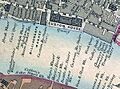
This map from 1862 shows London's Legal Quays. Botolph Wharf is in the top left corner.
-
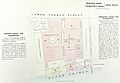
A plan from 1857 showing Botolph and Nicholson's Wharves.
