
North Park phacelia facts for kids
Quick facts for kids North Park phacelia |
|
|---|---|
 |
|
| Conservation status | |
| Scientific classification | |
| Genus: |
Phacelia
|
| Species: |
formosula
|

The Phacelia formosula, also known as the North Park phacelia, is a very rare flowering plant. It belongs to the borage family. This plant is found only in one specific area: the North Park region of Jackson County in the state of Colorado, United States.
It is considered an endangered species by the United States government. This means it is at high risk of disappearing forever. Many human activities, like using motorcycles and off-road vehicles in its home, threaten its survival.
Contents
What is the North Park Phacelia?
This plant is a type of herb that lives for two years. It grows to be about 22 centimeters (around 9 inches) tall. Its leaves have deep cuts, almost like they are divided into many small parts.
Flowers and Pollination
The flowers grow in a special shape called a scorpioid cyme. This means the branches holding the flowers curve like a scorpion's tail. The plant blooms in July and August. Tiny insects help the flowers make seeds by carrying pollen from one flower to another. One of these helpful insects is a type of pollen wasp called Pseudomasaris zonalis.
Where Does the North Park Phacelia Live?
The North Park phacelia only grows in the North Park area of northern Colorado. This area is a large basin surrounded by mountains. The plant likes to grow in ravines and on bare slopes where rocks are eroding (wearing away).
The soil where it lives is sandy and rust-colored. It also contains coal. Not many other plants can grow on these special slopes.
Why is the North Park Phacelia Endangered?
The North Park phacelia is an endangered species because its habitat is being harmed.
Threats to its Home
The eroding rock slopes where the plant grows are popular places for people to use off-road vehicles. These vehicles can damage the soil and disturb the plants. This makes it harder for the phacelia to grow and survive.
Other things that threaten the plant include:
- Trampling and grazing: Livestock like cows and sheep can walk on the plants or eat them.
- Coal mining: Digging for coal in the area can destroy the plant's habitat.
- Petroleum exploration: Searching for oil and gas can also harm the land where the phacelia lives.
Its History and Protection
The North Park phacelia was first found on August 6, 1918, near a town called Walden, Colorado. It was officially added to the US Endangered Species List on September 1, 1982.
Today, there are only about eight to eleven groups of these plants left. In total, there are fewer than 5,000 individual plants. Most of these groups are very small, making the plant even more vulnerable.
-
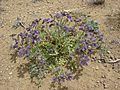
P. formosula in full bloom in late July.
-
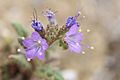
Detail of flower
-
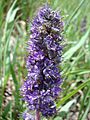
Inflorescence detail
-
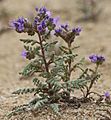
Foliage and flowers
.jpg)

.jpg)
.jpg)
