
Panamenian earth snake facts for kids
The Panamanian earth snake (Geophis championi) is a small, non-venomous snake. It belongs to the Colubridae family, which is a very large group of snakes. This snake is special because it is endemic to Panama. This means it can only be found naturally in Panama and nowhere else in the world!
Quick facts for kids Panamenian earth snake |
|
|---|---|
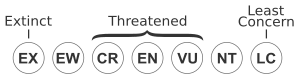
| Conservation status | |
Scientific classification  |
|
| Kingdom: | Animalia |
| Phylum: | Chordata |
| Class: | Reptilia |
| Order: | Squamata |
| Suborder: | Serpentes |
| Family: | Colubridae |
| Genus: | Geophis |
| Species: |
G. championi
|
| Binomial name | |
| Geophis championi Boulenger, 1894
|
|
| Script error: The function "autoWithCaption" does not exist. | |
| Synonyms | |
|
|
Script error: No such module "Check for conflicting parameters".
Contents
About the Panamanian Earth Snake
The Panamanian earth snake is a fascinating creature. It is a type of snake that lives hidden away. Scientists study these snakes to learn more about them.
What's in a Name?
The specific name of this snake, championi, was given to honor someone special. It is named after George Charles Champion. He was an English entomologist, which means he studied insects.
Where It Lives
This snake prefers to live in forest areas. Its natural habitat is usually found at high places. It lives at an altitude of about 1,370 meters (4,495 feet) above sea level.
What It Looks Like
The first G. championi snake studied by scientists was a male. It was about 21 centimeters (8.3 inches) long from its snout to its tail. Its tail was about 4 centimeters (1.6 inches) long.
The top part of its body is a shiny black color. The scales on its belly are whitish. The scales under its tail are also whitish. Both the belly and under-tail scales have black edges.
How It Reproduces
The Panamanian earth snake is oviparous. This means that the female snake lays eggs. Many snakes lay eggs, and this is how new baby snakes are born.
See also
 In Spanish: Geophis championi para niños
