
Polish 7th Air Escadrille facts for kids


The Polish 7th Air Escadrille (also called the Kościuszko Squadron) was a special group of pilots in the Polish Air Force. They fought during the Polish–Soviet War from 1919 to 1921. This squadron was first formed in late 1918. It was later re-formed in 1919 with many brave American volunteers. The Kościuszko Squadron became one of the most active Polish air units during the war.
Contents
How the Squadron Started
This air unit began on November 7, 1918, in Kraków, Poland. It was first known as the 3rd Air Escadrille. Poland had just become independent again. The squadron used mostly bomber and reconnaissance aircraft (planes that fly to gather information) left behind by the Austro-Hungarian forces.
On November 25, 1918, the unit moved to Lviv (then called Lwów). There, it played an important role in the Polish-Ukrainian War until June 1919. On December 21, 1918, its name changed to the 7th Air Escadrille. Jerzy Boreysza was the first commander. Later, Stefan Stec took command in April 1919. One of the pilots was Mieczysław Garsztka, a "flying ace" from World War I. This means he was a pilot who shot down many enemy planes.
American Volunteers Join In
In late 1919, eight American volunteers arrived in Poland. They came from France. These pilots included Major Cedric Fauntleroy and Captain Merian C. Cooper. In September 1919, they officially named their group the Kościuszko Squadron. They chose this name to honor Tadeusz Kościuszko, a Polish-American hero. Major Fauntleroy became their commander.
After reaching Poland, these American pilots joined the 7th Squadron. More pilots arrived in the following weeks. In total, 21 American pilots served, along with several Polish pilots like Ludwik Idzikowski. The ground crew, who helped with plane maintenance, were all Polish. In November 1919, Major Fauntleroy took command. On December 31, 1919, the squadron officially became the Kościuszko Squadron.
A Special Mobile Base
The Kościuszko Squadron was very innovative. It was the first air squadron to use a special railway train as a mobile flying base. This train had specially designed cars that could carry their aircraft. This meant they could move their planes easily as the war front changed. The train also held the squadron's headquarters, spare parts for planes, repair workshops, and living areas for the pilots and crew.
Fighting in the War
The Kościuszko Squadron first saw action in April 1920 during the Kiev Offensive. They moved their base from Lviv to Polonne. Their planes were Albatros D.III (Oef) fighters, and they also used Ansaldo A.1 Balilla planes. Since there were no air battles, their main jobs were reconnaissance (finding out what the enemy was doing) and attacking targets on the ground.
Most of the squadron's flights were against Semyon Budionny's First Cavalry Army. The squadron developed a new tactic: flying low to the ground and using machine guns to attack enemy groups. Polish commanders on the ground really valued the help from the Kościuszko Squadron. General Puchucki once wrote that the American pilots fought very hard. He said their commander attacked enemy groups from behind, shooting at them. He believed that without their help, they would have been in big trouble.
Brave Pilots and Escapes
Merian Cooper, one of the American pilots, was shot down during a mission. Luckily, he survived. Budionny had offered a large reward for Captain Cooper's capture. When Cossacks caught Cooper, he cleverly convinced them he was just a corporal, a lower rank. A few months later, he managed to escape from a POW camp (a prison camp for soldiers) near Moscow and made it to Latvia.
In August 1920, the Kościuszko Squadron helped defend Lviv. After the Battle of Warsaw, they also took part in the Battle of Komarów. This battle greatly weakened Budionny's cavalry. The busiest days for the squadron were August 16 and 17. Even with only five uninjured pilots, they flew 18 ground attack missions each day!
After the War
After the Polish-Soviet War ended, the 7th Kościuszko Squadron was reorganized in 1925. It became the 121st Fighter Squadron, and later the Polish 111th Fighter Escadrille. Both of these units kept the "Kościuszko" name. The 111th Squadron fought bravely in the Invasion of Poland at the start of World War II.
Perhaps the most famous group to carry on the legacy of the Kościuszko Squadron was the World War II No. 303 "Kościuszko" Polish Fighter Squadron. This squadron became the most successful fighter squadron in the Battle of Britain.
Squadron Achievements
In 1920, the Kościuszko Squadron completed over 400 combat flights. This shows how active and important they were during the war.
Many pilots received Poland's highest military award, the Virtuti Militari. These included Colonel Cedric E. Fauntleroy and Lt.-Col. Merian C. Cooper. Other brave pilots from the Kościuszko Squadron who received this honor were Major George M. Crawford, Captain Edward C. Corsi, Captain Władysław Konopka, and Lieutenants Elliot W. Chess, Carl H. Clark, E. H. Noble, H. C. Rorison, K. O. Shrewsbury, Jerzy A. Weber, and A. Senkowski. Mieczyslaw Garsztka was also given the Virtuti Militari after he passed away.
Images for kids
-
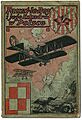
Faunt-le-Roy i jego eskadra w Polsce : dzieje Eskadry Kościuszki book cover.

