
Spanish argus facts for kids
The Spanish argus (Aricia morronensis) is a small, beautiful butterfly. It belongs to the Lycaenidae family, often called "blues" or "coppers" because of their colors. You can find this butterfly mainly in Spain and sometimes in the Hautes-Pyrénées region of France.
Quick facts for kids Spanish argus |
|
|---|---|
 |
|
Scientific classification  |
|
| Kingdom: | Animalia |
| Phylum: | Arthropoda |
| Class: | Insecta |
| Order: | Lepidoptera |
| Family: | Lycaenidae |
| Genus: | Aricia |
| Species: |
A. morronensis
|
| Binomial name | |
| Aricia morronensis (Ribbe, 1910)
|
|
| Script error: The function "autoWithCaption" does not exist. | |
| Synonyms | |
|
|
Script error: No such module "Check for conflicting parameters".
Contents
About the Spanish Argus
What Does It Look Like?
The Spanish argus butterfly is quite small. Its wingspan is usually between 22 and 26 millimeters. That's about the size of a large coin.
The top side of its wings is a dark black-brown color. It often has a darker spot in the middle of its front wings. The edges of its wings, called fringes, are pale. They might be a little darker at the very tips of the veins.
The underside of the wings is a coffee-brown color. It can have a slight reddish tint. You might see small, eye-like spots, similar to other butterflies in its group. The hindwing often has a pale stripe. This stripe goes from the center of the wing to the middle of the outer edge.
Where Does It Live?
This butterfly is mostly found in the mountains of Spain. It also lives in the Hautes-Pyrénées area of France. They prefer certain habitats where their food plants grow.
Life Cycle of the Spanish Argus
When Do They Fly?
Adult Spanish argus butterflies usually fly from June to September. Most years, they have one main group of butterflies hatching. Sometimes, if conditions are good, they might have two groups in a year.
What Do They Eat?
The young butterflies, called larvae or caterpillars, have a special diet. They feed on the leaves of plants from the Erodium family. These plants are important for their growth.
Interestingly, ants often attend to the larvae. This means the ants protect the caterpillars. In return, the caterpillars might give the ants a sweet liquid.
The Spanish argus butterfly spends the winter as a larva. This means the caterpillar stops growing and waits for warmer weather. When spring comes, it will continue to grow and eventually turn into a butterfly.
Types of Spanish Argus
Just like people can have different groups within a family, butterflies can have subspecies. These are slightly different groups within the same species. They might live in different areas or have small differences in their looks.
Here are some of the known subspecies of the Spanish argus:
- Aricia morronensis morronensis: This group is found in Andalusia, which is in Southern Spain. You can also find them in parts of Albacete and Murcia.
- Aricia morronensis hersselbarthi (Manley, 1970): This subspecies lives near Abejar in Soria, Spain.
- Aricia morronensis ramburi (Verity, 1913): You can find this group in the Sierra Nevada mountains.
- Aricia morronensis boudrani (Leraut, 1999): This subspecies lives in the Col du Tourmalet and the Cirque de Gavarnie in the Hautes-Pyrénées region.
Images for kids
-
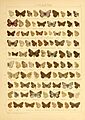
An older drawing of the Spanish argus, showing its patterns.
_(8145271295).jpg)
