
Venice Film Festival facts for kids
 |
|

The Venice Cinema Palace on Lido island
|
|
| Location | Venice, Italy |
|---|---|
| Founded | 6 August 1932 |
| Awards |
|
| Artistic director | Alberto Barbera (since 2011) |
The Venice Film Festival is a world-famous cinema event held every year in Venice, Italy. Founded in 1932, it holds the title of the world's oldest film festival. It ranks among the major "Big Five" film festivals on the planet. This elite group includes the Cannes Film Festival in France, the Berlin International Film Festival in Germany, the Toronto International Film Festival in Canada, and the Sundance Film Festival in the United States.
The festival forms an important part of the Venice Biennale, a massive art exhibition established in 1893. Today, the Biennale celebrates all kinds of creativity, including painting, architecture, music, theater, and dance. Even with so many cultural events, the film festival remains the most popular branch of the entire organization.
Every late summer, international movie stars, famous directors, and cinema fans gather on the island of Lido in the Venetian Lagoon. The historic Palazzo del Cinema acts as the main hub for movie premieres. In recent decades, Venice has become a crucial launchpad for major award-winning movies, helping great films gain attention before the Academy Awards.
Contents
How the Venice Film Festival Started and Grew
Cinema Craze in the 1930s
During the 1930s, going to the cinema was one of the most popular pastimes in Italy. People spent more money on movie tickets than on any other entertainment, including sports. However, most movies shown in Italian theaters came from Hollywood. Italian cultural leaders wanted to highlight domestic talent and celebrate European art alongside global cinema.
In August 1932, Italian business and political figures, including Giuseppe Volpi, Luciano de Feo, and Antonio Maraini, founded the festival. Volpi served as the leader of the Venice Biennale. The very first festival opened on 6 August 1932 on the outdoor terrace of the Excelsior Palace Hotel. The opening movie was the American classic Dr. Jekyll and Mr. Hyde.
The first festival did not feature an official jury. Instead, the audience voted for their favorite movies and performers. The French comedy À Nous la Liberté won the award for the most entertaining movie. American actor Fredric March and actress Helen Hayes won popular votes for their acting performances. The event was such an enormous success that officials turned it into an annual competition.
Early Changes and Permanent Buildings
By 1934, the number of participating nations grew from nine to seventeen. The festival introduced official prizes called the Mussolini Cup for best Italian and foreign films. In 1936, the organizers created an official panel of judges called a jury to select winners fairly.
During this era, the festival grew quickly and required a dedicated theater. In 1937, workers finished building the Palazzo del Cinema on the island of Lido. This grand hall features giant screens and viewing rooms. Except for a short interruption during World War II, the Palazzo has hosted the festival ever since.
Difficult Years and Post-War Rebirth

The 1940s brought significant disruption to European cultural events. Between 1940 and 1942, the festival moved away from the Lido, and many countries could not participate because of the war. Because of these disruptions, cinema historians do not count those war-torn years as official festival editions.
The festival reopened successfully in 1946 under peaceful conditions. Organizers scheduled the event for late summer so it would not clash with the newly created Cannes Film Festival held in the spring. In 1947, the festival celebrated a historic comeback in the open courtyard of the famous Doge's Palace in central Venice. Over 90,000 people attended, proving that international cinema was thriving again.
Modern Transformations and New Ideas

The festival underwent major changes during the 1960s under the leadership of director Luigi Chiarini. He believed film festivals should focus purely on artistic value rather than commercial hype. He wanted audiences to discover bold, unique stories that challenged everyday thinking.
During the 1970s, social changes across Italy led to a decade where films were screened without competitive prizes. In 1980, the festival officially brought back the famous Golden Lion award under director Carlo Lizzani. Lizzani modernized the festival by appointing committees of film experts to scout fresh talent worldwide.
In recent years, under artistic director Alberto Barbera, Venice has become the top place to launch groundbreaking motion pictures. Modern films that premiered at Venice include Gravity, La La Land, The Shape of Water, and Dune. In 2018, the movie Roma won the main award, showing that streaming releases could compete directly with traditional cinema.
Leadership and Festival Organization
Who Runs the Venice Film Festival?
The festival relies on two key leaders to manage its operations, guest lists, and film lineups:
- The President of the Biennale: This official represents the entire Venice Biennale art organization to public leaders and media. The Italian Ministry of Culture selects the president every four years.
- The Artistic Director: This leader oversees the film selection process, invites movie crews, and organizes screenings. Alberto Barbera has led the festival with great success, securing international premieres and modernizing the format.
Key Directors Throughout Festival History
| Term | Director Name |
|---|---|
| 1979–1983 | Carlo Lizzani |
| 1983–1987 | Gian Luigi Rondi |
| 1987–1992 | Guglielmo Biraghi |
| 1992–1996 | Gillo Pontecorvo |
| 1996–1998 | Felice Laudadio |
| 1998–2002 | Alberto Barbera |
| 2002–2004 | Moritz de Hadeln |
| 2004–2011 | Marco Müller |
| since 2011 | Alberto Barbera |
How the Festival Program Works
The Venice Film Festival aims to promote international cinema as both high art and popular entertainment. It supports artistic freedom and dialogue between cultures. To showcase diverse styles of filmmaking, the festival organizes movies into different categories and sections.
Official Selection Categories
The main program run by the festival committee includes several distinct showcases:
- In Competition: Around 21 feature films compete directly for the top prize, the Golden Lion. These movies represent high-profile cinematic achievements from around the globe.
- Out of Competition: Up to 18 major films screen for audiences without competing for prizes. This section often includes big-budget action films, exciting documentaries, and midnight premieres.
- Orizzonti (Horizons): This section focuses on rising trends in world cinema. It highlights experimental formats, young filmmakers, and creative storytelling styles.
- Venice Spotlight: Formerly named Orizzonti Extra, this section presents independent movies that appeal to wider public audiences.
- Venice Classics: This branch screens restored versions of vintage films, preserving classic cinema history for future generations.
- Venice Immersive: A cutting-edge section dedicated entirely to virtual and extended reality storytelling.
Independent Parallel Sections
Independent cinema associations run special partner sections during the same weeks on the Lido:
- International Critics' Week: A special showcase that presents seven or eight debut feature films by first-time directors.
- Giornate degli Autori: Created in 2004, this section promotes creative freedom and personal author-driven filmmaking, similar to the Directors' Fortnight at Cannes.
Major Awards and Trophies

.jpg)
.jpg)
Special panels of film experts, actors, and directors form juries to evaluate the movies. They present several prestigious awards at the closing ceremony.
Main Competition Prizes
- Golden Lion (Leone d'Oro): The highest honor of the festival, presented to the overall best film in competition. The trophy depicts the winged lion of St. Mark, the symbol of Venice.
- Grand Jury Prize: The award given to the second-place film in the main competition.
- Silver Lion (Leone d'Argento): A prestigious trophy awarded to the best director in the competition.
- Special Jury Prize: Awarded to the third-place film showing exceptional artistry.
- Volpi Cup (Coppa Volpi): The acting prizes awarded to the Best Actor and Best Actress.
- Best Screenplay Award: Honors the writers who crafted the most outstanding script.
- Marcello Mastroianni Award: Created in 1998, this prize honors an outstanding emerging young actor or actress.
Special Honors and Parallel Prizes

- Golden Lion for Lifetime Achievement: A career tribute given to veteran filmmakers and actors who dedicated their lives to cinema.
- Lion of the Future: An award given to the best debut movie across all festival categories. It comes with a cash prize to help new filmmakers produce their next project.
- Glory to the Filmmaker Award: Presented to visionary creators who have left an unmistakable mark on modern cinema.
- Venice Immersive Grand Prize: The top prize celebrating innovation in digital virtual reality projects.
Past Trophies and Historic Records
Over its nine decades of existence, several award categories have evolved or been replaced.
The Mussolini Cup Era (1934–1942)
Before the creation of the Golden Lion, the festival's highest honor was the Mussolini Cup. The festival retired this award name completely following World War II.
Notable Mussolini Cup Winners (Foreign Films)
| Year | Film | Director | Country |
|---|---|---|---|
| 1934 | Man of Aran | Robert J. Flaherty | United Kingdom, Ireland |
| 1935 | Anna Karenina | Clarence Brown | United States |
| 1936 | Der Kaiser von Kalifornien | Luis Trenker | Germany |
| 1937 | Life Dances On | Julien Duvivier | France |
Notable Early Best Director Winners
| Year | Director | Film Title |
|---|---|---|
| 1935 | King Vidor | The Wedding Night |
| 1936 | Jacques Feyder | Carnival in Flanders |
| 1937 | Robert J. Flaherty and Zoltan Korda | Elephant Boy |
Red Carpet Culture and Venice Atmosphere

The Venice Film Festival is famous for its unique island atmosphere. Unlike other cities where limousines bring guests to the theater, stars in Venice often arrive by private water taxis. Boats travel through lagoon waters directly to the docks near the red carpet.
Crowds of young cinema fans gather along the barriers outside the Palazzo del Cinema. They wait to collect autographs and take selfies with their favorite movie stars. Photographers from global news agencies snap pictures of dazzling outfits as the sun sets over the Adriatic Sea.
Inside the theaters, audiences share quiet moments before the screen lights up. After a premiere ends, crowds often erupt into long standing ovations. The length of applause often signals whether a movie will become a critical masterpiece or an award contender.
What Makes Venice Unique for Young Movie Lovers?
Pioneer in Virtual Reality
Venice was the first of the major film festivals to create an entire competitive section for virtual reality (VR). Rather than just watching a flat movie screen, visitors put on VR headsets to step inside three-dimensional animated worlds. This makes Venice a thrilling space for young programmers, animators, and digital artists.
Restoring Classic Cinema
Through the Venice Classics program, experts restore damaged, aging movie reels using modern digital tools. They remove scratches, repair audio tracks, and adjust colors so old films look fresh again. This work teaches younger generations to appreciate cinematic history and preservation.
See Also
 In Spanish: Festival Internacional de Cine de Venecia para niños
- Venice Biennale
- Cannes Film Festival
- Berlin International Film Festival
- Academy Awards
- Film festival
Images for kids
-
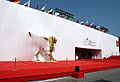
Cinema Palace during the 65th Venice International Film Festival
-
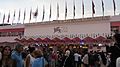
Cinema Palace decorated during the 74th Venice International Film Festival

.jpg)
