
Video facts for kids
Video is an electronic medium that shows moving pictures, often with sound or audio. We see video every day on televisions, computers, and phones. The word comes from Latin, meaning "I see". Video can be broadcast through the air, saved on discs, or shared by network streaming online.
Contents
History of Moving Images
Early moving images were captured on photographic film. In the 1800s, inventors worked on tools like the Nipkow disk to send images using wires. Video was first created to broadcast live pictures for mechanical television and cathode-ray tube screens.
In 1951, an Ampex team led by Charles Ginsburg built one of the first practical video tape recorder machines. These systems recorded signals from a television camera onto magnetic videotape. In the 1970s, machines like the videocassette recorder brought recorded movies directly into homes using VHS tapes.
Later, digital video became popular. Formats like the DVD in 1997 and the Blu-ray Disc in 2006 replaced older tapes. Today, modern personal computers and smartphone devices make recording and editing videos easy for everyone.
How Video Works
Video is made up of many still pictures shown very quickly to fool our eyes into seeing motion.
Frame Rate
The speed at which these pictures appear is called the frame rate. It is measured in frames per second. A movie on film usually runs at 24 frames per second. Regular television systems like PAL run at 25 frames per second, while NTSC runs at nearly 30 frames per second. If a video shows at least 16 frames per second, our brain blends them together smoothly through persistence of vision.
Interlacing and Progressive Scan
Screens draw images using horizontal scan line patterns:
- Progressive scan: The screen draws every single line from top to bottom in order. This creates very clear, sharp movement.
- Interlaced video: The screen draws every other line first (the odd lines), and then draws the rest (the even lines). This was invented to stop screens from flickering without needing too much data bandwidth.
Modern screens like an LCD television use progressive scanning. When older recordings play on them, a process called deinterlacing helps smooth out the picture.
Aspect Ratio and Pixels
The shape of a screen is called its aspect ratio. Older boxy televisions used a 4:3 shape. Modern widescreen televisions use a 16:9 shape. Digital pictures are made of tiny dots called pixels. When people watch clips while holding phones upright, this creates vertical video.
Colors and Compression
Video systems use a color model to show accurate colors on screen. The total number of colors that a pixel can display is called its color depth.
Because video files contain huge amounts of data, Uncompressed video can fill up storage space very quickly. Computers use a video codec to perform compression. Clever methods like image compression and motion compensation keep file sizes small without hurting the video quality. Popular digital formats include MPEG-2, MPEG-4, and H.264/MPEG-4 AVC.
Watching 3D Video
Special 3D videos use stereoscopic video tricks to create the illusion of depth:
- Wearing glasses with polarizing filters lets each eye see a slightly different image from the screen.
- Anaglyph 3D uses red and blue lenses to separate two overlapping pictures.
- LCD shutter glasses rapidly block one eye at a time in sync with the screen, which is common in virtual reality setups.
Images for kids
-
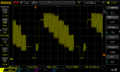
An analog television signal pattern
-

Different screen shapes compared to each other
-
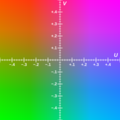
A color chart used in video processing
-

A video cable connector
-

A digital computer screen cable
-

An HDMI plug used for modern televisions
-

A DisplayPort cable
-

A classic VHS tape cassette


See also
 In Spanish: Video para niños
