
Brainstem facts for kids
| Brain: Brainstem | ||
|---|---|---|
Quick facts for kids
 |
||
| The three distinct parts of the brainstem are colored in this sagittal section of a human brain. | ||
| Latin | truncus encephali | |
| Part of | Brain | |
| Components | Medulla, pons, midbrain | |
The brainstem is a very important part of your brain. It looks like a stalk at the back of your head and connects your main brain (the cerebrum) to your spinal cord. Think of it as a vital bridge and control center!
Even though it's small, making up only about 2.6% of your brain's total weight, the brainstem has huge responsibilities. It helps control your heart rate and how you breathe. It also sends important nerve signals for your face and neck. Plus, it helps regulate your sleep cycle and keeps your whole central nervous system working properly. It's like the main highway for messages going between your brain and the rest of your body.
Contents
Understanding Your Brainstem

The brainstem is made up of three main parts: the midbrain, the pons, and the medulla oblongata. Sometimes, another part called the diencephalon is also included. This amazing structure stretches from just above your neck, connecting to the top of your spinal cord.
What the Brainstem Does
The brainstem has several critical jobs to keep your body running smoothly.
- Connecting Your Brain and Body: It acts as a superhighway for all the information traveling between your brain and the rest of your body. Sensory messages (like touch, pain, and temperature) travel up to your brain. Motor commands (telling your muscles to move) travel down from your brain.
- Controlling Basic Life Functions: The brainstem is in charge of automatic actions you don't even think about. This includes your breathing, heart rate, and blood pressure. It also helps control your arousal (how awake and alert you are) and your sleep patterns.
- Managing Your Face and Head Nerves: Ten out of the twelve pairs of special nerves called cranial nerves come from the brainstem. These nerves control things like your eye movements, facial expressions, hearing, balance, and swallowing.
Parts of the Brainstem
Let's take a closer look at the three main sections of the brainstem.
The Midbrain


The midbrain is the topmost part of the brainstem. It's like a busy intersection for information. It helps with your vision and hearing. For example, it helps you quickly turn your head towards a sudden sound or a moving object. It also plays a role in controlling your eye movements.
The Pons
The pons sits right below the midbrain, acting as a bridge between different parts of the brain. The word "pons" actually means "bridge" in Latin! It connects the cerebrum (the largest part of your brain) to the cerebellum (which helps with coordination). The pons is also important for regulating your breathing and helps coordinate movements.
The Medulla Oblongata
The medulla oblongata, often just called the medulla, is the lowest part of the brainstem. It connects directly to your spinal cord. This part is absolutely essential for life. It contains centers that control your heart rate, breathing, and blood pressure. It also helps with reflexes like vomiting, sneezing, and coughing.
How the Brainstem Gets Blood
Your brainstem needs a constant supply of blood to work properly. This blood comes mainly from special blood vessels called the basilar and vertebral arteries. These arteries form a network to make sure the brainstem gets all the oxygen and nutrients it needs. If there's a problem with this blood supply, it can affect how the brainstem functions.
How the Brainstem Develops
The brainstem starts to form very early when a baby is developing inside its mother. It grows from two of the three main "brain bubbles" that appear in the early neural tube. The midbrain comes from one bubble, and the pons and medulla come from another. This shows how fundamental the brainstem is to the development of the entire nervous system.
Brainstem and Your Nerves

As we mentioned, ten of the twelve pairs of cranial nerves either start or end in the brainstem. These nerves are like special wires that carry messages for specific tasks in your head and face. For example:
- Nerves for eye movement come from the midbrain.
- Nerves for facial sensations, chewing, and some eye movements come from the pons.
- Nerves for swallowing, taste, and controlling your voice come from the medulla.
These nerves allow you to see, hear, taste, smell, move your face, and much more!
When the Brainstem is Injured
Because the brainstem controls so many vital functions, any injury or disease affecting it can be very serious. Problems with the brainstem can lead to difficulties with vision, changes in sensation, muscle weakness, hearing issues, dizziness, and trouble swallowing or speaking.
For example, a stroke in the brainstem can cause a wide range of problems. In some very severe cases, a person might experience locked-in syndrome. This means they are fully awake and aware of everything around them, but they cannot move their body or speak, except sometimes for their eyes. Understanding how the brainstem works helps doctors figure out where a problem might be and how to help.
Images for kids
-
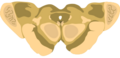
Cross-section of the midbrain at the level of the superior colliculus
-
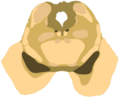
Cross-section of the midbrain at the level of the inferior colliculus
-

Cross-section of the middle pons (at the level of cranial nerve V)
-
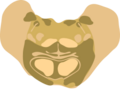
Cross-section of the inferior pons (at the level of the facial genu)
-
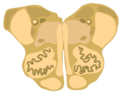
Cross-section of the rostral (superior) medulla
-
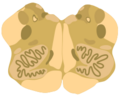
Cross-section of the middle medulla
-
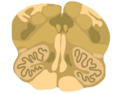
Cross-section of the inferior medulla


See also
 In Spanish: Tronco del encéfalo para niños
- Triune brain – reptilian brain
