
History of Deportivo de La Coruña facts for kids
Deportivo de La Coruña is a Spanish association football team. It's often called "Depor" by its fans. The team plays in the city of A Coruña, in the region of Galicia.
Contents
- How Depor Started: Early Days
- Growing the Game: The First Decades
- Ups and Downs: 1962-1991
- The Rise of 'Superdepor': 1991-1995
- Challenges and Changes: 1995-1998
- Building a Winning Team: 1998-2000
- 'Eurodepor' Joins Europe's Best: 2000-2004
- Changes and Relegation: 2004 Onwards
- Later Years: Ups and Downs
- Images for kids
- See also
How Depor Started: Early Days

Football came to A Coruña thanks to José María Abalo. He was a young man who had studied in England and brought the game back home. People quickly loved the sport, and many informal teams started playing. Abalo helped teach young people and organized the first matches.
In 1903, some young people from a gym called Sala de armas Calvet started playing football with Abalo. Later that year, Abalo's team changed its name to Foot-ball Corunna Club. They played their first official match on March 20, 1904, against a team of British sailors. Corunna FC won 3–0! Football became so popular that they needed a bigger field. They moved to a place called Corralón de la Gaiteira, which became the city's first permanent football field.

In 1906, members of the Sala Calvet gym formed their own team, Deportivo de la Sala Calvet. They even had a match against the gym's rowing team to see which sport was better! On March 1, 1906, the football team won 1–0. In December 1906, the club officially became Deportivo de La Coruña, with Luis Cornide as its first president.
In 1908, King Alfonso XIII of Spain gave the club the title "Real" (Royal). So, the team became Real Club Deportivo de La Coruña. They also moved to a new stadium called Viejo Riazor.
Growing the Game: The First Decades
Football became very popular across Spain after the Spanish national team did well in the 1920 Summer Olympics. This led to a national league being created. Depor didn't make it into the top league (Primera División) right away. They started in the Segunda División (Second Division) in the 1928/1929 season.
In 1932, Depor achieved a big surprise! While still in the second division, they managed to beat Real Madrid in the Copa del Rey tournament. Real Madrid was the top league champion that year, so it was a huge victory for Depor.
First Time in the Top League: 1941-1945
In 1941, during World War II (which was happening in other parts of Europe), Deportivo finally made it to the Primera División. They won a promotion match against Murcia 2–1. The team was led by coach Hilario Marrero. For this big achievement, each player received 2,000 pesetas, which was not much money at the time. The club even had to collect donations to pay them!
In their first year in the top league (1941/1942), Depor finished fourth. A new stadium, Riazor, was opened in 1944. However, the team struggled and was relegated from the Primera División in 1945.
Almost Champions: 1950
Depor went up and down between divisions, but in the 1949/1950 season, they had their best result yet. They finished second in the league! They almost won the Spanish title but lost it to Atlético de Madrid on the very last day.
During these years, Depor brought in players from other countries, like two Argentine players, Corcuera and Oswaldo. They became part of a famous attacking group known as the "Orquesta Canaro." This strong attack helped Depor stay in the top division until 1957. This was known as their "Golden Decade." Famous players like Helenio Herrera and Luis Suárez (who later became a European Footballer of the Year) played for Depor during this time.
Ups and Downs: 1962-1991
After their "Golden Decade," Depor faced a tough period. Even though they had talented players from their youth system, like Luis Suárez and Amancio, the club had money problems. They couldn't keep their best players, who often left for richer clubs. This led to many "ups and downs." Depor was relegated several times (in 1963, 1965, 1967, 1970, and 1973). They were often too good for the lower leagues but couldn't stay in the Primera División.
Tough Times in Lower Leagues: 1973-1991
The years after 1973 were very difficult for Deportivo. The club spent many years stuck in the Segunda B División and even the Tercera División (third and fourth tiers). This hurt the club's reputation and its finances. Even Luis Suárez couldn't help when he coached the team in 1978/1979.
The 1980s were full of disappointment. Depor desperately wanted to return to the Primera División, but they kept failing. In May 1988, they were very close to being relegated even further, which could have ended the club due to money problems. But a late goal by a player named Vicente saved them!
Things slowly started to get better. In 1988, Augusto César Lendoiro was elected president. He worked to fix the club's money problems and make the team stronger. The club had a lot of debt, but the number of fans joining the club grew to 17,500.
In the 1990/1991 season, with new players like Josu and Djukic, Depor had a clear goal: reach the Primera División. After 18 years out of the top league, Deportivo finally won their play-off matches against Murcia and were promoted! The whole city of A Coruña celebrated.
The Rise of 'Superdepor': 1991-1995

After returning to the top league, Depor became known as "Superdepor" because of their amazing performances.
Staying in the Top League: 1991/1992
The 1991/1992 season was a time of change. The team had a mix of older and younger players. After some struggles, coach Arsenio Iglesias took over. Depor ended up in a play-off match to stay in the Primera División. They won against Betis, and fans celebrated as if they had won the league title!
Surprising Spain: 1992/1993
In 1992, Deportivo became an "Anonymous Society" (S.A.D.), meaning fans and shareholders could own a part of the club. This showed that it was truly "a club for all Coruñeses."
The team signed important international players like Brazilians Mauro Silva and Bebeto. President Lendoiro made it clear: avoiding relegation was no longer the goal. Depor wanted more! About 30,000 fans came to see the new team. They won their first five matches, including an exciting 3–2 win against Real Madrid after being down 0–2. Bebeto scored 29 goals that season, winning the Pichichi Trophy as the league's top scorer.
Close to the Title: 1993/1994
The 1993/1994 season was historic. Depor played in a European tournament for the first time. They also came very close to winning the league title. The team was strengthened with players like Donato and Manjarín. They even beat Real Madrid 4–0!
From December 4 onwards, Depor stayed at the top of the Primera División. On the final day of the season, they needed to win at home against Valencia to secure the title. The score was 0-0 at halftime. In injury time, Depor was awarded a penalty kick. Defender Djukic stepped up but missed the shot. Barcelona won their match, and because they had a better goal difference, they snatched the title away from Depor. It was a heartbreaking loss.
First Ever Trophy: 1994/1995
The next season, 1994/1995, Depor continued to play well. They finished second in the league again. For the third time in a row, they qualified for European football.
But this season, they finally won a trophy! On June 27, 1995, Deportivo won the Copa del Rey final. The match had been postponed due to heavy rain. Manjarín scored for Depor, and Alfredo scored the winning goal to make it 2-1. Depor held on to win their first major trophy!
Challenges and Changes: 1995-1998
After winning their first trophy, coach Arsenio Iglesias left the club. He was replaced by Welsh coach John Benjamin Toshack. Expectations were very high.
Winning the Supercopa: 1995/1996
Depor started the 1995/1996 season by winning the Supercopa 1995 against Real Madrid. This was their second trophy! They won 5–1 over two matches. However, the league season didn't go as planned. The team struggled, and there were arguments between coach Toshack and some players, including Bebeto. Depor finished the season in a disappointing position.
Rivaldo's Impact: 1996/1997
Star striker Bebeto left the club in 1996. However, Depor signed a new Brazilian midfielder, Rivaldo, for a lot of money (about €7.4 million). He was a big "star" signing. The team had their best start to a season ever, staying unbeaten until the end of 1996. They were only two points behind leaders Real Madrid. Rivaldo scored 21 goals that season, and goalkeeper Songo'o won the Trofeo Zamora for letting in the fewest goals.
Despite the good results, the relationship between coach Toshack and the club became difficult. Toshack resigned, and assistant coach José Manuel Corral took over temporarily. Later, Brazilian coach Carlos Alberto Silva took charge, and the team played well again. They finished third in the league, qualifying for the UEFA Cup.
Difficult Season: 1997/1998
Depor invested more money in new Brazilian players, Djalminha and Luizão. But just before the transfer deadline, Barcelona paid a huge amount (over €25 million) to take away star player Rivaldo. This was a big blow.
The team struggled without Rivaldo and other key players. They had many foreign players, leading to the nickname "United Nations." Coach Silva was sacked, and José Manuel Corral took over again. The team never got higher than 11th place and finished 12th. Djalminha played well, but the team had a bad season, even losing 2–6 at home to neighbours Compostela.
Building a Winning Team: 1998-2000
After two disappointing seasons, President Lendoiro looked for a new coach. He chose Javier Irureta, who had done well with Celta de Vigo. This marked the start of a new era for Depor.
New Confidence: 1998/1999
New players like Romero and 'Turu' Flores joined the team. The team showed promise, beating Atlético de Madrid and Lazio Roma in a summer tournament. After a difficult start, 'Turu' Flores became a new star, scoring many goals. Depor had impressive wins, including a 4–0 victory against Real Madrid. They finished sixth in the league, qualifying for European football again.
Depor Wins the League: 1999/2000


Nobody expected what happened in the 1999/2000 season. Depor signed Roy Makaay, who cost about €8.6 million. Other new players included César Martín and Víctor Sánchez. The team, with experienced players like Songo’o and Naybet, became incredibly consistent.
They started the season well and, after a strong winning streak, took the first spot in the league on November 21, 1999. They beat teams like Barcelona (2-1) and Atlético de Madrid (3-1). Depor held onto their lead, even though other teams like Barcelona and Real Madrid were close behind.
On May 19, 2000, Deportivo de La Coruña won their first ever Liga title in the club's 94-year history! They also qualified for the Champions League for the first time. The city of A Coruña exploded with joy, and over 200,000 fans celebrated in the streets. It was a massive, unforgettable party.
'Eurodepor' Joins Europe's Best: 2000-2004

After winning the league, Depor continued to succeed. In 2000, they won the Supercopa again, adding a fourth trophy to their collection.
Many players joined the squad, including Molina, Capdevila, Valerón, Duscher, and Tristán. President Lendoiro knew they needed a strong team to compete in the Champions League.
Impressing Europe: 2000/2001
Depor started the 2000/2001 season very well. They earned their first Champions League point and then their first win. They even drew 0–0 against Juventus. They finished first in their Champions League group and continued to impress in the second group stage.
One amazing match was against Paris-Saint Germain. Depor was losing 0–3 at halftime but made an incredible comeback to win 4–3! They reached the Champions League Quarter Finals for the first time, but lost to Leeds United. Still, Europe had seen what Deportivo could do. They finished second in the Liga, showing they could defend their title with dignity.
Copa Win at the Bernabéu: 2001/2002

The 2001/2002 season continued Depor's strong performances. They proved their European success wasn't just luck. On September 25, 2001, they beat Manchester United 2–1 in the Champions League. They even won 3–2 at Old Trafford, Manchester United's home stadium!
The best day of the season was March 6, 2002. Depor reached the final of the Copa del Rey against Real Madrid. The final was played at Real Madrid's stadium, the Bernabéu, on their 100th birthday! Despite everyone expecting Real Madrid to win, Depor stayed calm. Sergio scored an early goal, and Diego Tristán added another before halftime. Depor won 2–1, adding their second Copa del Rey trophy to their cabinet.
They reached the Champions League Quarter Finals again but were eliminated by Manchester United. Depor finished second in the Liga, with Diego Tristán as the league's top scorer (Pichichi) with 21 goals.
Makaay's Last Season: 2002/2003

In 2002, Depor made big signings like Jorge Andrade and Albert Luque. They won their third Supercopa in August 2002. A historic moment came on September 18, 2002, when Roy Makaay scored three goals to give Depor a 3–2 win at Bayern Munich. It was the first time a Spanish team had won in Munich!
The team faced many injuries, but they still managed to reach the Champions League second round. They finished third in the Liga, which was a good achievement after a difficult season. Roy Makaay was the top scorer in Europe, with 29 Liga goals. He later moved to Bayern Munich in 2003.
Reaching the Champions League Semifinals: 2003/2004

Even though Roy Makaay left, Depor continued to impress. They qualified for the Champions League for the fifth time in a row. They started the Liga season perfectly, winning their first three matches. Walter Pandiani, who returned from a loan, scored many goals.
October was an excellent month. Depor won three out of four Liga matches, including a brilliant 2–0 victory at Barcelona. They were leading the Primera División again.
In the Champions League, Depor reached the Quarter Finals. They faced AC Milan, who had beaten them 4–1 in the first leg. But on April 7, 2004, Riazor exploded with joy! Depor made an incredible comeback, winning 4–0 against AC Milan. This meant they had overturned a three-goal deficit and reached the Champions League Semifinals for the first time ever!
However, the Semifinals were disappointing. They lost to FC Porto, who went on to win the Champions League that year. Depor finished third in the Liga, just one point behind Barcelona. Their European achievements were truly incredible.
Changes and Relegation: 2004 Onwards
After the "Eurodepor" era, the team started to change. Many important players left, and the club faced financial difficulties. Coach Irureta left in 2005.
End of an Era: 2004/2005
The 2004/2005 season was the last for coach Irureta and club legends Fran and Mauro Silva. New players didn't arrive, and the team struggled. They had their worst start under Irureta and were eliminated from all European competitions early. They even became the first team in Champions League history not to score a single goal in the group stage. The team finished 8th in the Liga, a big drop from previous seasons.
Transition Year: 2005/2006
In 2005, Joaquín Caparrós became the new coach. Many important players like Walter Pandiani and Albert Luque left. The club had to rely more on younger players due to money problems. Depor played in the Intertoto Cup, a pathway to the UEFA Cup, and performed well, but didn't qualify.
The team had a good start in the Liga, staying unbeaten in September. They even beat Real Madrid at home. However, the season was full of ups and downs. Key player Valerón suffered a serious knee injury and was out for the rest of the season. The team struggled to score goals and often relied on set pieces. They were eliminated from the Copa del Rey and finished 8th in the Liga, missing out on European football.

Later Years: Ups and Downs
In the second half of the 2000s, Depor's team became weaker, and they became a mid-table team. In 2011, Deportivo was relegated to the second division. But they immediately got promoted back to the top league in 2012! However, in 2013, they were relegated again on the last day of the season.
In December 2012, it was announced that Deportivo was facing serious money problems. In 2013, President Lendoiro, who had led the club for 25 years, announced he would not seek re-election. In 2014, Deportivo earned promotion back to the top division once more.
Images for kids
-
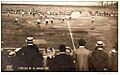
Football match in the old Corralón da gaiteira
-
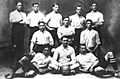
Deportivo Sala Calvet in 1908
-
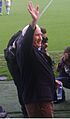
Arsenio Iglesias was the Súper Dépor coach.
-
Javier Manjarín.
-
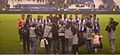
Euro Dépor players like Scaloni, Djalminha, Manuel Pablo, Diego Tristán, Noureddine Naybet, Amavisca, Jorge Andrade and Albert Luque after a veterans match.
-
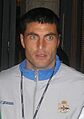
Diego Tristán scored a goal in Copa final.
-
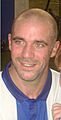
Walter Pandiani.
-
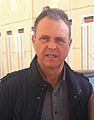
Joaquín Caparrós.
-
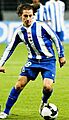
Andrés Guardado played for Deportivo between 2007 and 2012.


See also
 In Spanish: Historia del Real Club Deportivo de La Coruña para niños
