
Incan animal husbandry facts for kids

The Inca people, who lived in the Andes mountains a long time ago, were really good at raising animals. This is called Incan animal husbandry. They especially focused on animals called camelids. The two main types they raised were the llama and the alpaca. These were the only camelids that Andean people managed to tame and keep in large groups.
The Incas also used two other types of camelids that were not tamed: the vicuña and the guanaco. They would hunt guanacos in big group hunts called chacos.
The Inca people used simple tools like stones, knives (called tumis), and axes made of stone or bronze. They also made ropes in their free time. Many of these tools helped them shear the camelids, which means cutting off their wool. After shearing, the animals were let go. This way, the Incas made sure there were always enough animals. Guanacos were hunted for their meat, which was a special food.
Contents
Raising Camelids
The South American camelids were a very valuable resource for the Incas. They used almost every part of these animals!
- Their meat was eaten fresh or dried into charqui or chalona.
- Their wool was used to make strong threads and beautiful fabrics.
- Their bones, hide, fat, and even their poop had many uses. Bones could become musical instruments, hides were used for shoes, and dried poop was a great fertilizer for crops.
Young people, usually between 12 and 16 years old, were in charge of looking after the community's camelid herds.
In places with huge herds, like the altiplano (high plains) where pastures were far away, it's likely that special full-time shepherds took care of them. These shepherds were called llama michi or llama camayos. The llama camayos were like employees responsible for the state's herds. They kept track of the animals, and officials checked their work.
How Camelids Were Grouped
An old writer named José de Acosta said that in Ancient Peru, camelid herds were divided by their colors. There were white, black, brown, and moromoros (which meant multi-colored) herds. Another writer, Inca Garcilaso de la Vega, added that if a baby camelid was born a different color, it would be moved to the correct color herd once it grew up. This color system made it easier to count the animals using quipus, which were special knotted cords made with wool of the same color as the animals they were counting.
Tamed Camelids

The llama and alpaca were super important for the Inca economy.
- Llama: The Incas used llamas for everything!
- Their wool was spun into clothes for people living in the mountains. People on the coast used cotton for their clothes instead.
- Llama meat was eaten fresh or dried into charqui, which could be stored for a long time in warehouses.
- Their hides were used to make ropes, sandals, and other items.
- Dried llama poop was an excellent fuel, especially in high places where there weren't many trees for firewood.
- One of the most important uses for llamas was as pack animals. They could carry up to 40 kilograms (about 88 pounds) and walk easily up steep mountains.
- Llama caravans, which were groups of llamas traveling together, were mostly made up of male llamas. For long trips, like from the high plains to the coast, they preferred "new males" about two years old.
- The herds traveled from early morning until midday, stopping where there was water and grass. It wasn't hard to feed them because they just ate the grasses they found along the way. They would eat in the afternoon and chew their cud (like cows do) at night.
- Alpaca: Alpacas mainly provided wool. While not as fine as vicuña wool, it was still used for beautiful and fancy fabrics. The areas where alpacas grazed were managed similarly to farm lands. Different groups of people, like the ayllus (family groups), important lords, and even the Inca ruler, had their own pastures for their animals.
- Archaeological finds and old documents show that camelids were raised on the coast long before the Incas took over. They probably ate plants in the hilly areas and in forests of carob trees. When the hills dried up, the animals would eat the pods from the carob trees.
Wild Camelids

The vicuña and the guanaco were not tamed by the Incas.
- Vicuña: Old stories say that vicuñas were never killed. Instead, they were caught to get their very valuable wool. The Inca ruler's clothes were made from this special wool. They would catch vicuñas in big group hunts (chacos), shear them, and then let them go. This helped keep their numbers healthy.
- Guanaco: Guanacos were found in many places, from warmer areas near the equator all the way down to Tierra del Fuego. A writer named Pedro Cieza de León said that guanacos were hunted to make charqui, which was stored in warehouses to feed the army. Their meat was highly valued.
How Much Meat Was Eaten?
Old records show that even a regular Inca person could own up to a thousand camelids, while an important lord might own as many as fifty thousand! Raising these animals was a huge source of wealth back then.
Writers from the past said that meat from all camelids was eaten. However, because there were rules about when animals could be killed, eating fresh meat was probably a special treat. Most people likely only got fresh meat when they were in the army or during big ceremonies when many animals were sacrificed and shared.
Later, when the Spanish arrived, they brought their own animals like cows and sheep. These new animals ate a lot of the pastures, making them disappear or become less rich. The Andean environment changed a lot because of the animals the Spanish brought during their conquest.
Other Animals Raised
Besides camelids, the Incas also raised other animals. They domesticated the cuy, or guinea pig. While not found in huge numbers, guinea pigs were a part of the Andean diet and still are today. They also raised ducks at home because their meat was highly valued.
Some old writings from the time of the Spanish colonization mention that people in the high jungle also raised tame animals like guinea pigs and turkeys.
Images for kids
-
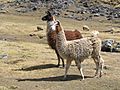
The camelids were an essential resource of the Tahuantinsuyo. The Inca state was concerned with sourcing both meat and fiber from these animals.
-
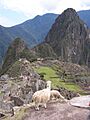
View of llamas in the citadel of Machu Picchu.
-
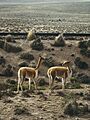
Vicuñas in the Salinas y Aguada Blanca National Reserve.
See also
 In Spanish: Ganadería incaica para niños
