
Jonathan Baxter Harrison facts for kids
Quick facts for kids
Jonathan Baxter Harrison
|
|
|---|---|

Jonathan Baxter Harrison, around 1880
|
|
| Born | April 5, 1835 |
| Died | June 17, 1907 |
| Occupation | journalist, Unitarian minister |
| Known for | advocacy of forest preservation; studies of New England working class, Indian reservations, and postbellum South |
Jonathan Baxter Harrison (born April 5, 1835 – died June 17, 1907) was an important American writer and minister. He cared deeply about many big issues of his time. These included ending slavery, protecting forests, and fighting for the rights of Native Americans. He also worked to improve the lives of everyday working people. Harrison is known for writing about American life in a very real way. His work helped shape how writers told stories about regular people.
Contents
Jonathan Harrison's Life Story
Early Years and War Service
Jonathan Harrison was born in a simple log cabin in Greene County, Ohio. From a young age, he loved to read. He would often study by firelight after long days working in the fields. As a young man, he became a Methodist minister. Later, he worked for a Quaker newspaper that was against slavery.
When the American Civil War began, Harrison joined the army. He was a First Sergeant in the 8th Indiana Infantry Regiment. This group fought in the Battle of Rich Mountain. After his time in the army, he became a newspaper editor. He edited the Winchester Journal in Randolph County, Indiana. Here, he started writing letters to Charles Eliot Norton. Norton was an important figure who worked to share good ideas. They became lifelong friends. Norton saw Harrison as a wise and honest person, much like Abraham Lincoln.
Moving East and New Friendships
After the war, Harrison became a Unitarian minister. This was a different kind of religious leader. He also joined a movement called Spiritualism. Many people who wanted social change were part of this group. To be closer to his friend Norton, Harrison moved to the eastern United States.
He worked as a Unitarian minister in Montclair, New Jersey, from 1870 to 1873. Later, he moved to Franklin, New Hampshire, in 1879. He lived there until he passed away. In New Hampshire, he met other important people in Norton's group. These included Frederick Law Olmsted, a famous landscape architect. He also met William Dean Howells, who edited The Atlantic Monthly magazine.
Writing About Important Issues
With encouragement from his friends, Harrison began writing about big social issues. He wrote about life in the Southern states after the Civil War. He also wrote about the lives of working-class people in New England. He studied the situation of Native Americans. And he wrote about how forests in the Northeast were being cut down too quickly.
In 1882, there was a big effort to save Niagara Falls. Harrison wrote many letters to newspapers in Boston and New York. These letters helped change public opinion. People started to support protecting the natural beauty of the falls. By 1889, he was a well-known writer. That year, Harvard University gave him an honorary degree. This was a special award for his achievements.
Harrison's Unique View of America
Harrison's friends saw him as someone who understood American life very well. He traveled widely and talked to many ordinary people. He wrote about their everyday lives, especially in the South after the war. He wanted to show educated people how the rest of America lived and thought.
Like his friend Charles Eliot Norton, Harrison worried about how money and business could harm culture. He wanted to make sure that people cared about the spiritual lives of ordinary working people. His writings are still important today. They help us understand what life was like in the United States in the late 1800s.
Images for kids
-
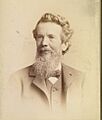
Jonathan Baxter Harrison, around 1880
