
Meme facts for kids
A meme is like an idea, a behavior, or a style that spreads quickly from person to person. Think of it as a cultural message that gets copied and shared. This sharing can happen through talking, writing, gestures, or even online. Memes help us understand how ideas move and change within a group of people.
The word "meme" is often used today to describe funny pictures or videos shared on the internet. These are called Internet memes. They are copied, changed, and passed around online, becoming a shared experience.
Contents
What Does 'Meme' Mean?
The word meme was created by Richard Dawkins in his 1976 book, The Selfish Gene. He shortened it from "mimeme." This word comes from an ancient Greek word, mīmēma, which means 'imitated thing'. It's related to the Greek word for 'to imitate'.
Dawkins used "meme" to explain how ideas and cultural things spread, much like genes spread in biology. He gave examples like catchy tunes, popular sayings, fashion trends, and even building techniques.
Where Did the Idea of Memes Come From?
Richard Dawkins' Big Idea

The idea of memes started with Richard Dawkins, a British scientist. He wrote that evolution isn't just about genes. It's about anything that can copy itself and spread. He saw memes as another way for things to copy and spread, helping to explain human behavior and how culture changes.
Dawkins thought of memes as any cultural item that gets copied. He said melodies, fashion, and learned skills are good examples. Memes spread because people are good at copying information and actions.
People don't always copy memes perfectly. They might change them, combine them, or make new ones. This is how memes can change over time. Dawkins compared this process to how genes change through natural selection in biology.
He also pointed out that if you share a great idea, it can live on long after you're gone. Think of famous thinkers like Socrates or Leonardo da Vinci. Their ideas are still powerful today, even though they lived a long time ago.
How Memes Spread and Survive
The Life Cycle of a Meme

.jpg)
.jpg)
Just like living things, memes are better at spreading if they can copy themselves well. Successful memes stick around and spread widely. Memes that aren't very good at copying themselves are forgotten.
For a meme to survive, it needs to be remembered. The longer a meme stays in people's minds, the more likely it is to spread. When someone uses a meme, they help it live longer.
Memes can spread in different ways:
- Directly: From one person to another through talking or showing.
- Indirectly: Through things like books, songs, or online posts.
Some people compare the spread of memes to how a cold or flu spreads. Ideas can be "contagious"! Think of popular trends or fads that everyone starts doing. However, this is different from natural actions like yawning, which we do without learning.
Different Ways Memes Travel
A scientist named Aaron Lynch described seven ways memes can spread:
- Family Sharing: Ideas that children are very likely to learn from their parents.
- Group Ideas: Ideas that make a group stick together and not listen to outside ideas. This helps the group's ideas stay strong.
- Sharing with Everyone: Ideas that encourage people to tell others, even outside their family. Many movements spread this way.
- Long-Lasting Ideas: Ideas that make people want to keep them for a long time. These ideas are hard to forget or replace.
- Fighting Other Ideas: Ideas that make people want to challenge or stop competing ideas.
- Easy to Understand: Ideas that most people find logical or sensible. These spread more quietly.
- Self-Benefit: Ideas people adopt because they think it will help them.
How Memes Change Over Time
Memes change and evolve, much like living things. For evolution to happen, three things are needed:
- Variation: New changes or ideas are introduced.
- Copying: The ability to make copies of these ideas.
- Survival Advantage: Some ideas are better suited to their environment and spread more easily.
.gif)
Richard Dawkins said that memes have these qualities, so they also go through a type of natural selection. Ideas that help people survive or are simply good at spreading will continue to exist. For example, if a group develops a better tool design, that idea spreads and gives them an advantage.
Sometimes, memes can spread even if they don't directly help the person who has them. People are like "hosts" for memes, helping them to copy and spread.
Memes can also change in two main ways:
- Copying Instructions: Like copying a recipe exactly.
- Copying the Result: Like watching someone bake a cake and then trying to make one yourself, even if you don't copy every single step.
Groups of memes that work well together are called memeplexes. These are like bundles of ideas that spread as a package. If a new idea fits into a successful memeplex, it might get accepted more easily.
What is Memetics?
Memetics is the study of memes. It looks at how ideas spread and change in culture. This field tries to use scientific methods, similar to how scientists study genes or diseases, to understand how cultural ideas move from person to person.
Memes in the Digital Age
An Internet meme is an idea, image, video, or phrase that spreads very quickly online. You see them everywhere: on social networks, blogs, in emails, and on news sites. Sharing memes with friends can be a way to show you care, sometimes called "pebbling."
In 2013, Richard Dawkins said that Internet memes are special. They are often changed on purpose by people, using their creativity. This is different from his original idea of memes changing randomly.
Internet memes show how quickly ideas can reflect current events and become part of how we remember a time. For example, the "Gangnam Style" music video by Psy became hugely popular in 2012. People quickly made their own versions, like "Mitt Romney Style," which was a funny take on a politician during the 2012 U.S. presidential election.
Meme Stocks: Online Buzz in Business
Meme stocks are company shares that become popular because of a lot of online talk, not just because the company is doing well. These stocks get a lot of attention from individuals or groups on the internet.
For example, in 2021, a group on Reddit called r/wallstreetbets became famous for encouraging people to invest in companies like GameStop. This led to a sudden and big increase in GameStop's stock price, showing the power of online communities.
Memes and Politics
In countries like the United States, political campaigns have used Internet memes a lot in recent years. Sometimes, there are concerns that memes can spread false information during elections. It's important to be careful and check facts when you see political memes online.
See also
 In Spanish: Meme (cultura) para niños
Images for kids
-

Typical format for image macros
-
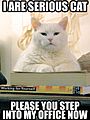
A lolcat image macro, of a style popular in the mid-2000s
-

Advice animal meme
-

Example of the "deep-fried" style of meme, where colours are distorted and saturated and characters have glowing eyes
-
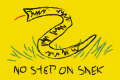
A comedic rendition of the Gadsden Flag, which pokes fun at the political position of those who use it, such as libertarians.
-

This image macro belongs to the public domain in the United States as the background is taken by the Department of Agriculture


.svg)

 | Janet Taylor Pickett |
 | Synthia Saint James |
 | Howardena Pindell |
 | Faith Ringgold |
