
Operation Dixie facts for kids

Operation Dixie was a special effort by a big group of labor unions called the Congress of Industrial Organizations (CIO). This campaign happened right after World War II. Its main goal was to help workers in the Southern United States join unions, especially those in the textile industry.
The campaign started in the spring of 1946. It covered 12 Southern states. The CIO wanted to achieve two main things. First, they aimed to protect the good wages workers had won in the Northern United States. They believed raising wages in the South would help. Second, they hoped to change the politics of the South. They wanted the region to support workers' rights more. This would help unions win support across the whole country.
Operation Dixie faced many challenges and did not succeed. One big problem was the Jim Crow laws. These laws caused deep racial problems in the South. It made it very hard for Black workers and poor white workers to work together to form unions. Also, a new law called the Taft-Hartley Act made things tougher. This law made it harder for unions to organize. It limited workers' right to strike and stopped "closed shops." A closed shop meant only union members could be hired.
Another issue was the Cold War and the "Red Scare." This was a time when many people were very afraid of communism. This fear made people less trusting of unions and other groups seen as "left-wing."
The failure of Operation Dixie had a big impact. It led the CIO, which was usually more progressive, to join with the more traditional American Federation of Labor. They formed the AFL–CIO in 1955. This showed a shift away from unions trying to change society. Instead, they focused more on just improving wages and working conditions.
In the long run, Operation Dixie's failure meant the South stayed a place with low wages and few unions. This made it harder for unions to stay strong in the North. Businesses could threaten to move to the South for cheaper labor. This helped lead to a decline in the American union movement in the second half of the 20th century.
Contents
History of Operation Dixie
Early Union Growth

The first labor unions in America mostly started in the Northern United States. For example, shoemakers in Philadelphia formed a group in 1792. Printers in New York City followed in 1794. Other groups of workers formed unions in Northern cities like Baltimore and Boston.
It took longer for unions to appear in the South. The first Southern union was for printers in New Orleans in 1810. The North became industrial much faster than the South. The South was mostly farms and relied on slavery. This meant fewer factories and fewer reasons for industrial workers to form unions there.
Unions grew a lot when President Franklin D. Roosevelt was in office. From 1933 to 1945, union members increased from under 3 million to over 14 million. Even during World War II, unions gained members in Southern cities. These cities included Memphis, Birmingham, and Atlanta. Union growth in the South was not just in one industry. It happened in coal mining, tobacco, paper, oil, and some textile factories.
As World War II ended, people thought unions would grow even more. Factories were getting ready to make many goods for people to buy.
Unions believed organizing the South was very important. In 1945, about 35% of American non-farm workers were in unions. But without unions in the South, pro-union politicians could not get enough power in Congress. This allowed pro-business politicians and conservative Southern politicians to stop laws that helped unions. Also, without unions in the South, businesses could move there for cheaper labor. This weakened the power of unions everywhere. Union leaders believed that organizing Southern workers would help protect wages and make politics more friendly to workers.
Starting Operation Dixie
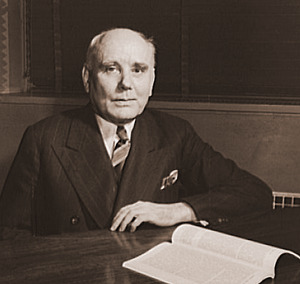
The Congress of Industrial Organizations (CIO) began planning Operation Dixie in September 1945. CIO President Philip Murray asked a committee to study where unions could grow after the war. The committee reported that the "best place for the CIO to undertake organizing...would be in the South." They noted the South's conservative politics and low wages.
After many discussions, the CIO's leaders approved a big plan. In March 1946, they decided to unionize all manufacturing industries in the Southern United States.
When Operation Dixie began, the CIO had about 225,000 members in the South. This number did not include 100,000 Southern members of the United Mine Workers of America. That union had left the CIO in 1942. About 42,000 CIO members in the South were part of the Textile Workers Union of America. Other important CIO unions in the South included the United Cannery, Agricultural, Packing, and Allied Workers of America, the United Steelworkers of America, and unions for oil, shipbuilding, and rubber workers.
The CIO set up a special group called the Southern Organizing Committee (SOC). This committee included leaders from major unions like the United Auto Workers (UAW) and the United Electrical Workers (UE). Van Bittner, an experienced Steelworkers' Union organizer, was chosen to lead the SOC. George Baldanzi, a vice president of the Textile Workers' Union, was his main helper.
The CIO planned to raise $1 million for the campaign. Member unions contributed money based on their size. They also planned to send 200 organizers to the South. Union officials saw this as a return to the successful methods used to organize the steel industry in 1936 and 1937.
CIO President Murray called this campaign "the most important drive of its kind ever undertaken." This effort also encouraged the rival American Federation of Labor (AFL) to start its own organizing drive in the South that same May.
Organizing Strategies
The CIO's plan was to pick certain areas in the South. They would send teams of organizers to these places. These teams would try to organize "everything in sight." Workers who joined the union would pay a $1.00 initiation fee. They would then pay $1.50 in dues each month. This money would go back to support the organizing campaign in the region. Military veterans were not required to pay these fees or dues.
The main office for the Southern Organizing Committee was in Atlanta. The committee worked closely with different CIO unions. They helped solve any disagreements about which union should organize certain workers.
The money from the member unions was a big help. The Steelworkers and the United Cannery, Agricultural, Packing, and Allied Workers each gave $200,000. The Textile Workers gave $125,000. The Auto Workers, the United Electrical Workers, and CIO headquarters each contributed $100,000 to Operation Dixie.
