
Recreational vehicle facts for kids


A recreational vehicle, or RV, is like a home on wheels! It's a special motor vehicle or trailer that has living spaces inside. People use RVs for traveling, camping, and even as a place to live.
There are many kinds of RVs. Some popular types are motorhomes, campervans, travel trailers, and popup campers. Each type offers a different way to explore and enjoy the outdoors.
Most RVs come with useful things like a kitchen for cooking, a bathroom, and comfy beds. Some RVs are simple, with just the basics for sleeping and cooking. Others are very fancy, offering things like air conditioning, TVs, and even nice countertops, making them feel like a luxury apartment on the road!
Contents
Exploring Different Types of RVs
RVs come in two main forms: those you tow and those you drive. Some RVs have just one level, while others are two stories tall! To make more room when parked, many larger RVs have "slide-outs." These are sections that extend outwards, creating extra living space.
Motorhomes are RVs you can drive. Their engine might be in the front or the back. RVs with rear engines are sometimes called "pushers." While older models often used different fuels based on engine placement, modern RVs offer more choices for both gasoline and diesel engines.
Here's a quick look at some common RV types:
| Name | Image | Type | Length | Description |
|---|---|---|---|---|
| Camper or Travel trailer |  |
Trailer | 13 to 35 ft (4.0 to 10.7 m) | This trailer attaches to the back of a towing vehicle. |
| Fifth wheel |  |
Trailer | 17 to 57 ft (5.2 to 17.4 m) | This trailer connects to a special hitch in the bed of a pickup truck. The biggest ones might even need a tractor unit to pull them. |
| Folding / Pop-up |  |
Trailer | 8 to 16 ft (2.4 to 4.9 m) | These have sides that fold down for easy towing and pop up when you're ready to camp. |
| Class A (Integrated) | .jpg) |
Motorhome | 26 to 45 ft (7.9 to 13.7 m) | These large motorhomes are often built on strong truck or bus frames. |
| Class B (Semi-integrated) |  |
Motorhome | 17 to 23 ft (5.2 to 7.0 m) | These are usually vans with taller roofs, offering a compact living space. |
| Class C (Alcove) | .jpg) |
Motorhome | 20 to 30 ft (6.1 to 9.1 m) | These motorhomes are built on truck or van bases and often have a sleeping area over the driver's cab. |
| Truck camper | .jpg) |
Insert | 8 ft (2.4 m) or more | This type of camper fits right into the bed of a pickup truck. |
The History of Recreational Vehicles
Early RV Adventures
The very first RVs were pulled by horses! They started appearing in the late 1800s. People adapted wagons used for other jobs, like public transport or carrying sheep, into mobile homes.
The first RV made just for fun was a horse-drawn "Wanderer" in the UK in 1884. Dr. Gordon Stables ordered it so he could travel and enjoy nature. This idea inspired the first RV club, The Caravan Club, in 1907. After World War I, cars became more common and affordable. This meant fewer horse-drawn RVs were used.
The first RVs with engines appeared in France around 1900. Some were pulled by steam engines, and soon after, gasoline-powered motorhomes arrived. In America, early motorhomes were called "camp cars." By 1911, lightweight tent trailers became popular in the US. This was thanks to better roads and new national parks.
RVs Grow and Develop
In the early 1900s, RV builders in many countries tried out different designs. They made various kinds of trailers, motorhomes, and even luxury touring cars. Early motorhomes were often converted trucks. They were big and expensive, so mostly wealthy people or those who built their own could afford them.
A big change came in 1950 with the small, light Volkswagen Kombi. This made motorhomes much more accessible. During the 1920s and 1930s, travel trailers became very popular. They were affordable and could handle different weather. The Great Depression also led many to seek low-cost housing, boosting trailer demand.
Some clever builders created unique RVs during this time. One famous company, Airstream, started building trailers in 1931. They are one of the few early RV makers still around today. These early designs helped create the RV industry we know now.
Post-War RV Boom
After World War II, from 1945 to 1960, RVs became very popular in many countries. People had more money and free time for vacations. Special RV parks were built just for RV users.
New technologies made RVs much more comfortable. These included better batteries, refrigerators, gas stoves, and lighter building materials. More powerful engines also allowed RVs to become larger and faster. Governments also started making rules about how RVs were made and used.
RVs in the 21st Century
In 2016, the average age of RV owners in the United States was 45. By 2020, more young adults, often called millennials, became interested in RVs. They wanted to go camping and enjoy outdoor activities.
The COVID-19 pandemic caused a big increase in RV sales in the United States. By March 2021, 11.3 million households owned an RV. This was a 26 percent increase over the previous ten years. In October 2021, North America produced 58,000 RVs, the most ever in a single month. This shows how much people wanted RVs for domestic trips during that time.
-
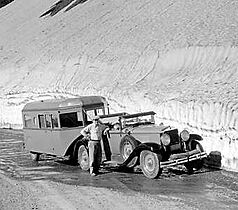
A car and tourist observation trailer from 1933
-
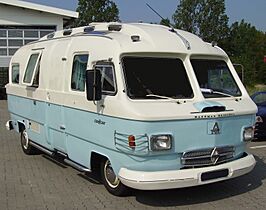
A 1970s Hanomag-Henschel Orion RV
-
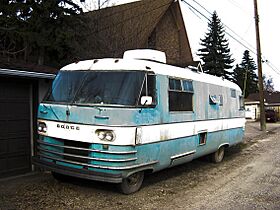
A 1970s Dodge Travco motorhome
-
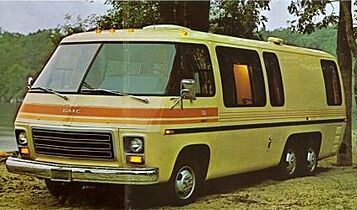
A 1973 GMC Motorhome
-
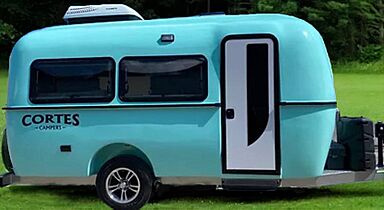
Modern fiberglass trailers are lighter and more durable


The RV Manufacturing Industry
In the United States, about 85 percent of RVs are made in Indiana. A large part of this production happens in Elkhart County. This area is known as "the RV Capital of the World." The RV industry brings in billions of dollars each year for Indiana. It also provides many jobs and wages for people in the state.
The RV industry in Elkhart is connected to many other companies. These companies make parts for trailers and special buses. Sometimes, challenges like taxes on imported materials can affect the industry. For example, taxes on steel and aluminum caused RV prices to go up. This led to fewer RVs being sold in 2018 and 2019.
How People Use RVs

.jpg)
RVs are most often used as a place to live while traveling. Instead of staying in a hotel, families can sleep in their RV during a road trip. Some people even tow their regular car behind their RV. This makes it easier to explore once they reach their destination.
While most people use RVs for temporary travel, some choose to live in them full-time. About one million Americans live in RVs. In Australia, retired people who travel in RVs are sometimes called "grey nomads."
You can also rent RVs for vacations. Companies specialize in renting RVs to families. This lets people enjoy the fun of an RV trip without owning one. It's often cheaper than other vacation options and gives you lots of freedom to plan your journey.
It is legal to live in an RV in the United States. However, there are rules about where and for how long RVs can be parked.
Some RV owners add solar panels to their roofs. This allows them to generate their own electricity. With solar power and internet access, many RV users can even work remotely while traveling.
RVs are also common at outdoor events like festivals. However, most festivals have rules about how RVs can be used during the event.
Protecting Our Planet: RVs and the Environment
RVs use fuel, which releases gases into the air. These gases can affect air quality and contribute to greenhouse gases. It's important to be aware of this impact when using RVs.
The making and using of RVs also affect the environment in other ways. For example, the RV industry uses a lot of wood. Some of this wood comes from tropical forests. It's important that wood is sourced responsibly to protect rainforests, wildlife, and local communities.
When RVs are used in natural areas, they can sometimes cause damage. This can include chemical pollution, harming soil and water, disturbing wildlife, and causing erosion. Studies have shown that many drivers don't realize their personal impact.
A study in 2021 looked at camping in Sri Lanka's national parks. It found that campsites, both busy and quiet, showed signs of damage. This included compacted soil, less natural debris, fire scars, and litter. These issues harmed the natural beauty and visitor experience. This shows why careful management and education are important for sustainable camping.
See also
- Alternative housing
- Fulltiming
- Housetrucker
- Motorhome
- List of recreational vehicle manufacturers
- List of recreational vehicles
- Living Vehicle
- Recreational vehicle terms
- Rest area
- RV park
- Tiny-house movement
- Vardo (Romani wagon)
- Van-dwelling
- Breaking Bad
