
Principality of Waldeck and Pyrmont facts for kids
Quick facts for kids
Principality of Waldeck and Pyrmont
Fürstentum Waldeck und Pyrmont
|
|||||||||||
|---|---|---|---|---|---|---|---|---|---|---|---|
| 1180–1918 | |||||||||||
 .svg) Top: Flag
(before 1830) Bottom: Flag (after 1830)  Coat of arms
|
|||||||||||
|
Anthem: "Mein Waldeck"
|
|||||||||||
.svg)
Waldeck (red) within the German Empire. The small northern territory is Pyrmont while the southern lands are Waldeck.
|
|||||||||||

Map of Waldeck, showing the border between Westphalia and Hesse-Nassau
|
|||||||||||
| Status | State of the Holy Roman Empire State of the Confederation of the Rhine State of the German Confederation State of the North German Confederation State of the German Empire |
||||||||||
| Capital | Waldeck (to 1655) Arolsen (from 1655) 51°22′N 9°1′E / 51.367°N 9.017°E |
||||||||||
| Common languages | German | ||||||||||
| Religion | United Protestant: Evangelical State Church of Waldeck and Pyrmont | ||||||||||
| Prince | |||||||||||
|
• 1712–1728
|
Friedrich Anton Ulrich (first) | ||||||||||
|
• 1893–1918
|
Friedrich (last) | ||||||||||
| Historical era | Middle Ages | ||||||||||
|
• Established as a County
|
1180 | ||||||||||
|
• Became Reichsgraf (immediate count)
|
1349 | ||||||||||
|
• Succeeded to Pyrmont
|
1625 | ||||||||||
|
• Raised to Imp. Principality
|
January 1712 | ||||||||||
|
• Administered by Prussia
|
1868 | ||||||||||
|
• German Revolution
|
1918 | ||||||||||
|
• Subsumed into Prussia
|
1929 | ||||||||||
| Population | |||||||||||
|
• 1848
|
56,000 | ||||||||||
|
|||||||||||
| Today part of | Germany | ||||||||||


The Principality of Waldeck and Pyrmont was a historical state in what is now Germany. It existed for a very long time, from the late 1100s until 1929. It started as a small county and grew into a principality. A principality is a territory ruled by a prince. Waldeck and Pyrmont was part of bigger empires and confederations throughout its history. Today, its lands are part of the German states of Hesse and Lower Saxony.
Contents
A Look Back: History of Waldeck and Pyrmont


The ruling family of Waldeck came from the Counts of Schwalenberg. They first appeared around 1120 at Waldeck Castle. This castle overlooked the Eder river. Over many years, this family built up a small territory in what is now northern Hesse.
From County to Principality
Waldeck began as a county, a territory ruled by a count. In 1349, it gained special independence within the Holy Roman Empire. This meant it was directly under the Emperor, not another lord. The family faced money problems and became tied to the Landgraviate of Hesse in the 1400s.
The Waldeck family split into different branches over time. In 1526 and 1529, the rulers of Waldeck-Wildungen and Waldeck-Eisenberg changed their states to Lutheranism. This was a big religious change in Europe.
In 1626, the Waldeck family also inherited the County of Pyrmont. From then on, they called themselves "Counts of Waldeck and Pyrmont." Waldeck and Pyrmont were two separate areas, not connected by land. They only became one legal state much later.
In 1655, the main residence of the county moved from Waldeck to Arolsen. In 1682, Count George Frederick was given the title of "Prince of Waldeck" by the Emperor. This made Waldeck a principality. Since he had no sons, the rule passed to his cousin, Christian Louis, who became the sole ruler in 1692.
Princes and Wars
On January 6, 1712, Frederick Anthony Ulrich of Waldeck and Pyrmont was officially made a prince. This confirmed Waldeck and Pyrmont as a principality. During the American War of Independence (1775-1783), Prince Frederick Carl Augustus sent soldiers to help the British. About 1,225 Waldeck soldiers fought in America.
The principality was involved in the Napoleonic Wars. In 1807, it joined the Confederation of the Rhine, a group of German states allied with Napoleon. For a short time (1806-1812), Pyrmont was a separate principality. However, it was reunited with Waldeck after Prince Frederick's death.
In 1815, the Congress of Vienna confirmed Waldeck and Pyrmont's independence. It then became a member of the German Confederation. In 1832, it joined the Zollverein, a customs union that helped trade.
Becoming Part of Prussia
Waldeck and Pyrmont had been connected to the County of Pyrmont since 1645. In 1849, the two territories officially united to form the Principality of Waldeck-Pyrmont.
In 1862, Waldeck-Pyrmont made a military agreement with Prussia. Because of this, Waldeck-Pyrmont fought on Prussia's side in the Austro-Prussian War of 1866. This helped it avoid being taken over by Prussia. However, the small principality struggled with money.
To solve its financial problems, Waldeck-Pyrmont signed a treaty with Prussia in 1867. From January 1, 1868, Prussia took control of the principality's finances, administration, courts, and schools. Waldeck-Pyrmont remained officially independent, but Prussia managed many of its daily affairs. The prince still had some power, like over the church and vetoing new laws. This arrangement continued when the principality joined the new German Empire in 1871. In 1905, Waldeck and Pyrmont had an area of 1,121 square kilometers and a population of 59,000 people.
The ruling family of Waldeck and Pyrmont had close ties to the royal family of the Netherlands. The last ruling prince, Frederick, was the brother of Queen Emma of the Netherlands.
The End of the Principality
After World War I, a revolution swept through Germany. On November 13, 1918, the monarchy in Waldeck and Pyrmont was abolished. The principality became the Free State of Waldeck-Pyrmont within the Weimar Republic.
Pyrmont separated from Waldeck on November 30, 1921, and joined Prussia. The remaining territory was then simply the Free State of Waldeck. Due to financial difficulties, the Free State of Waldeck could no longer support itself. So, on April 1, 1929, the state was abolished. It became part of the Prussian province of Hesse-Nassau. This marked the end of Waldeck as an independent state.
Waldeck Today
When Waldeck joined Prussia in 1929, its districts were kept. Later, in 1942, the three districts of Waldeck merged into a new Waldeck district. This new district had borders similar to the old Free State. In 1945, it became part of "Greater Hesse," which became the modern state of Hesse in 1946. Today, Waldeck is part of the Waldeck-Frankenberg district in Hesse.
Military Service
Waldeck had its own soldiers, but for much of its history, these soldiers often served in other armies. They were known as 'auxiliary troops' or 'soldiers for hire' by the rulers of Waldeck. This was a common practice at the time.
Waldeck soldiers served with the Dutch army. They also fought for the British in the American War of Independence (1776-1783). In America, these German soldiers were often called 'Hessians'. The Waldeck regiment was captured by French and Spanish forces. Only a small number returned home.
During the Napoleonic Wars, Waldeck soldiers served in the French army. They fought in the Peninsular War against the Duke of Wellington. After Napoleon's defeat in 1814, Waldeck provided companies to the newly formed German Confederation.
By 1866, the Waldeck military unit was called the Fürstlisches Waldecksches Füselier-Bataillon. They allied with Prussia in the Austro-Prussian War but did not see action. After 1867, Waldeck joined the North German Confederation under Prussian leadership. The Waldeck battalion became part of a Prussian infantry regiment.
The Waldeck soldiers were allowed to wear a special symbol, the Cockade of Waldeck, on their helmets. This showed their unique identity within the Prussian army. The regiment fought in the Franco-Prussian War of 1870 and later on the Eastern Front during World War I.
Gallery of Castles
-
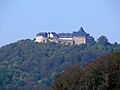
Castle Waldeck, Hesse
-
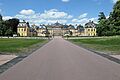
Arolsen Castle
-
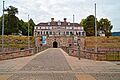
Schloss Pyrmont
-
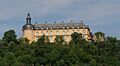
Friedrichstein Castle at Bad Wildungen
-
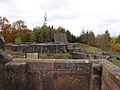
Ruins of Eisenberg Castle near Korbach
-
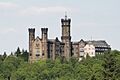
Schaumburg Castle


See also
- Arolsen Castle
