
Achene facts for kids

An achene is a special kind of fruit that you might not even realize is a fruit! It's a dry fruit that doesn't open up when it's ripe. Inside each achene, there's just one seed. The cool thing about achenes is that the seed is very close to the fruit's outer wall, called the pericarp, but it's not actually stuck to it. This makes the whole achene look a lot like a single seed itself!
Contents
What is an Achene?
Achenes are a type of simple, dry fruit found in many flowering plants. They are formed from a single part of the flower called a carpel. Unlike some fruits that split open to release their seeds, achenes are indehiscent, meaning they stay closed when they are mature. The single seed inside an achene almost completely fills the fruit, but it remains separate from the fruit's outer layer. This unique structure often makes achenes appear to be just seeds, because the fruit wall hardens and closely surrounds the seed.
Common Examples of Achenes
You can find achenes in many plants around you. For example, the fruits of buttercup, buckwheat, caraway, quinoa, and amaranth are all typical achenes.
The tiny "seeds" on the outside of a strawberry are actually achenes! The juicy red part we eat is not the fruit itself, but a special part of the flower that grew big and sweet. This makes the strawberry an accessory fruit.
A rose also produces achenes. These small fruits are found inside the rose hip, which is the round, often red or orange part that forms after the flower fades. The rose hip is a special structure that holds many achene fruits together.
Different Kinds of Achenes
Achenes come in many interesting shapes and sizes, often with special features that help them spread their seeds.
Winged Achenes: Samaras
Have you ever seen a maple seed spin like a helicopter as it falls from a tree? These are called samaras, and they are a type of achene with a special wing attached. This wing helps the wind carry the seed far away from the parent tree, giving the new plant a better chance to grow.
Tumble Fruits: Achenes on the Go
Some achenes have fuzzy or hair-like parts that help them travel. They can tumble or float in the wind, spreading their seeds to new places. Think of them like tiny parachutes! This type is sometimes called a tumble fruit or diaspore. An example is the fruit of some Anemone plants.
Grains and Utricles
A caryopsis, also known as a grain, is a type of fruit that looks a lot like an achene. The main difference is that in a grain, the outer wall of the fruit (the pericarp) is completely fused, or stuck, to the seed inside. This is why you can't easily separate the 'shell' from the 'seed' in grains like corn or wheat.
An utricle is similar to an achene, but its fruit wall is often thin and puffy, like a tiny balloon.
Cypselas: The Sunflower's Secret

The "seeds" you eat from a sunflower are actually a special type of achene called a cypsela. Even though they look like a single seed, they are technically a fruit with a hard outer shell. This shell is the fruit wall, and inside is the actual seed. When you crack open a sunflower "seed," you're actually opening the cypsela fruit to get to the edible seed inside.
Many cypselas, like those from a dandelion, have fluffy, parachute-like structures called pappi attached to them. These pappi are modified parts of the flower that help the wind carry the cypsela far away, just like tiny umbrellas! This is a clever way for plants to spread their seeds.
Images for kids
-
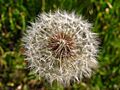
The fluffy pappi on a dandelion "clock" help the cypselas (the fruits) spread in the wind.
-
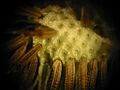
A close-up view of a dandelion "clock" showing the central part and the cypselas.
-
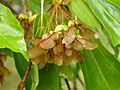
Samaras of Acer buergerianum are achenes with large wing-like structures that help them fly.
-
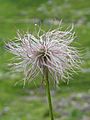
The diaspore of Pulsatilla uses long, hairy parts to catch the wind and spread its achenes.
-
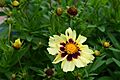
Coreopsis tinctoria flowers showing different stages of blooming, with cypselas forming.
-
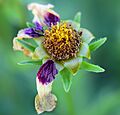
A Coreopsis tinctoria flower head where cypselas are forming as the small flowers finish blooming.


