
Bicton, Western Australia facts for kids
Quick facts for kids BictonPerth, Western Australia |
|||||||||||||||
|---|---|---|---|---|---|---|---|---|---|---|---|---|---|---|---|

View of Point Walter Reserve, Bicton
|
|||||||||||||||
| Established | 1830s | ||||||||||||||
| Postcode(s) | 6157 | ||||||||||||||
| Area | 3.2 km2 (1.2 sq mi) | ||||||||||||||
| Location | 15 km (9 mi) from Perth | ||||||||||||||
| LGA(s) | City of Melville | ||||||||||||||
| State electorate(s) | Bicton | ||||||||||||||
| Federal Division(s) | Tangney | ||||||||||||||
|
|||||||||||||||
Bicton is a lovely riverside suburb in Perth, Western Australia. It is located about 10 kilometers (6 miles) south-west of Perth's main city area. Most of Bicton is made up of homes and families. It is part of the City of Melville local government area, which helps manage local services.
The suburb sits right next to the beautiful Swan River to the north. A large part of its northern area is a special protected natural space called a Class-A nature reserve at Point Walter. Bicton was first settled in the 1830s when a big vineyard was started. It was mostly a farming area until a former horse racing track was divided into smaller plots for houses in 1919. More homes were built in the Castle Hill area in 1921, making Bicton a popular place to live near Fremantle. The suburb grew even more after World War II. Today, Bicton is known as one of Perth's nicest riverside suburbs, home to many people who own businesses and have done well.
Discovering Bicton: A Perth Suburb
A Glimpse into Bicton's Past
Early Inhabitants and European Arrival
Before Europeans arrived, the Noongar Aboriginal people, specifically the Beeliar group, lived in this area. They found food and fresh water along the riverbanks and in the open grassy spaces. The sandbar at Point Walter was an important crossing point over the river. The Noongar people called the area around Point Walter Dyoondalup, which means "place of white sand". They had many traditional stories about this special place.
The riverfront areas of East Fremantle and Bicton, including Blackwall Reach, were known as Quaada gabee. This means "beautiful water" and was home to several freshwater springs. In April 1829, the Swan River Colony was officially started by Charles Fremantle. However, Bicton itself was not settled until 1830. That year, four men – John Hole Duffield, Alfred Waylen, Joseph Cooper, and William Hapgood – received land to start farms.
From Vineyards to Racecourses
Bicton got its name from a village in England called Bicton, Devon, where John Hole Duffield used to live. In 1845, Duffield planted the colony's first large vineyard with 5,700 grapevines. Sadly, in 1860, his son James Hole Duffield and another worker, John Luff, passed away in an accident while digging a well on the property.
Later, in 1904, the Bicton Racecourse was built on land rented by the Higham family. This happened after the South Fremantle Racecourse closed. The racecourse was used for horse racing until 1917, when a new law stopped racing there. In 1919, the land where the racecourse once stood was divided into smaller pieces for homes. The Castle Hill area, near Point Walter, was also developed for housing in 1921. Bicton continued to grow and develop even more after World War II ended.
Bicton's Natural Beauty and Landscape
Bicton is surrounded by several main roads and the Swan River. Petra Street is to the west, Stock Road to the east, and Canning Highway to the south. The Swan River forms its northern and northwestern borders, including areas known as Melville Water and Blackwall Reach. Most of Bicton is residential, meaning it's full of homes, except for the protected reserve and golf course at Point Walter.
Bicton is known for being one of Perth's hilliest coastal suburbs. Castle Hill is the highest point. The suburb also has lovely beaches at Bicton Baths, Point Walter, and along the Bicton foreshore. Bicton sits on the Swan Coastal Plain, a flat area along the coast. Much of the land is made of limestone rock. The cliffs at Blackwall Reach are entirely made of limestone. Many old houses, especially those built around the late 1800s and early 1900s, used limestone from Bicton for their foundations. The soil in Bicton is generally sandy and not very fertile for farming.
The Swan River: A Local Treasure
The Bicton foreshore, which is the land along the river, has always been a popular spot for families to visit. Just a short distance from Bicton Baths is a grassy area with a square jetty. This is a favorite place for swimming, fishing, and other fun water activities.
Fun Things to Do and Places to See
Bicton is home to the Melville Water Polo Club and Bicton Swimming Club. Both are based at Bicton Pool, which overlooks the river and was first opened as a swimming area in 1926. Two professional water polo teams, the Fremantle Mariners (men's) and the Fremantle Marlins (women's), play their home games here. The Tom Hoad Cup, an international water polo tournament, has been held at the pool every year since 2003.
The Bicton Junior Cricket Club started around 1923 for school and church competitions. Today, the club is based in nearby Attadale but still plays some games at Bicton Primary School. You can find three shopping areas in Bicton, plus a long line of shops along Canning Highway. There are also two churches: St. Christophers Anglican Church and Bicton Presbyterian Church. The Bicton Uniting Church is in the next-door suburb of Palmyra.
For older people, Bicton has three aged care facilities: Carinya of Bicton, Braemar Lodge, and Craigview Grove. The local branch of the Returned and Services League (RSL), which supports veterans, is on Foss Street. The Leopold Hotel, a historic building, is located at the corner of Point Walter Road and Canning Highway. Many other homes and places in Bicton are also recognized for their historical importance by the Heritage Council.
A quarantine station, which was a place to check for diseases, opened in 1916 to serve the port of Fremantle. This station closed in 1983. Part of its land was turned into housing, and the rest became Quarantine Park. Its jetty is now used for fun recreational activities.
Bicton has five public parks managed by the City of Melville: Bicton Quarantine Park, Fred Jones Reserve, Harry Grose Reserve, John Dickinson Reserve, and Rod Campbell Park. There are also reserves at Bicton Baths (including Bicton Pool), Blackwall Reach, and Point Walter. At Point Walter, you can also find an eight-hole golf course and tennis courts. The suburb offers several playgrounds and paths for cycling and walking along the Swan River.
Learning in Bicton
Bicton has one public primary school, Bicton Primary School, which opened in 1904 on View Terrace. In 2011, the school had about 410 students, including those in kindergarten, pre-primary, and primary grades. The school is sometimes used by the local community and helps host an annual fair with other local schools.
Students from Bicton Primary School usually go on to Melville Senior High School. The school is also used as a polling booth (a place to vote) for both state and federal elections in Western Australia. In May 2005, a small tornado caused a lot of damage in Bicton, including $6 million worth of damage to the school. This meant the school had to close for four weeks for repairs.
Getting Around Bicton
Canning Highway forms the southern edge of Bicton. This important road connects Fremantle to The Causeway in Victoria Park. Other main roads in Bicton include Petra Street to the west, Stock Road to the east, and Preston Point Road, which runs through the suburb.
Bicton is served by Transperth bus routes 148 and 158 from Fremantle station. Other bus services, like the 910 and 111, run along Canning Highway. During school terms, the 765 school special bus also travels through Bicton. All these bus services are operated by Swan Transit.
In the past, a tram network called Fremantle Municipal Tramways had a line to Point Walter. This tram line ran between 1915 and 1939. The trams helped make Point Walter a very popular place for holidays and entertainment. With the trams came electric lights, and soon after, shops and restaurants. People enjoyed listening to McNamara's Band and taking in the amazing views of the Swan River at Point Walter.
How Bicton is Governed
Bicton has one place where people can vote in elections, called a polling booth, located at Bicton Primary School. For national elections, Bicton is part of the Division of Tangney. For state elections, it is in the Electoral district of Bicton, which was created for the 2017 state election. In the Western Australian Legislative Council, Bicton is part of the South Metropolitan region.
At the local level, Bicton is part of the Bicton-Attadale Ward within the City of Melville. This ward, which also includes Attadale, elects local councillors to represent the community.
Images for kids
-
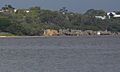
Blackwall Reach cliffs viewed from Freshwater Bay, Claremont
-
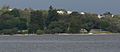
Point Walter viewed from Freshwater Bay, Claremont
-
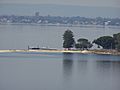
Point Walter viewed from Mosman Park
-
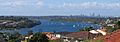
View from East Fremantle of Bicton's Blackwall Reach and Point Walter


See also
- Electoral district of Bicton
