
Chinese river dolphin facts for kids
Quick facts for kids Baiji |
|
|---|---|
 |
|
| Photograph from Miller's species description in 1918 | |
 |
|
| Size compared to an average human | |
| Conservation status | |
Scientific classification  |
|
| Kingdom: | Animalia |
| Phylum: | Chordata |
| Class: | Mammalia |
| Order: | Artiodactyla |
| Infraorder: | Cetacea |
| Clade: | Delphinida |
| Superfamily: | Lipotoidea |
| Family: | Lipotidae |
| Genus: | Lipotes Miller, 1918 |
| Species: |
L. vexillifer
|
| Binomial name | |
| Lipotes vexillifer Miller, 1918
|
|
 |
|
| Natural range of the baiji | |
| Script error: The function "autoWithCaption" does not exist. | |

Script error: No such module "Check for conflicting parameters".
The baiji (Lipotes vexillifer) was a gentle river dolphin that lived in China. It swam exclusively in the waters of the famous Yangtze river basin. People affectionately referred to this creature as the "Goddess of the Yangtze". Fishermen and boaters regarded it as a protector on the water. Today, the animal is listed as critically endangered and is possibly extinct.
Scientists believe it is the first dolphin species wiped out by human activities. The species has not been seen with certainty in over twenty years. A huge scientific expedition searched the river thoroughly in 2006. The team found no trace of any living baiji during the search. They declared the unique animal functionally extinct at that time.
This dolphin is also named the Chinese river dolphin or the whitefin dolphin. In scientific naming, Lipotes translates to "left behind". The species label vexillifer translates to "flag bearer". Its pale fin appeared like a triangular banner when cutting through waves. The baiji was the only species grouped inside its biological genus.
The loss of the baiji marks a great loss for world biodiversity. It was the first large water vertebrate to vanish since the 1950s. The Japanese sea lion and Caribbean monk seal disappeared around that earlier time. Along with this animal, an entire evolutionary family of river dolphins was lost. The dolphin lived beside other threatened creatures like the Yangtze finless porpoise.
Contents
- What Did the Baiji River Dolphin Look Like?
- Habitat and Distribution Across the Yangtze Basin
- Life Cycle, Diet, and Reproduction of the Baiji
- Evolutionary History and Fossil Relatives
- Cultural Legends and Folklore in China
- Why Did the Baiji River Dolphin Disappear?
- Scientific Surveys and Search Expeditions
- Past Conservation Projects and Qi Qi the Dolphin
- Lessons Learned for Modern Wildlife Conservation
- Images for kids
- See also
What Did the Baiji River Dolphin Look Like?
The baiji was a graceful water mammal with a distinct body shape. Its body was streamlined to slip through rushing freshwater currents easily. An adult male dolphin grew to about 2.3 meters (7.5 feet) long. Female dolphins were slightly bigger, reaching lengths of up to 2.5 meters. The very largest dolphin ever measured by scientists stretched 2.7 meters long.
An adult baiji weighed anywhere between 135 and 230 kilograms (300 to 500 pounds). The dolphin had a pale blue to light grey color across its back. Its belly, or ventral side, was entirely pure white. This countershading coloration provided useful natural camouflage inside cloudy river waters. Enemies or prey looking up saw white blending with bright surface sunlight.
The dolphin had a very long beak that curved slightly upward at the tip. Both the upper and lower jaws contained between 31 and 36 conical teeth. These small, sharp teeth were ideal for snapping up slippery, quick river fish. Unlike ocean dolphins, the baiji possessed tiny, reduced eyes set high on its head. These small eyes were not very sharp because the river was always murky.
Instead of a tall curved fin, it featured a low, triangular dorsal fin. When breaking the surface, this light-colored fin looked like a floating flag. That appearance gave the dolphin its traditional nickname of the "white-flag dolphin". Its wide pectoral flippers helped it steer through shallow sandy channels and sharp turns. Its powerful tail flukes drove it smoothly forward through strong river currents.
The baiji was an agile swimmer adapted to long, winding freshwater channels. When cruising normally, the dolphin swam at speeds of 30 to 40 kilometers per hour. If frightened by danger, it could accelerate up to 60 kilometers per hour. That rapid burst allowed it to dodge river obstacles and dangerous underwater nets. It came up to breathe air every twenty to thirty seconds during activity.
Because the Yangtze was filled with silt, the baiji had poor vision. To find its way around, the animal depended heavily on echolocation or biological sonar. It possessed a round, fatty organ on its forehead called a melon. The melon focused high-frequency clicking sounds into a directed beam through the water. Sound waves bounced off fish, rocks, and mud banks back to the dolphin.
Special cavities in the lower jaw received the bouncing echoes from the water. The jaw transmitted these vibrations directly to the dolphin's sensitive middle ear bones. Its brain processed the sound signals into a clear picture of the surroundings. The frequencies of these echolocation clicks ranged from 70 kilohertz to 100 kilohertz. Echolocation also helped the animals communicate emotions and locate members of their pod.
Habitat and Distribution Across the Yangtze Basin
The natural home of the baiji was the vast Yangtze river system. The Yangtze is the longest river in Asia and third-longest on Earth. In ancient times, the dolphin's range spanned over 1,700 kilometers of the river. It lived from Yichang in the west down toward the city of Shanghai. It also swam in attached freshwater basins like Poyang Lake and Dongting Lake.
Some pods even ventured into the nearby waters of the scenic Qiantang River. The dolphins preferred areas where tributaries met the main river channel. These junction points created huge swirling eddies rich in nutrients and small fish. Dolphins loved to hunt along wide sandbars where moving water trapped schooling prey. Deep water channels also provided safe resting places during winter dry seasons.
Over the decades, human activity altered the natural flow of the river basin. The dolphins were gradually forced out of their favorite side lakes and tributaries. By the late twentieth century, their range shrank by hundreds of kilometers. They became confined to the busy main stem of the central Yangtze channel. The river basin is home to roughly twelve percent of all human beings.
This massive human population placed immense pressure on the surrounding freshwater environment. Cities grew larger, and shipping traffic along the Yangtze riverway increased dramatically. Natural sandbars were dredged away to make deep navigation channels for cargo ships. Concrete walls were built along shorelines, destroying shallow nursery areas for native fish. As their natural space shrank, the dolphins faced growing competition with human activities.
Life Cycle, Diet, and Reproduction of the Baiji
The baiji was a social creature that lived in small family pods. A regular group usually consisted of two to six closely bonded individuals. Sometimes, larger aggregations of up to sixteen dolphins gathered in rich feeding zones. They spent their mornings and late afternoons foraging actively for various freshwater fishes. They used their long, sensitive beaks to probe the muddy river floor.
The dolphin's diet included many types of small and medium-sized river fishes. They ate carps, minnows, and bottom-dwelling fishes that swam through the silt. Because they could not see well, echolocation was critical for catching food. A dolphin could instantly detect the heartbeat or movement of a nearby fish. Once captured, the fish was swallowed whole, headfirst, without any chewing.
Breeding and Calf Development
Scientists gathered valuable facts about the reproduction of the baiji over time. Breeding occurred primarily during the first half of the calendar year. The peak season for females to give birth ran from February to April. Female dolphins carried their developing calves for a gestation period of ten to eleven months. A mother dolphin gave birth to a single calf every two years.
When a calf was born, it measured between 80 and 90 centimeters long. The mother immediately nudged her newborn baby to the surface for its first breath. Young calves were lighter in color and had softer, pliable skin than adults. The young stayed close to their mothers, swimming beside their dorsal fins for safety. Mothers produced rich, fatty milk to nurse their young calves underwater.
Nursing continued for eight to twenty months until the calf learned to hunt. Young males grew steadily, reaching complete sexual maturity around four years of age. Young females matured slightly more slowly, becoming fully mature at age six. In their natural habitat, a healthy baiji could live for roughly 24 years. Low birth rates meant the population could not recover quickly from sudden losses.
Evolutionary History and Fossil Relatives
The baiji has a fascinating history that dates back millions of years. It belongs to a very old branch of the toothed whale family tree. Millions of years ago, ancestral dolphins lived throughout warm, shallow coastal oceans. As ocean levels shifted, some species traveled into inland freshwater rivers. The baiji adapted completely to living its entire life in freshwater river systems.
Studies of fossil evidence show the baiji separated from other dolphins long ago. It diverged from the ancestors of South American river dolphins during the Miocene epoch. That evolutionary split occurred approximately sixteen million years in the prehistoric past. The closest extinct relative discovered by paleontologists is a fossil genus named Parapontoporia. That ancient creature lived along the Pacific coast of prehistoric North America.
Scientists place true river dolphins into several distinct, unrelated biological families. The baiji was the only member of the unique mammal family named Lipotidae. Other river dolphins include the Amazon river dolphin and the South Asian river dolphin. These species look similar because of convergent evolution in murky freshwater habitats. Each group independently developed long beaks, flexible necks, and reduced vision for river life.
Genetic studies revealed that the baiji had very low genetic diversity in modern times. A major population bottleneck occurred at the end of the last ice age. Rapid changes in global sea levels and temperatures reduced their ancient numbers significantly. Because their numbers remained relatively small, their genes changed very slowly over millennia. When modern human pressures arrived, the species lacked genetic resilience to adapt quickly.
Cultural Legends and Folklore in China
For thousands of years, the baiji held a treasured place in Chinese culture. People living along the Yangtze shores called it the "Goddess of the Yangtze". Traditional fishermen viewed the dolphin as an omen of peace and seasonal good fortune. Whenever dolphins leaped near boats, fishermen believed safe weather would follow on the water. Many folk stories warned people never to harm or hunt these sacred creatures.
One famous folk story tells of a virtuous young girl living along the riverbanks. According to the tale, her cruel stepfather wanted to sell her away for money. He took her onto a wooden boat to carry her down the river. During the journey, the girl escaped his grasp and leaped into the water. A sudden rainstorm appeared over the river and punished the cruel man's boat.
When the storm clouds cleared away, the young maiden did not drown. Instead, she had transformed into a beautiful, snow-white dolphin swimming through the waves. She swam freely toward the open horizon, safe from any further harm. Ever since that day, locals regarded the dolphin as an incarnation of that girl. Because of this legend, generations of river folk protected the gentle swimming mammals.
Why Did the Baiji River Dolphin Disappear?
The decline of the baiji happened very quickly during the twentieth century. In the 1950s, scientists estimated that several thousand baiji swam in the Yangtze. By the late 1970s, the wild population had dropped down to a few hundred. Surveys in the 1980s showed fewer than four hundred individuals remaining in the wild. By the late 1990s, scientists could only locate thirteen surviving individuals.
Dangers from Fishing Gear and Bycatch
The greatest direct threat to the baiji was accidental capture in fishing gear. This accidental catching of non-target animals is called bycatch by marine scientists. Millions of people made their living by harvesting fish from the river. Fishermen used dangerous rolling hooks, which were long lines containing hundreds of sharp barbs. Dolphins swimming along the river bottom easily became tangled in these deadly lines.
Large nets, such as gill nets and fyke traps, were also placed across channels. Dolphins could not detect fine nylon mesh using their biological sonar until too late. Once trapped underwater by a net, a mammal cannot reach the air to breathe. Tragically, at least half of all recorded dolphin deaths were caused by tangled gear. Many healthy dolphins drowned accidentally within their own home waters this way.
Another harmful method that became widespread during the 1990s was electrofishing. Fishermen used boat batteries and electric wires to stun fish in the water. While intended to harvest small fish, the electric currents swept through river shallows. An electric shock easily stunned or killed dolphins swimming through the nearby area. Electrofishing accounted for nearly forty percent of all dolphin deaths recorded in that decade.
Boat Collisions and Noise Pollution
The Yangtze is one of the busiest inland shipping highways in the world. Thousands of cargo vessels, tugboats, ferries, and motorized barges travel it daily. As China's economy expanded, boats grew much larger and their engines became faster. Dolphins swimming near the surface were frequently hit and injured by sharp spinning propellers. Boat strikes caused numerous fatal injuries to dolphins moving across active shipping lanes.
Furthermore, heavy vessel traffic created massive amounts of underwater noise pollution. The continuous roar of boat motors echoed throughout the murky river waters. Because the baiji relied on hearing rather than sight, loud sounds blinded their senses. The artificial noise drowned out their echolocation clicks, making navigation almost impossible. Confused dolphins could not locate their pod members, find prey, or avoid oncoming vessels.
Habitat Destruction and Water Quality
Human construction projects along the river altered the baiji's natural freshwater environment. The construction of dams, including the massive Three Gorges Dam, changed river flows. Dams blocked the seasonal migration routes of both dolphins and the fish they ate. Reservoirs behind dams trapped silt, altering water depths and water temperatures downstream. Sandbars where dolphins traditionally fed were stripped away by changing water currents.
At the same time, chemical runoff from farms and factories poured into the riverway. Untreated industrial wastewater and urban sewage drained directly into the middle Yangtze reaches. This pollution harmed the health of dolphins and caused painful skin and organ diseases. It also caused sharp declines in native fish populations, leaving dolphins without food. With its ecosystem severely damaged, the baiji could no longer sustain its numbers.
Scientific Surveys and Search Expeditions
Scientists noticed the rapid disappearance of the baiji and organized systematic searches. Biologists traveled thousands of river kilometers in research boats equipped with listening devices. These dedicated surveys tracked the numbers of remaining dolphins over several decades. The data collected showed an alarming, steady drop in sightings between each expedition.
| Year | Survey Area | River km Surveyed | Dolphins Sighted | Estimated Total |
|---|---|---|---|---|
| 1979 | Wuhan to Chenglingji | 230 km | 19 dolphins | Not estimated |
| 1979 | Nanjing to Taiyangzhou | 170 km | 10 dolphins | Not estimated |
| 1979–1981 | Nanjing to Guichi | 250 km | 3 to 6 groups | ~400 dolphins |
| 1978–1985 | Yichang to Nantong | 1,600 km | Over 20 groups | ~156 dolphins |
| 1985–1986 | Yichang to Jiangyin | 1,510 km | 42 groups | ~300 dolphins |
| 1987–1990 | Yichang to Shanghai | 1,669 km | 108 dolphins | ~200 dolphins |
| 1989–1991 | Hukou to Zhenjiang | 500 km | 29 dolphins | ~120 dolphins |
| 1991–1996 | Xinchang to Wuhan | 413 km | 42 dolphins | Under 10 dolphins |
The 2006 Yangtze Freshwater Dolphin Expedition
By the early 2000s, scientists were terrified that the baiji was vanishing forever. In late 2006, an ambitious international research team organized the largest search yet. The Yangtze Freshwater Dolphin Expedition 2006 included nearly forty top marine mammal experts. Scientists arrived from China, the United States, Japan, Switzerland, the United Kingdom, and Germany. The expedition was co-led by August Pfluger of the Baiji.org Foundation.
Two high-tech research vessels traveled side-by-side along the river for six weeks. They surveyed a distance of over 1,600 kilometers from Yichang down to Shanghai. Researchers used powerful binoculars to scan the river surface from dawn to dusk. They also towed sensitive underwater microphones called hydrophones behind the boats. Hydrophones could detect the unique clicking sounds of dolphins even in deep water.
After six weeks of continuous searching, neither vessel found a single river dolphin. Not one animal was seen surfacing, and not a single click was recorded. The expedition leaders announced with heavy hearts that the species was functionally extinct. Functional extinction means too few individuals remain alive to reproduce and save the population. The expedition's findings were published in the scientific journal Biology Letters in 2007.
Unconfirmed Sightings and Hope
Even after the expedition's sad conclusion, occasional sightings were reported by local residents. In August 2007, a man filmed a large white water creature swimming in Anhui. Scientists who examined the grainy video thought it might have been a baiji. However, a single surviving animal of old age cannot rebuild an entire population. Occasional unconfirmed sightings occurred in subsequent years, but none produced verified scientific evidence.
Biologists emphasize that protecting the river remains vital, even if the baiji is gone. Other endangered freshwater creatures still live in the waters of the Yangtze basin. The critically endangered Yangtze finless porpoise faces many of the very same environmental dangers. By restoring the river's health, scientists hope to prevent other species from suffering extinction. Every reported sighting reminds conservationists of the urgent need to preserve natural river habitats.
Past Conservation Projects and Qi Qi the Dolphin
During the late twentieth century, scientists and governments launched programs to save dolphins. In 1978, the Chinese Academy of Sciences founded a dedicated dolphin research center. This research facility was built within the Institute of Hydrobiology located in Wuhan. Researchers worked hard to study the dolphins' biology, natural diet, and sensory abilities. Five protected nature reserves were established along designated stretches of the Yangtze River.
Conservationists planned two types of protection programs: in-situ and ex-situ conservation. In-situ conservation focuses on protecting animals directly inside their natural wild habitat. This involved outlawing harmful fishing methods and establishing river patrol stations with speedboats. Ex-situ conservation involves moving endangered animals into protected semi-natural reserves or sanctuaries. Scientists hoped to breed dolphins safely away from heavy ship traffic and fishing nets.
The Tian-e-Zhou Oxbow Reserve
A major sanctuary was established at the Tian-e-Zhou Oxbow Nature Reserve near Shishou. An oxbow lake is a curved body of water formed when a river bends. The Tian-e-Zhou lake was once part of the main Yangtze river channel. It became cut off from the main shipping river, forming a calm water sanctuary. It possessed clean water, plentiful fish, and no noisy commercial cargo ship traffic.
Conservationists successfully introduced finless porpoises into the oxbow lake, where they reproduced. In December 1995, a female baiji was carefully moved into the reserve. Unfortunately, during a major summer flood in 1996, the dolphin passed away. While the reserve proved difficult for baiji breeding, it saved hundreds of porpoises. Today, it remains an important sanctuary for protecting freshwater wetland wildlife and migratory birds.
Qi Qi: The Most Famous Baiji
The most famous individual baiji in history was an affectionate male named Qi Qi. In early 1980, a local fisherman found the injured, young dolphin in Dongting Lake. Qi Qi had suffered injuries from contact with sharp fishing hooks on the water. Scientists brought the young dolphin to the dolphinarium at the Wuhan Institute of Hydrobiology. Dedicated caretakers and veterinarians nursed the young animal back to complete health.
Qi Qi lived safely at the Wuhan dolphinarium for more than twenty-two years. He became an international celebrity and a beloved ambassador for river dolphin conservation. Millions of people learned about the endangered status of freshwater dolphins through his story. Authors Douglas Adams and Mark Carwardine visited Qi Qi while writing their book Last Chance to See. Scientists learned nearly everything known today about baiji behavior and sonar from Qi Qi.
Qi Qi lived in a specialized dolphin pool filled with carefully monitored water. He ate fresh fish prepared daily by researchers and responded enthusiastically to his human trainers. Scientists attempted to find female mates for Qi Qi, but wild captures proved difficult. Qi Qi lived a long, comfortable life and died of natural old age in 2002. His passing marked the end of the only long-term captive study of the species.
Lessons Learned for Modern Wildlife Conservation
The tragic disappearance of the baiji offers crucial lessons for wildlife conservationists worldwide. It demonstrated that waiting too long to protect an endangered animal can be fatal. Although plans were written to protect the dolphin, actions were taken too late. By the time reserves were built, the remaining wild population was already too small. Timely financial support and quick habitat protection are essential to prevent modern extinctions.
Today, scientists apply these painful lessons to protect the world's most endangered cetaceans. In Mexico's Gulf of California, conservationists are working desperately to protect the tiny vaquita. Like the baiji, the vaquita is critically endangered due to entanglement in fishing nets. In the Yangtze, strict fishing bans and habitat restoration projects protect the finless porpoise. By studying what happened to the baiji, people hope to keep other marvelous creatures safe.
Images for kids
-
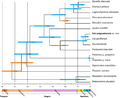
Relationships of the baiji compared to other dolphins
-
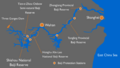
Map showing historical conservation reserves along the Yangtze River


See also
 In Spanish: Baiji para niños
