
Critically endangered facts for kids
Quick facts for kids Conservation status
|
|
|---|---|
 |
|
| Extinct | |
|
|
| Threatened | |
|
|
| Lower Risk | |
|
|
|
Other categories |
|
|
|
|
Related topics
|
|
 Comparison of Red list classes above and NatureServe status below  |
|
_--_2023_--_0462.jpg)
The term critically endangered (often shortened to CR) describes a species facing an extremely high risk of disappearing forever in the wild. The International Union for Conservation of Nature (IUCN) uses this category as part of its IUCN Red List. The Red List is like a global report card for plants, animals, and fungi. It tells us how threatened different species are.
As of December 2023, the IUCN Red List included 157,190 species. Out of these, 9,760 were listed as critically endangered. This number included 1,302 species that might already be extinct and 67 that might be extinct in the wild.
Species listed as critically endangered are part of a larger group called "Threatened" species. The IUCN Red List does not declare a species extinct until many detailed searches have been done. This means some species that are possibly extinct are still listed as critically endangered.
Contents
How Scientists Identify Critically Endangered Species
Scientists use several important factors to decide if a species is critically endangered. They look at the size of the population and how quickly it is shrinking. They also examine the area where the species lives.
Population Decline and Size
One key factor is a rapid drop in the number of individuals in a species. If a population has shrunk by a very large amount over a short time, it's a serious warning sign. Scientists also consider if the total number of mature individuals is very small. For example, if there are fewer than 250 mature individuals, the species is in great danger.
Geographic Range and Habitat
Another important factor is the size of the area where a species lives. If a species only lives in a very small area, or if its habitat is broken into tiny pieces, it faces a higher risk. Scientists also look for ongoing declines in the quality or size of the species' habitat. They check if the number of places where the species can be found is getting smaller.
Risk of Extinction
Scientists also use special computer models to predict the chance of a species going extinct. If these models show a very high probability of extinction within a short period, the species is listed as critically endangered. This helps conservationists act quickly to protect these vulnerable species.
Why Species Become Critically Endangered
Many species are becoming critically endangered much faster than they would naturally. Most of these problems are caused by human activities. These activities include climate change and the widespread loss of different life forms.
Habitat Loss
The biggest reason species become endangered is the loss of their homes, or habitat loss. Animals and plants need their specific habitats to find food, shelter, and reproduce. When habitats are destroyed, species lose the resources they need to survive. Activities like pollution, building new cities (urbanization), and expanding farms (agriculture) all lead to habitat loss.
Invasive Species
Another major threat comes from invasive species. These are species that are introduced to a new area, often by humans. They can take over the habitat and use up all the natural resources. This makes it very hard for the native plants and animals to survive. Invasive species can outcompete native organisms, sometimes even causing them to go extinct.
Diseases
Diseases can also cause species to become endangered. When a new disease enters a habitat, native species might not have any natural protection against it. This can lead to many individuals dying off quickly.
.jpg)
Images for kids
-
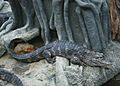
The Chinese alligator is critically endangered due to habitat destruction and hunting.
-
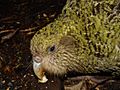
The Kākāpo from New Zealand is critically endangered because of invasive species that hunt them.
-
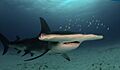
The Great hammerhead shark is critically endangered due to overfishing for its fins.


See also
 In Spanish: Especie en peligro crítico de extinción para niños
