
Grand Teton National Park facts for kids
Quick facts for kids Grand Teton National Park |
|
|---|---|
|
IUCN Category II (National Park)
|
|

The John Moulton Barn and the Teton Range
|
|

 Grand Teton National Park
Location in Wyoming

Grand Teton National Park
Location in the United States
|
|
| Location | Teton County, Wyoming, United States |
| Nearest city | Jackson |
| Area | 310,000 acres (1,300 km2) |
| Established | February 26, 1929 |
| Visitors | 2,806,223 (in 2022) |
| Governing body | National Park Service |
Grand Teton National Park is a famous nature reserve in the state of Wyoming. It is known for its giant, jagged mountains and beautiful lakes. The park covers about 310,000 acres of land. It includes the Teton Range and a large valley called Jackson Hole.
The park is very close to Yellowstone National Park. They are connected by a special road called the John D. Rockefeller Jr. Memorial Parkway. Together, these areas protect a huge ecosystem. This means many plants and animals can live there safely.
Contents
History of the Land
Native American Heritage
People have lived in the Grand Teton area for over 11,000 years. The first humans were hunters who moved with the seasons. They spent summers in the valley and winters in warmer areas. Archaeologists have found ancient tools made of obsidian (volcanic glass) near the lakes.
The Shoshone people lived here when European explorers first arrived. One group was called the "Sheep-eaters." They were experts at living in the high mountains. They had a deep spiritual connection to the peaks. Some stone structures on the mountains were used for special ceremonies.
Explorers and Trappers
In the early 1800s, fur trappers came to the region. They wanted to find beavers for their valuable fur. A man named John Colter was likely the first European to see the mountains. The name "Teton" comes from French trappers who visited later.
By the 1880s, the first permanent settlers arrived. These pioneers started ranches and farms. Life was hard because the winters were very long and cold. Later, "dude ranches" were built. These were places where tourists could stay and act like real cowboys.
Creating the Park
Grand Teton National Park was officially created in 1929. At first, it only protected the mountains. A wealthy man named John D. Rockefeller Jr. wanted to protect the valley too. He secretly bought a lot of land to give to the government.
In 1950, the park was expanded to include the valley of Jackson Hole. Today, the park is managed by the National Park Service. They work hard to keep the land and animals healthy for everyone to enjoy.
Geography and Nature
The Teton Range
The Teton Range is the youngest part of the Rocky Mountains. These mountains started growing about 6 to 9 million years ago. They are special because they rise straight up from the valley. There are no smaller hills at the bottom.
The highest peak is called Grand Teton. It is 13,775 feet tall! There are nine other peaks that are over 12,000 feet high. These mountains were shaped by giant sheets of ice called glaciers. The glaciers carved out deep, U-shaped valleys between the peaks.
Lakes and Rivers
The park has many beautiful lakes. Jackson Lake is the biggest one. It is 15 miles long and very deep. Most of the lakes were formed by melting glaciers. The Snake River flows through the park. It is a great place for fish and birds.
Rocks and Geology
Some of the rocks in the park are very old. Scientists say they are nearly 2.7 billion years old! These are some of the oldest rocks in any American park. You can see different layers of rock, like granite and limestone, on the mountain faces.
Plants and Animals
Wildlife in the Park
Grand Teton is home to many amazing animals. You can find:
- Large Mammals: Grizzly bears, black bears, gray wolves, and mountain lions.
- Hoofed Animals: Thousands of elk, moose, bison, and pronghorn.
- Birds: Over 300 species, including bald eagles and trumpeter swans.
- Fish: The Snake River fine-spotted cutthroat trout is a famous local fish.
Trees and Flowers
There are over 1,000 types of plants in the park. In the high mountains, the weather is too cold for trees. This area is called the alpine tundra. Lower down, you will find forests of lodgepole pine and fir trees. The valley floor is covered in sagebrush and colorful wildflowers.
One important tree is the whitebark pine. It produces large seeds that bears and birds love to eat. Scientists are working hard to protect these trees from diseases and tiny bugs called beetles.
Fun Things to Do
Hiking and Climbing
The park has over 200 miles of hiking trails. Some are easy walks around lakes. Others are very steep and go high into the mountains. Many people come from all over the world to climb the rocky peaks. If you want to climb, it is best to go with a professional guide.
Boating and Fishing
You can take boats out on Jackson Lake and Jenny Lake. Many people enjoy kayaking or canoeing in the calm water. Fishing is also very popular. You need a special license to fish, and there are rules about how many fish you can keep.
Winter Sports
In the winter, the park is covered in deep snow. People visit to go cross-country skiing or snowshoeing. It is a very quiet and peaceful time to see the mountains. Some areas are closed to protect animals that are resting for the winter.
Staying Safe in the Park
Nature is beautiful, but it can also be dangerous. Visitors must follow important safety rules:
- Bear Safety: Always keep your food in bear-proof containers. Never get close to a bear.
- Weather: The weather can change quickly. It can get very cold even in the summer.
- Water: The water in the lakes and rivers is very cold. Always wear a life jacket on a boat.
- Stay on Trails: This protects the plants and keeps you from getting lost.
Images for kids
-
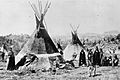
A Shoshone camp in Wyoming from 1870.
-
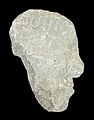
The Colter Stone, which might have belonged to an early explorer.
-
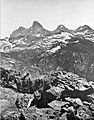
One of the first photos ever taken of the Tetons.
-
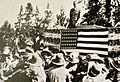
The opening ceremony of the park in 1929.
-
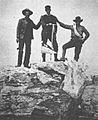
Early climbers on the summit of Grand Teton.
-
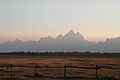
A beautiful sunset over the mountain range.
-
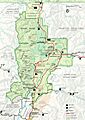
A map showing the park and surrounding areas.
-
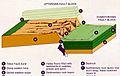
How the mountains and valley were formed by a fault.
-
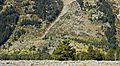
A line in the earth showing where the ground moved.
-
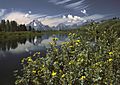
The Snake River curving through the park.
-
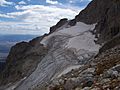
A glacier sitting high on the mountainside.
-
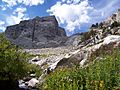
A dark line of rock called the Black Dike.
-
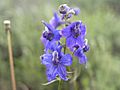
A purple wildflower found in the park.
-
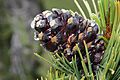
Cones from the important whitebark pine tree.
-
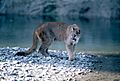
A rare look at a mountain lion.
-
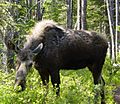
A moose wading in the water.
-
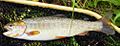
A native cutthroat trout from the Snake River.
-
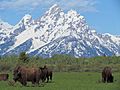
Bison grazing with the mountains in the background.
-
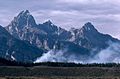
A forest fire helps the forest grow back stronger.
-
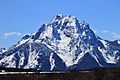
Mount Moran covered in spring snow.
-
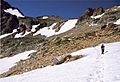
A hiker exploring the high mountain trails.
-
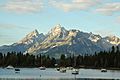
Boats at the marina on Jackson Lake.
-
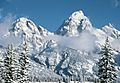
The peaks looking white and cold in winter.
-
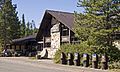
A place where visitors can stay inside the park.


See also
 In Spanish: Parque nacional de Grand Teton para niños
