
How did people wash their clothes before soap and detergent were widely available facts for kids

Imagine a world without washing machines, dryers, or even a bottle of liquid detergent. Today, we simply toss our clothes into a machine, add a pod or some powder, and press a button. But for thousands of years, keeping clothes clean was one of the most difficult and time-consuming chores in a household. It required knowledge of chemistry, botany, and a great deal of physical strength.
Before the mass production of soap, which only became common for everyday people in the last few hundred years, humans had to be creative. They looked to the natural world around them to find substances that could break down dirt, grease, and sweat.
Contents
Nature’s Cleaning Agents: The Power of Plants
.jpg)
Long before factories made soap, people discovered that certain plants contained natural chemicals called "saponins." Saponins are soap-like substances that create a lather when mixed with water.
One of the most famous of these is the Soapwort (Saponaria officinalis). This plant has been used for centuries across Europe and Asia. If you take the leaves or roots of the soapwort plant and crush them in water, the water becomes foamy. This foam acts as a mild detergent. People would soak their clothes in this "soapwort water" and then scrub them. It was gentle on fabrics like wool and silk, making it a favorite for delicate items.
Other plants, such as the Yucca plant in North America, were also used by indigenous peoples. The roots of the yucca contain high concentrations of saponins. By pounding the roots and mixing them with water, they created a powerful cleaning solution that could remove stubborn stains from blankets and clothing.
The Magic of Wood Ash

Perhaps the most important cleaning discovery in human history was the use of wood ash. When you burn wood in a fireplace, the leftover ash is rich in potassium carbonate. When you mix this ash with water, it creates a liquid called lye (or potash).
Lye is highly alkaline, which means it is the opposite of an acid. It is very effective at breaking down fats and oils. Since most of the dirt on our clothes is held there by our own body oils or food spills, lye was the perfect "degreaser."
However, lye is also very strong. If you left your clothes in a lye solution for too long, it could eat through the fabric! People had to be very careful. They would often filter the water through a barrel of wood ash to get a clean, concentrated lye solution, then dilute it with plenty of fresh water before adding their clothes. This process was the ancestor of modern soap-making. Eventually, people learned to boil this lye with animal fats (like tallow or lard) to create actual soap bars, which were much safer and easier to use.
The Power of Physical Force
.jpg)
Even with natural cleaning agents, the clothes wouldn't get clean just by soaking. In the ancient world, washing was a full-body workout. Because they didn't have machines to agitate the water, people had to provide the agitation themselves.
One of the most common methods was to take wet clothes to a riverbank and beat them against large, flat rocks. The force of the impact helped push the water and the cleaning agent through the fibers of the fabric, loosening the dirt.
People used wooden paddles or their own hands to scrub the fabric against itself. This friction was essential for removing mud and stains.
After the scrubbing, the clothes had to be rinsed thoroughly in running water. A river was the best place for this, as the constant flow of fresh water carried away the dirty, soapy water.
The Surprising Role of Urine

This might sound strange to us today, but for thousands of years, human urine was a highly valued cleaning agent. In Ancient Rome, for example, urine was collected in public jars because it contains ammonia.
Ammonia is a powerful chemical that is still used in many modern household cleaners. It is excellent at removing grease and whitening fabrics. The Romans had a professional class of laundry workers called Fullers. These workers would collect urine, let it sit until it became rich in ammonia, and then use it to wash white wool togas.
The Fullers would put the clothes into large tubs filled with the urine-water mixture and then jump in and stomp on the clothes with their bare feet. This "stamping" was the ancient version of the washing machine's agitator. It was hard, smelly work, but it was incredibly effective at making clothes bright and clean.
The Ancient Profession of Fulling
.png)
"Fulling" was a specialized trade that involved more than just washing. It was a process used to clean and thicken wool cloth. After the wool was woven, it was often oily and dirty. The fulling process involved:
- Scouring: Washing the wool in a mixture of water, lye, or urine to remove the natural oils (lanolin) and dirt.
- Fulling (or Milling): Beating the fabric to make the fibers lock together, which made the cloth thicker, warmer, and more durable.
Fullers were essential members of society. In medieval times, fulling mills were built near rivers. These mills used waterwheels to power giant wooden hammers that beat the cloth, replacing the need for human feet to do the stomping. This was one of the first examples of using technology to automate the laundry process.
Washing Day: A Community Event

In many cultures, washing day was not a solitary chore; it was a social event. Because washing required so much water and effort, women would often gather at a local river, stream, or communal well.
They would spend the entire day washing, rinsing, and then spreading the clothes out on the grass or hanging them on bushes to dry in the sun. The sun was also a secret weapon—the ultraviolet rays in sunlight act as a natural bleach, helping to whiten white fabrics and kill bacteria.
This communal washing day was a time to share news, tell stories, and help each other with the heavy lifting. It was a vital part of village life.
Why We Don't Do It This Way Anymore
As time went on, the process of making soap became easier and cheaper. By the 19th century, soap was no longer a luxury item made at home, but a product you could buy in a store.
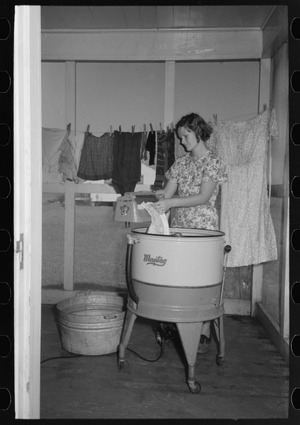
The invention of the washboard in the late 1700s made scrubbing much easier by providing a ridged surface to rub clothes against. Then, in the early 20th century, the first electric washing machines were invented. These machines mimicked the motion of the human hand, using a motor to agitate the water and clothes, which saved people hours of back-breaking labor every week.
Today, we use synthetic detergents. Unlike old-fashioned soap, which could react with minerals in "hard" water to leave a sticky residue (called soap scum), modern detergents are designed to work perfectly in any kind of water. They contain enzymes that act like tiny scissors, cutting through proteins and fats in food stains, making our clothes cleaner than ever before.
Summary of Historical Cleaning Methods
To summarize, before the modern era, people used a combination of:
- Chemistry: Using lye (from wood ash) and ammonia (from urine) to break down grease.
- Botany: Using saponin-rich plants like soapwort and yucca to create natural suds.
- Physics: Using the force of beating, scrubbing, and stomping to move water through fabric.
- Nature: Using the power of the sun to bleach and sanitize clothes.
It is fascinating to think about how much work went into a single clean shirt. The next time you put your clothes into the washing machine, remember that you are benefiting from thousands of years of human trial and error. Our ancestors were true scientists, using the resources of the earth to solve the everyday problem of staying clean. They didn't have fancy machines, but they had ingenuity, patience, and a lot of hard work.
Understanding this history helps us appreciate the convenience of modern life. We no longer have to spend our entire day at the riverbank, but we still use the same basic principles of chemistry that the ancient people discovered long ago. Whether it is the alkaline nature of soap or the way we use water to rinse away dirt, the science of cleaning remains a fundamental part of how we live.
