
Ismailism facts for kids
Quick facts for kids Ismailism |
|
|---|---|

Ismaili Center in Dushanbe, Tajikistan
|
|
| Classification | Shia Islam |
| Scripture | Quran |
| Theology | Imamate |
| Imam (Nizari) | Prince Rahim Aga Khan V |
| Branches and sects |
Branches and sects of Isma'ilism |
| Region | Ismāʿīli communities can be found in Pakistan, Tajikistan, China, Afghanistan, India, Central Asia, Syria, Iran, Saudi Arabia, Yemen, Eastern Africa, and North America |
| Origin | 9th century Middle East |
| Separations | Druze |
| Members | 12–15 million |
Ismailism is a special branch of Shia Islam. Like all Shia Muslims, Ismailis believe there are two sides to Islam: an outward, clear meaning (called zahir) and a deeper, hidden meaning (called batin). Ismailis are unique because they focus a lot on understanding this hidden, spiritual meaning.
Ismailis get their name from Isma'il ibn Jafar. They believe he was the rightful spiritual leader, or Imam, after his father, Ja'far al-Sadiq. This is where they differ from another large Shia group, the Twelver Shia, who followed Isma'il's younger brother, Musa al-Kazim. So, Ismailis see Isma'il ibn Jafar as the sixth Imam in their line of leaders.
After Isma'il's son, Muhammad ibn Isma'il, passed away in the 8th century, Ismaili teachings grew even more. They focused strongly on the deeper, hidden meanings of the Islamic faith. This led to a split in Shia Islam. Some groups, like the Ismailis, focused on the mystical path and understanding God's nature through the "Imam of the Time." Other groups focused more on religious law and the actions and sayings of Prophet Muhammad and the Twelve Imams.
Today, the largest group of Ismailis are the Nizaris. They recognize Prince Rahim Aga Khan V as their 50th hereditary Imam. Other groups belong to the Tayyibi branch. Ismaili communities live in many parts of the world, including Central Asia, Afghanistan, Pakistan, India, Syria, and have also moved to Europe, North America, and other places.
Exploring Ismaili History
Early Beginnings and Leadership Challenges
Ismailism began during a time of disagreement in the early Muslim community. This was about who should lead after Prophet Muhammad. Shia Muslims believed that Ali, Muhammad's cousin and son-in-law, should be both the political and spiritual leader. This leadership, called the Imamate, would then pass to his sons.
After Ali became the leader, some conflicts arose. One important event was the Battle of the Camel, where Ali faced opposition but handled it respectfully. Later, a group called the Khawarij disagreed with Ali's decisions. They eventually caused Ali's passing in 661 CE.
The leadership then passed to Ali's sons, Hasan ibn Ali and later Husayn ibn Ali. Ismailis believe that the spiritual authority of Ali, known as walayah, was passed down to these Imams. This authority meant their guidance came from God's will.
The Tragic Battle of Karbala
After Imam Hasan's passing, Imam Husayn and his family faced difficult times under the rule of Yazid. In 680 CE, Husayn traveled with his family towards Kufa. However, Yazid's army stopped them in Karbala. Husayn and his companions were bravely martyred there. His family members were taken captive.
This event is very important to Shia Muslims. Many, like the Twelvers and Musta'li Ismailis, remember this tragedy during a time called Ashura. Nizari Ismailis, however, do not mourn in the same way. They believe the Imam's spiritual light never truly dies but passes to the next Imam. Still, they show respect during this time and reflect on the events of Karbala.
Spreading the Ismaili Message
After the events of Karbala, Zaynab bint Ali, Husayn's sister, began sharing the story. This was an early way of spreading the Shia message, known as daʿwah. For Ismailis, this daʿwah became a very spiritual effort.
Later, after the passing of Ja'far al-Sadiq, a key split happened. Ismailis believe the Imamate passed to Isma'il ibn Jafar, or his son Muhammad ibn Isma'il. Other Shia groups followed a different path. During this time, the Ismaili Imams often had to stay hidden to protect themselves from persecution.
The Rise of Hidden Imams and Da'is
When the Imams were hidden, special teachers called Da'iyyun (or Da'is) helped spread the Ismaili faith. These Da'is were more than just missionaries. They were spiritual guides who helped students understand the deeper meanings of Islam and recognize the Imam. The relationship between a Da'i and student was very close, like a spiritual family.
The Fatimid Caliphate: A Golden Age
The period of hidden Imams ended with Abdullah al-Mahdi Billah. He taught that the Imams had been hidden for protection, not truly secluded. In 910 CE, al-Mahdi Billah established a powerful Shia state in North Africa, known as the Fatimid Caliphate. This was a unique time when the spiritual leadership (Imamate) and political rule (Caliphate) were united.
The Fatimid Caliphate grew quickly, eventually including Egypt, North Africa, and parts of the Middle East. Under Fatimid rule, Egypt became a thriving center of trade and culture. The Fatimids promoted new ideas, like choosing leaders based on skill rather than just family connections.
During this time, different branches of Ismailism began to form. One group, later known as the Druze, separated after the rule of al-Hakim bi-Amr Allah. Another important split happened after the passing of al-Mustansir Billah. His sons, Nizar and al-Musta'li, disagreed over who should be the next Imam. This led to the formation of the Nizari and Musta'li branches.
The Fatimid Caliphate eventually declined due to various challenges. By the 1160s, its power had shrunk, and in 1169, a general named Saladin took control of Egypt, ending the Fatimid rule.
The Alamut Stronghold
A key figure in Nizari Ismaili history was Hassan-i Sabbah. He was a brilliant missionary who established a famous mountain fortress called Alamut Castle in Persia. He converted many people in the surrounding areas to Ismailism. Alamut became a strong outpost for the Ismaili community.
To protect their community, which was often surrounded by powerful enemies, the people of Alamut used clever and daring tactics. They were known for their strategic actions against those who threatened them. The English word "assassins" is thought to come from the Arabic word Hashasheen, meaning "annihilators" or "skilled agents."
After the Fatimid Caliphate declined, the Nizari Imams continued their leadership from Alamut. However, in 1256, the Mongols, led by Hulagu Khan, attacked and destroyed Alamut. The Ismaili Imams and their followers had to find new places of refuge.
Ismailism Today
After these historical events, the main branches of Ismailism developed in different parts of the world. The Musta'li branch mostly thrived in Yemen and later moved its leadership to India, where they are known as the Bohras.
The Nizari branch has large communities in Syria, Central Asia, Afghanistan, Pakistan, and India. They are unique because they have a living Imam, Prince Rahim Aga Khan V, who holds the title of Aga Khan. The region of Badakhshan, in Afghanistan and Tajikistan, has a majority Ismaili population, thanks to the teachings of the scholar Nasir Khusraw.
The Druze mainly settled in Syria and Lebanon. While they have historical ties to Ismailism, their beliefs are quite different today.
Core Ismaili Beliefs
Understanding the Quran
Ismailis believe that God's message, the Quran, has two layers of meaning. There's the zahir, which is the clear, outward meaning, and the batin, which is the hidden, deeper spiritual meaning. They believe that Prophet Muhammad received divine inspiration, and he then put these truths into the Arabic words of the Quran.
Ismailis see Muhammad as the living example of the Quran. They also believe that the Imams, who are Muhammad's successors, are guided by the Holy Spirit. This allows them to interpret the Quran's deeper meanings for the community. The Imam is seen as the "speaking Quran," while the written Quran is the "silent Quran."
Ginans and Qasidas
The Ginans are special religious poems written by Ismaili spiritual teachers (Pirs) in the Nizari tradition. They help explain the meanings of the Quran. Other Ismailis, like those from Persia and Central Asia, have similar poetic works called qasidas.
The Importance of Numbers
Ismailis believe that numbers can have spiritual meanings. The number seven is especially important in their beliefs. It appears in ideas about seven heavens, seven continents, and other aspects of the world.
The Role of the Imamate
A central belief for Ismailis is the Imamate. They believe that divine guidance is given through a line of Imams. These Imams are seen as manifestations of truth and the path to God. The Imam is a spiritual guide who helps people understand the inner meaning of religion.
Pirs and Da'wah: Spiritual Guides
In Nizari Ismailism, the head spiritual guide is called the Pir, and the Imam himself is the Pir. The Da'i is a teacher who passes on sacred knowledge from the Imam to students. This helps students grow spiritually and connect with God through the Imam.
Zahir and Batin: Outward and Inward Meanings
A key idea in Ismailism is that everything has an outward form (zahir) and an inward, spiritual essence (batin). The batin is the source of the zahir, and the zahir is how the batin shows itself. The deeper batin meaning is often understood by those who are spiritually connected to the Imam.
'Aql: The Universal Intellect
Ismailis believe that understanding God comes from the first light in the universe, called Aql, or the Universal Intellect. All living things connect to God through this light. God is seen as being beyond all human understanding and descriptions. For Shia Muslims, the light of the Imamate is this Universal Intellect, and the Imam on Earth is a reflection of this Intellect.
Ismaili Acts of Worship
Daily Practices and Pillars
Ismailism has its own approach to the traditional five pillars of Islam:
- Prayer: Nizari Ismaili Muslims are encouraged to pray a specific prayer called the Du'a three times a day. Other forms of prayer are optional.
- Charity (Zakat): Ismailis give Zakat, which is a percentage of their wealth, to the Ismaili Imamate. This money is used for development projects that help both Ismailis and other communities around the world.
- Fasting (Sawm): During Ramadan and other times, Nizari and Musta'li Ismailis focus on the spiritual meaning of fasting. This means purifying the soul by avoiding sinful acts and doing good deeds, rather than just avoiding food and drink. Nizari Ismailis also fast on "Shukravari Beej."
- Pilgrimage (Hajj): Many Ismaili groups believe that the Hajj can metaphorically mean visiting the Imam, which they see as a very spiritual journey. Musta'li Bohras, however, also perform the literal pilgrimage to the Kaaba in Mecca.
Additional Ismaili Pillars
Beyond the traditional five pillars, Ismailis observe two more:
- Taharah (Purity): This means having a pure soul, along with bodily cleanliness. Purity of body, clothes, and prayer space is important for prayers to be accepted.
- Jihad (Struggle): For Ismailis, jihad means a struggle against one's own inner self. It is about striving to be righteous and overcome personal challenges.
Walayah: Love and Devotion
Another central act of worship is walayah, which means "guardianship" or "love and devotion." This is about showing deep love and loyalty to God, the Prophets, the Imams, and the Da'i. Ismailis believe that God shows Himself through Prophets and Imams. Following their guidance is seen as essential for spiritual happiness and reaching heaven.
Images for kids
-
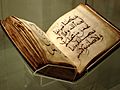
Ismāʿīlīs believe the Quran has two layers of meaning, the zāhir, meaning apparent, and the bātin, meaning hidden.
-

Ambigram depicting Muhammad and Ali written in a single word. The 180 degrees inverted form shows both words.
-
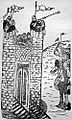
View of Alamut besieged
-
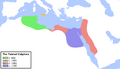
The Fatimid Caliphate at its peak
-
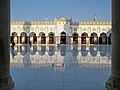
Al-Azhar Mosque in Cairo was originally built as the official mosque of a new Fatimid capital between 970 and 972 and became an educational institution that disseminated Isma'ili doctrine.


See also
- Banu Yam
- Brethren of Purity
- Fatimid Caliphate
- Ghulat
- Hosay
- Khoja
- List of Ismaili castles
- List of Isma'ili imams
- List of Isma'ili missionaries
- List of the Order of Assassins
- Nasir al-Din Nasir Hunzai
- Nasir Khusraw
- Nizari Ismaili state
- Pamir Ismaʻilis
- Satpanth
