
John O'Reilly (soldier) facts for kids
Quick facts for kids
John O'Reilly
|
|
|---|---|

John O'Reilly with his wife Salaria Kea circa 1938
|
|
| Nickname(s) |
|
| Born | 29 March 1908 |
| Died | 31 December 1986 (aged 78) |
| Allegiance |
|
| Branch | |
| Years of service |
|
| Unit |
|
| Battles/wars | |
| Spouse(s) | Salaria Kea |
John O’Reilly (born March 29, 1908 – died December 31, 1986) was an Irish soldier. He fought in the Spanish Civil War for the side that supported the government. He also fought in World War II as part of the British Army and later the US Army. During the Spanish Civil War, he met and married Salaria Kea, an African-American nurse. She was also volunteering to help the government side.
Contents
Early Life and Army Service
John O'Reilly was born in Thurles, Ireland, in 1908. He was one of four sons. His father fought in World War I. John grew up in a poor, quiet countryside. At 14, he moved to his aunt's farm. He was expected to take over the farm, but he found this life boring.
When he was 20, O'Reilly moved to England to find work. He soon joined the Irish Guards, a part of the British Army. He served for three years. In 1931, he left the army without permission. This was during the Great Depression, a time when many people struggled to find work. O'Reilly worked as a bricklayer and tannery worker in England and Ireland. In 1934, he joined a workers' group called the Irish Transport and General Workers Union. In 1936, O'Reilly left Ireland for good.
Fighting in the Spanish Civil War

In 1936, O'Reilly was working in Oxford, England. He started going to meetings about the situation in Spain. Spain was in a civil war, with people fighting for and against the government. O'Reilly saw an advertisement asking for volunteers to help the government side. Because he had military experience, he went to Spain in December 1936. He later said he wanted to fight for the poor people.
First Battles in Spain
When he arrived, O'Reilly joined an English-speaking group called the XIV International Brigade. This group was made of volunteers from different countries. Many Irish volunteers were in his company. On Christmas Eve 1936, O'Reilly's group went to the front lines near Córdoba. They fought in the Battle of Lopera. This battle was a defeat for their side. Many volunteers were hurt or died.
O'Reilly later said that the army had problems with trust and organization. He felt that officers were chosen for political reasons, not because they were good leaders.
Fighting Near Madrid
On January 11, 1937, O'Reilly's group moved to Madrid. They took part in the Second Battle of the Corunna Road. Their job was to take back a village called Las Rozas. But their opponents had better weapons, and the mission failed. After this battle, only a few of the original volunteers returned to their base.
A new group called the British Battalion was forming. Many Irish volunteers joined a different group called the Connolly Column. But O'Reilly chose to stay with the British Battalion. He was given the job of Quartermaster for the cookhouse. This job made him feel less excited about fighting.
Helping at the Front Lines
In February 1937, the Battle of Jarama began. O'Reilly decided to work as an ambulance guard near the battle. For three months, he helped transport injured soldiers from the front lines to hospitals. During this time, he worked at the American No.1 Base Hospital. This is where he met Salaria Kea, a new head nurse from New York City.
Meeting Salaria Kea

In the spring of 1937, O'Reilly started to like Salaria Kea. He was quiet and wrote poetry in his room. Another nurse noticed his poems were about Kea. She encouraged Kea to talk to O'Reilly. Kea, who was African-American, was at first unsure about dating a white man. But O'Reilly convinced her, saying it was about their right to love each other. After a summer of getting to know each other, O'Reilly and Kea married in October 1937.
They both continued to help the government forces by providing medical care. Kea worked during the Battle of Teruel. In March 1938, their hospital was moved to Vic, near Barcelona.
Soon after, Kea and many other medical staff were sent back to the United States. They were suffering from the stress of the war. O'Reilly stayed at the hospital in Vic. Conditions there became very difficult. The hospital was too crowded, and a disease called typhoid spread in September 1938. O'Reilly had to leave Spain in October 1938. He went to England and was hospitalized for three weeks. He then stayed in a refugee camp. He wrote to his father, saying he felt he could not return to Ireland with his new wife because they might face unfair treatment.
Moving to America
Both O'Reilly and Kea wanted to be together in the United States. But it was hard for O'Reilly to get a visa. The American Embassy in London said it would be difficult. However, Kea was able to get her job back as head nurse at Harlem Hospital in New York. This helped their case. Kea even wrote to the President of the United States, Franklin Roosevelt, for help.
O'Reilly was finally given a visa. He joined Kea in New York on August 22, 1940. He found work with a train company called the Interborough Rapid Transit Company (IRT). Many Irish people worked there.
Serving in World War II
In early 1943, O'Reilly was called to join the US Army at age 35. He joined the 82nd Engineer Combat Regiment. His unit trained in Texas and then went to North Africa in November 1943. From there, they went to England to prepare for D-Day.
Ten days after the D-Day landings at Omaha Beach, O'Reilly's unit went to Normandy, France. For the next 11 months, O'Reilly and the 82nd unit helped the Allied forces advance through France and Belgium. In December 1944, they fought in the Battle of the Bulge. By April 1945, they had reached Magdeburg in Germany. On May 5, 1945, the war in Europe ended, and O'Reilly was sent home.
Later Life and Family
After the war, it was easier for non-citizens who served in the American military to become citizens. O'Reilly became an American citizen in Paris on May 28, 1945.
O'Reilly and Kea reunited in New York. Sadly, their only child died during pregnancy in 1946, and Kea could not have more children. They sometimes faced difficulties because of their involvement in the Spanish Civil War. Kea became a nursing tutor, and O'Reilly became a Transport Police officer.
Because they were an interracial couple, O'Reilly and Kea chose to live in a Jewish neighborhood. In the mid-1950s, they moved to the Bronx. However, neighbors pressured them to move again. In 1973, they moved to Akron, Ohio, where much of Kea's family lived. Even there, they sometimes faced challenges from groups like the Ku Klux Klan after attending church.
In the late 1970s, Kea began to have memory problems. She was later diagnosed with Alzheimer's. O'Reilly cared for her until he passed away in 1986. Kea died four years later in 1990. They were buried together in Glendale Cemetery in Akron.
Images for kids
-
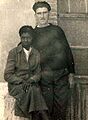
John O'Reilly with his wife Salaria Kea circa 1938
-
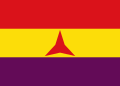
The flag of the International Brigades, which O'Reilly fought as part of
-
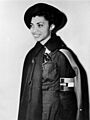
Salaria Kea in March 1937
