
List of historical structures maintained by the Great Smoky Mountains National Park facts for kids
The Great Smoky Mountains National Park is a special place, not just for its amazing nature but also for its history! This park is home to many old buildings and structures that tell stories of the people who lived here long ago.
These historic buildings are found in different areas of the park, like Cades Cove, Roaring Fork, the Noah Ogle Place, and Elkmont. Some of these places are even part of important U.S. Historic Districts. This means they are protected and kept safe so everyone can learn about them.
The park takes great care of all these old structures, making sure they stay in good condition for future generations to explore.
Contents
- Cades Cove: A Glimpse into the Past
- Elkmont: A Resort Town's Remains
- Cataloochee: A Remote Valley's History
- Hazel Creek: Deep in the Mountains
- Greenbrier: A Quiet Corner
- Tyson McCarter Place: A Family Homestead
- The Sugarlands: Near the Park Entrance
- Noah Ogle Place: A Working Farm
- Roaring Fork: A Motor Nature Trail Journey
- Little Greenbrier: The Walker Sisters' Home
- Oconaluftee: Mountain Farm Museum
- Images for kids
Cades Cove: A Glimpse into the Past

Cades Cove is a beautiful valley known for its rich history and many well-preserved buildings. You can drive a loop road to see most of them!
- John Oliver Cabin (built 1822): This is the oldest building still standing in the entire park! Imagine living here over 200 years ago.
- Cades Cove Primitive Baptist Church (built 1887): A simple church where early settlers worshipped.
- Cades Cove Methodist Church (built 1902): Another church that shows the strong faith of the community.
- Cades Cove Missionary Baptist Church (built 1915): This church was built later, showing how the community grew.
- Myers Barn (built 1920): A barn used for farming, showing how people lived off the land.
- Elijah Oliver Cabin (built 1866): This cabin has a unique "dog-trot" style, meaning it has an open hallway through the middle. It also had a separate kitchen.
- Elijah Oliver stable (around 1866): A place for horses and other farm animals.
- Elijah Oliver corn crib (around 1866): Used to store corn, a very important crop.
- Elijah Oliver chicken coop (around 1866): Where chickens were kept for eggs and meat.
- Becky Cable House (built 1879): This building was first a store, showing how people traded goods.
- John Cable Gristmill (built 1868): This mill used water power to grind corn into flour. Its big water wheel is a favorite for photographers!
- Cades Cove Museum Barn, chicken coop, Smokehouse, corn crib, and Molasses still: These buildings were moved from other places to create a museum area, showing different parts of pioneer life. The corn crib has a unique look.
- Henry Whitehead Cabin (built 1896): Another example of a family home from the past.
- Dan Lawson Cabin (built 1855): Built by Peter Cable, Dan Lawson's father-in-law.
- Dan Lawson Smokehouse, Chicken Coop, and Barn: These structures supported the daily life and farming of the Lawson family. The barn is a great example of old farm buildings.
- Tipton Cabin (1870s): Sometimes called the Tipton-Oliver Place.
- Tipton Barn (built 1968): This barn is famous for its "double-cantilever" design, which means the upper part extends out over the lower part. It's based on an original design.
- Tipton Corncrib: Used for storing corn.
- Tipton Oliver Blacksmith Shop: Where a blacksmith would make and repair metal tools.
- Tipton Smokehouse: A small building used for smoking and preserving meat.
- Carter Shields Cabin (1880s): Another historic home in the cove.
Elkmont: A Resort Town's Remains

Elkmont was once a logging town and then a popular resort area. Many of its old cabins and buildings remain.
- Mayna Avent Cabin (built 1850): First built by the Ownby family, this cabin was later used as an art studio by Mayna Avent in the 1920s.
- Appalachian Clubhouse (built 1934): This building replaced an earlier clubhouse that burned down. It was a central gathering spot.
- Sneed Cabin (built 1910): A log cabin with grout between the logs. A kitchen was added later.
- Smith Cabin (built 1910): A porch was added to this cabin in the 1970s.
- Higdon Cabin (built 1910): This cabin also had a porch added later.
- Swan Cabin (built 1910–1930): This cabin was changed and updated many times over the years.
- Addicks Cabin (built 1910): This was first a "set house" for lumber company workers. A back section was added in the 1930s.
- Adamless Eden (built 1921): A fun children's playhouse on the Addicks Cabin property, made with rough, natural logs.
- Creekmore Cabin (built 1910–1930): Several parts were added to this cabin in the 1970s and 1980s.
- Mayo Cabin (built 1910): Another "set house" for lumber workers, with a back section added in the 1930s.
- Levi Trentham Cabin (built 1830): This very old cabin was moved to the Mayo Cabin lot after Levi Trentham passed away.
- Mayo Cabin – servants' quarters (built 1920): A separate building for servants, with a specific type of siding called "board and batten."
- Cain Cabin (built 1915): This cabin was remodeled many times.
- Galyon Cabin (built 1910–1919): A kitchen was added in 1919, and a shed was built in 1970.
- Baumann Cabin (built 1910): This cabin had a "clerestory" (a raised section with windows) added in the 1920s and a back section in 1936.
- Scruggs-Brisco Cabin (built 1910–1930): A porch was added to this cabin in 1970.
- Cook Cabin (built 1912): Several additions were made between 1930 and 1950, and a porch was added in 1970.
- Hale Cabin (built 1910–1930): A porch was added to this cabin in 1970.
- Byers Cabin (built 1910–1930): This cabin was given to Colonel David Chapman for his hard work in creating the national park.
- Spence Cabin (built 1910–1930): Also known as "River Lodge," this cabin has different types of log and wood siding.
Cataloochee: A Remote Valley's History

Cataloochee is a more remote valley with its own collection of historic buildings.
- Hannah Cabin (1860s): This cabin features a brick chimney.
- Cook Cabin (1850s): This cabin was taken apart in the 1970s due to damage but was carefully put back together in 1999.
- Palmer House (built 1869): This house is now used as a museum, helping visitors learn about the area.
- Palmer Smokehouse, Springhouse, and Barn: These buildings were part of the Palmer farm, showing how they lived and worked.
- Palmer Chapel (built 1898): A historic church in the valley.
- Beech Grove School (built 1907): This was the local schoolhouse where children learned.
- Caldwell House (built 1898–1903): Another important family home.
- Caldwell Barn (built 1923): A large barn for farming.
- Steve Woody House (built 1880): This house had wood paneling added in the early 1900s.
- Steve Woody Springhouse: A small building built over a spring to keep food cool.
- Little Cataloochee Baptist Church (built 1889): Also known as the Ola Baptist Church.
- Will Messer Barn (built 1905): This barn was moved from its original spot in Little Cataloochee.
Hazel Creek: Deep in the Mountains

Hazel Creek is a beautiful, more secluded area of the park with a few historic structures.
- Granville Calhoun House (1920s): Built by George Higdon and bought by Calhoun in 1928.
- Hall Cabin (built 1892): This is the most remote historic building in the entire park, meaning it's the hardest to reach!
Greenbrier: A Quiet Corner

Greenbrier is another peaceful area with historical buildings.
- John Messer Barn (built 1875): Built by Pinkney Whaley, this is another example of a double-cantilever barn.
- Smoky Mountain Hiking Club Cabin (built 1934): This cabin was built by the Smoky Mountain Hiking Club using logs from an old Whaley cabin nearby.
- Baxter Cabin (built 1889): Sometimes called the "Jenkins Cabin" after a later owner.
Tyson McCarter Place: A Family Homestead

The Tyson McCarter Place shows what a complete family farm looked like.
- Tyson McCarter Barn (around 1876): A large barn for farm animals and storage.
- Tyson McCarter Springhouse (around 1876): Used to keep food cool using natural spring water.
- Tyson McCarter Smokehouse (around 1876): For preserving meat.
- Tyson McCarter Corncrib (around 1876): Attached to the barn, used for storing corn.
The Sugarlands: Near the Park Entrance

The Sugarlands area, close to the main park entrance, also has a historic cabin.
- John Ownby Cabin (1850s): You can find this cabin on a nature trail near the Sugarlands Visitor Center.
Noah Ogle Place: A Working Farm

The Noah Ogle Place shows a well-preserved farmstead.
- Noah "Bud" Ogle Cabin (late 1880s): This is interesting because it's actually two cabins that share one chimney!
- Noah "Bud" Ogle Barn (late 1880s): Located behind the cabin.
- Noah "Bud" Ogle Tub Mill (built 1885): This mill is still working today, showing how grain was ground long ago!
Roaring Fork: A Motor Nature Trail Journey

The Roaring Fork Motor Nature Trail offers a chance to see several historic buildings.
- Alex Cole Cabin (early 19th century): This cabin was moved from its original spot and is now part of the Jim Bales Place.
- Jim Bales Barn (late 19th century): Part of the Jim Bales Place.
- Jim Bales Corncrib (late 19th century): Also part of the Jim Bales Place.
- Ephraim Bales Cabin (late 19th century): Another "dog-trot" style cabin with two sections.
- Ephraim Bales Corncrib, Barn, and Hogpen (late 19th century): These buildings were all part of the Ephraim Bales farm.
- Alfred Reagan Cabin (late 19th century): This cabin had wood paneling and paint added in the early 1900s.
- Alfred Reagan Tubmill: Located across the street from Reagan's cabin, this mill was used for grinding.
Little Greenbrier: The Walker Sisters' Home

Little Greenbrier is famous for the Walker Sisters, who lived a traditional mountain life here.
- Walker Cabin (built 1859): Sometimes called the King-Walker Cabin, this was the home of the famous Walker Sisters.
- Walker Corncrib: Located right next to the cabin.
- Walker Springhouse: Found near the cabin, used for keeping things cool.
- Little Greenbrier School (early 1880s): This school was built from hewn (shaped) poplar logs, showing how sturdy old buildings were made.
Oconaluftee: Mountain Farm Museum

The Oconaluftee area features the Mountain Farm Museum, a collection of buildings moved from different parts of the park to show what a mountain farm looked like.
- Mingus Mill (built 1886): This is a large, three-story gristmill that is still working today!
- Smokemont Baptist Church (early 20th century): A church located near the Smokemont Campground.
- John Davis Cabin (built 1900): Originally from Indian Creek, now part of the Mountain Farm Museum.
- Enloe Barn (around 1880): Part of the Mountain Farm Museum.
- Messer Applehouse: Originally from Cataloochee, used for storing apples. Now part of the Mountain Farm Museum.
- Baxter Chickenhouse (late 19th century): Originally from the Baxter Cabin area, now at the museum.
- Mountain Farm Museum Meathouse: Originally from Cataloochee, used for storing meat.
- Mountain Farm Museum Blacksmith Shop (built 1900): Originally from Cades Cove, where tools were made.
- Mountain Farm Museum Springhouse: Originally from Cataloochee, used for cooling food.
- Mountain Farm Museum Corncrib/Shed (around 1900): Originally from near Bryson City.
- Mountain Farm Museum Corncrib (around 1900): Another corncrib from near Bryson City.
- Mountain Farm Museum Hogpen: Originally from Indian Creek, where pigs were kept.
Images for kids
-
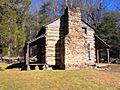
The John Oliver Cabin, the oldest standing structure in the park.
-
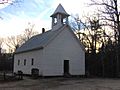
Cades Cove Primitive Baptist Church
-
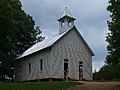
Cades Cove Methodist Church
-
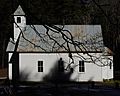
Cades Cove Missionary Baptist Church
-
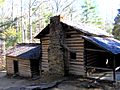
Elijah Oliver Cabin
-
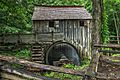
John Cable Gristmill
-
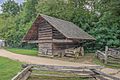
Cades Cove Museum corn crib
-
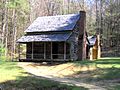
Henry Whitehead Cabin
-
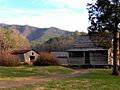
Dan Lawson Cabin
-
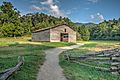
Dan Lawson Barn
-
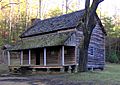
Tipton Cabin
-
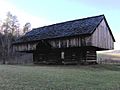
Tipton Barn
-
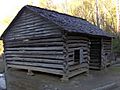
Tipton Corncrib
-
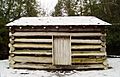
Tipton Oliver Blacksmith Shop
-
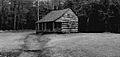
Carter Shields Cabin
-
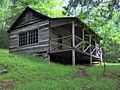
Mayna Avent Cabin
-
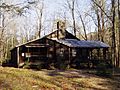
Appalachian Clubhouse
-
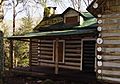
Sneed Cabin
-
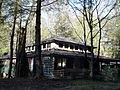
Baumann Cabin
-
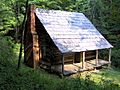
Hannah Cabin
-
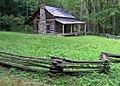
Cook Cabin
-
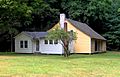
Palmer House
-
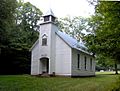
Palmer Chapel
-
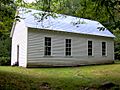
Beech Grove School
-
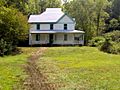
Caldwell House
-
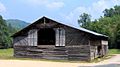
Caldwell Barn
-
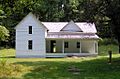
Steve Woody House
-
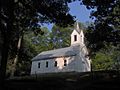
Little Cataloochee Baptist Church
-
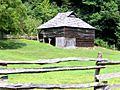
Will Messer Barn
-
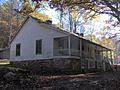
Granville Calhoun House
-
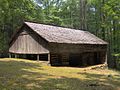
John Messer Barn
-
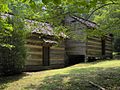
Smoky Mountain Hiking Club Cabin
-
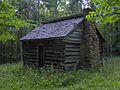
Baxter Cabin
-
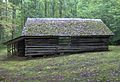
Tyson McCarter Barn
-
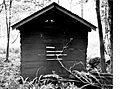
Tyson McCarter Springhouse
-
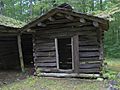
Tyson McCarter Smokehouse
-
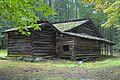
Tyson McCarter Corncrib
-
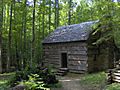
John Ownby Cabin
-
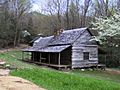
Noah "Bud" Ogle Cabin
-
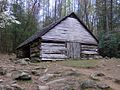
Noah "Bud" Ogle Barn
-
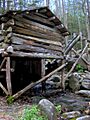
Noah "Bud" Ogle Tub Mill
-
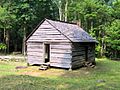
Alex Cole Cabin
-
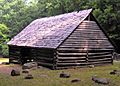
Jim Bales Barn
-
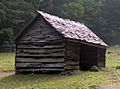
Jim Bales Corncrib
-
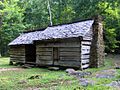
Ephraim Bales Cabin
-
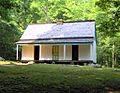
Alfred Reagan Cabin
-
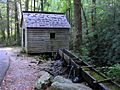
Alfred Reagan Tubmill
-
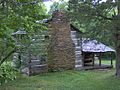
Walker Cabin
-
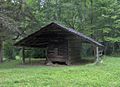
Walker Corncrib
-
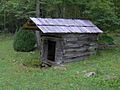
Walker Springhouse
-
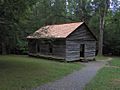
Little Greenbrier School
-
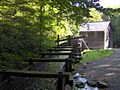
Mingus Mill
-
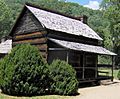
John Davis Cabin
-
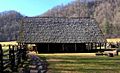
Enloe Barn
-
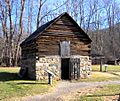
Messer Applehouse
-
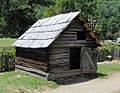
Baxter Chickenhouse
-
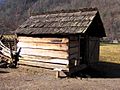
Mountain Farm Museum Springhouse
-
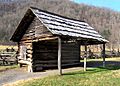
Mountain Farm Museum Corncrib/Shed
-
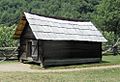
Mountain Farm Museum Corncrib


