
National Register of Historic Places listings in San Juan County, Utah facts for kids

Have you ever wondered about the special places in Utah that tell stories from the past? In San Juan County, Utah, there are many such spots! This article is about the places in San Juan County that are listed on the National Register of Historic Places.
The National Register of Historic Places is like a special list kept by the United States government. It includes buildings, sites, and objects that are important in American history, architecture, archaeology, engineering, or culture. When a place is on this list, it means it's recognized as a valuable part of our heritage and should be protected.
San Juan County has 39 places on this list. One of them is even a National Historic Landmark, which is an even higher level of historical importance! These places help us learn about the people who lived here long ago, how they built their homes, and what their daily lives were like.
Contents
Historic Places in San Juan County
San Juan County is full of amazing historical sites, from ancient ruins to old buildings. Let's explore some of these special places!
Ancient Sites and Districts
Many of the historic places in San Juan County are ancient sites left by early people. These sites often include old villages, rock art, and tools.
Alkali Ridge: An Ancient Village

One very important site is Alkali Ridge, located south of Monticello, Utah. It was added to the National Register way back in 1966. This place is special because it's a major "proto-Pueblo" archaeological site. This means it's one of the earliest known villages built by the ancestors of today's Pueblo people. Archaeologists have learned a lot about how these ancient communities lived by studying Alkali Ridge.
Butler Wash Archeological District

Near Blanding, Utah, you'll find the Butler Wash Archeological District. This area is a collection of ancient ruins. It's a great example of the homes and structures built by early Native Americans in the region. Exploring these ruins helps us imagine what life was like thousands of years ago.
Edge of Cedars Indian Ruin

Also near Blanding is the Edge of Cedars Indian Ruin. This site was listed in 1971 and is now part of the Edge of the Cedars State Park Museum. It's a fascinating place where you can see ancient Pueblo structures and artifacts up close. The museum helps protect these important historical treasures and teaches visitors about the rich history of the area's first inhabitants.
Grand Gulch Archeological District

The Grand Gulch Archeological District is another large area near Blanding with many ancient sites. It was added to the National Register in 1982. This district is known for its well-preserved cliff dwellings and other archaeological finds. It's a valuable area for understanding the ancient cultures of the Southwest.
Indian Creek State Park (Newspaper Rock)

About 14 miles north of Monticello is Indian Creek State Park, also known as Newspaper Rock State Historic Monument. This site was listed in 1976. The main attraction is a large rock panel covered in hundreds of ancient carvings called petroglyphs. These carvings were made by Native Americans over thousands of years and tell stories or record events from their lives. It's like an outdoor art gallery from the past!
Natural Bridges Archeological District

The Natural Bridges Archeological District is another important area near Blanding, listed in 2004. This district contains many ancient sites, including granaries (places where food was stored) and other structures built by early people. These sites are often found near the famous natural bridges, showing how people lived in harmony with the unique landscape.
Owachomo Bridge Trail

The Owachomo Bridge Trail is located in Armstrong Canyon, near Blanding. It was listed in 1989. This trail leads to Owachomo Bridge, one of the beautiful natural rock bridges in the area. While the bridge itself is a natural wonder, the trail and surrounding area have historical significance, likely related to ancient travel routes or settlements.
Historic Buildings and Structures
Beyond ancient sites, San Juan County also has many historic buildings that show how people lived more recently.
Bluff Historic District

The Bluff Historic District in Bluff, Utah, was listed in 1995. This district includes many of the older buildings in the town, showing what a frontier settlement looked like. Bluff was one of the first towns settled by pioneers in this part of Utah, and its historic buildings tell the story of their challenges and triumphs.
Goulding's Trading Post

Goulding's Trading Post is a famous spot near Gouldings, Utah, just north of the Arizona border. It was listed in 1980. This place started as a trading post where Native Americans and settlers could exchange goods. Over time, it grew into a lodge and museum, especially famous for its connection to many Western movies filmed in nearby Monument Valley. It's a great example of how commerce and tourism developed in the region.
Hole-in-the-Rock Trail

The Hole-in-the-Rock Trail is a historic trail that starts near Escalante, Utah, and ends at Bluff. It was listed in 1982. This trail was used by early pioneers who faced incredible challenges to settle this remote area. They had to lower wagons down a narrow crack in the cliffside! It's a powerful reminder of the determination of early settlers.
Hyland Hotel

In Monticello, the Hyland Hotel was listed in 1994. This building is a beautiful example of the American Craftsman style of architecture, which was popular in the early 1900s. It shows how towns like Monticello grew and developed, offering places for travelers to stay.
Kirk's Cabin Complex

The Kirk's Cabin Complex is located in Canyonlands National Park, near Moab, Utah. It was listed in 1988. This complex includes a log cabin and corrals built around 1890. It tells the story of early ranchers and cowboys who worked in this rugged landscape. It's a glimpse into the tough life of the frontier.
Lost Canyon Cowboy Camp

Another interesting site related to cowboys is the Lost Canyon Cowboy Camp, also near Moab and listed in 1988. This camp was used by cowboys as they herded cattle through the vast canyons. It helps us understand the history of ranching and the cowboy way of life in Utah.
Jens Nielson House

The Jens Nielson House in Bluff was listed in 1982. This house is an example of the homes built by early settlers in the area. It shows the architectural styles and building methods used during that time.
Lemuel H. Redd, Jr. House

Also in Bluff, the Lemuel H. Redd, Jr. House was added to the National Register in 1983. This house belonged to an important figure in the early settlement of Bluff. Studying homes like this helps us learn about the prominent families and their contributions to the community's development.
John Albert Scorup House

The John Albert Scorup House in Bluff was listed in 1983. John Albert Scorup was a well-known rancher and businessman in the region. His house is another example of the historic homes that tell the story of Bluff's pioneer past.
These are just some of the many historic places in San Juan County, Utah, that are recognized for their importance. Each one offers a unique window into the past, helping us understand the rich history of this incredible part of the United States.
Images for kids
-
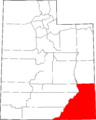
Location of San Juan County in Utah
-
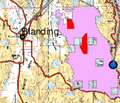
Alkali Ridge, an important archaeological site.
-
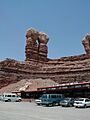
The Twin Sisters rock formation near the Bluff Historic District.
-
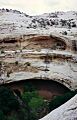
The Butler Wash Ruins, showing ancient structures.
-
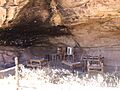
Cave Springs Cowboy Camp in Canyonlands National Park.
-
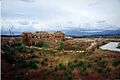
The Edge of Cedars Indian Ruin, now part of a museum.
-
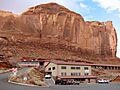
Goulding's Lodge, part of the historic trading post.
-
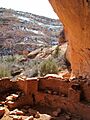
Junction Ruin, part of the Grand Gulch Archeological District.
-
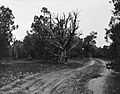
A section of the challenging Hole-in-the-Rock Trail.
-

The Hyland Hotel in Monticello, built in the Craftsman Style.
-
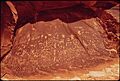
Newspaper Rock, covered in ancient petroglyphs.
-
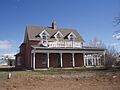
The Frederick Isaac and Mary M. Jones House in Monticello.
-
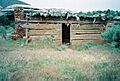
Kirk's Cabin, a historic log cabin in Canyonlands National Park.
-
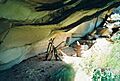
A hitching post at the Lost Canyon Cowboy Camp.
-
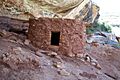
Perfect Granary, an ancient storage building in Natural Bridges.
-
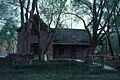
The historic Jens Nielson House in Bluff.
-
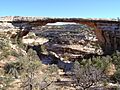
Owachomo Bridge, a natural rock formation.
-
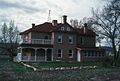
The Lemuel H. Redd, Jr. House in Bluff.
-
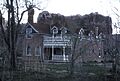
The John Albert Scorup House in Bluff.


