
Southern Transitional Council facts for kids
Quick facts for kids Southern Transitional Council |
|
|---|---|
| المجلس الانتقالي الجنوبي (Arabic) | |
| Ideology |
|
| Groups |
|
| Chairman | Aidarus al-Zoubaidi (AWOL) |
| Vice president | Hani bin Burayk |
| Headquarters | Aden, Yemen (until 2026) |
| Part of | Presidential Leadership Council (PLC) (2022-2026) |
| Allies |
|
| Opponents |
|
| Battles and wars | Yemeni civil war (2014–present)
|


The Southern Transitional Council (STC) was a political and military group in Yemen. It existed from May 2017 until it was dissolved on January 9, 2026. The STC wanted to create a separate country in southern Yemen, similar to the old South Yemen. This group received support from the United Arab Emirates.
The STC was led by Aidarus al-Zoubaidi, who was once the governor of Aden Governorate. Hani bin Burayk, a former government minister, served as its vice president. The council was formed after a large protest in Aden, following al-Zoubaidi's removal from his governor position.
The STC played a big role in the Yemeni Civil War. For a time, it controlled much of the area that used to be South Yemen. In April 2022, the STC joined the Presidential Leadership Council, which became Yemen's new governing body. Aidarus al-Zoubaidi became the Vice President of this new government.
However, in December 2025, the STC launched an offensive to gain more territory. This effort did not succeed. By January 2026, the STC had lost most of its controlled areas, including its main city, Aden. Its leader, al-Zoubaidi, left the country. The council announced its dissolution on January 9, 2026.
Contents
A Look Back at History
How Southern Yemen Came to Be
Long ago, in 1914, the United Kingdom and the Ottoman Empire divided the Arabian Peninsula. The southeast part came under British influence. The UK created the Aden Colony in 1937. Later, in 1963, it became the Federation of South Arabia. After some fighting, British forces left southern Yemen in 1967. This led to the creation of an independent country called the People's Republic of Southern Yemen. It later changed its name to the People's Democratic Republic of Yemen in 1970.
In May 1990, this southern country joined with its neighbor, the Yemen Arab Republic, to form the Republic of Yemen. However, some people in the south still wanted their own country. They tried to separate again in 1994, but this attempt was not successful.
The STC's Beginning
The Southern Transitional Council (STC) started because of disagreements in Yemen. In April 2017, Yemen's President Hadi removed Aidarus al-Zoubaidi from his job as governor of Aden. President Hadi believed al-Zoubaidi was too close to the United Arab Emirates. Many people in Aden supported al-Zoubaidi and protested his removal.
On May 4, 2017, al-Zoubaidi gave a speech in Aden. This speech is known as the "Aden Historic Declaration." With help from the United Arab Emirates, the STC was officially formed on May 11, 2017. Aidarus al-Zoubaidi became its leader. President Hadi immediately said the new council was not legitimate.
Taking Control of Aden
In January 2018, forces loyal to the STC took control of government buildings in Aden. This was a big step for the STC. Aidarus al-Zoubaidi declared a state of emergency in Aden. He announced that the STC was taking over leadership in the South.
Later, in August 2019, there were more clashes in southern Yemen. Forces supported by the UAE, called the Security Belt Forces, lost some areas to troops loyal to President Hadi. To stop Hadi's forces from taking back Aden, the UAE launched airstrikes. These strikes caused many casualties among government soldiers.
The UAE and Hadi's government had disagreements. The UAE believed Hadi was working with a group called Islah, which the UAE did not support.
After the Riyadh Agreement
On November 5, 2019, the STC and the Yemeni government signed an agreement called the Riyadh Agreement. This agreement recognized the STC and allowed its members to join the government. In return, the STC agreed to move its military forces out of Aden and give up some security control. The goal was to stop the fighting between them and unite against other rebel groups.
However, on April 26, 2020, the STC declared that it would govern itself in southern Yemen. This move was seen by the government as an attempt to take power. In Aden, the STC successfully took control of government offices.
To resolve the ongoing conflict, a new government was formed in December 2020. This new government included representatives from both northern and southern Yemen. Saudi Arabia helped mediate this agreement. The aim was to end the internal fighting and focus on the wider civil war.
In April 2022, the STC officially became part of the Presidential Leadership Council. This new council became the main governing body of Yemen. STC leader Aidarus al-Zoubaidi became the new Vice President. In May 2023, the STC increased its representation in this council.
In August 2022, the STC launched an offensive in the Abyan and Shabwah provinces. They managed to capture most parts of these areas.
On September 25, 2025, the STC suggested a "two-state solution" for the Yemeni civil war. Aidarus al-Zoubaidi believed this would bring peace, as he thought it was impossible to remove the Houthis from Northern Yemen. He felt the country was already divided.
The December 2025 Offensive and Its Aftermath
On December 2, 2025, the STC started a large offensive across southern Yemen. This operation was called "Operation Promising Future." By December 8, they had captured most of the territory that made up the old South Yemen. The STC announced its plan to continue advancing. After this offensive, the leaders of Yemen's Presidential Leadership Council left Aden for Riyadh, Saudi Arabia.
Following the offensive, many people in Aden and other cities held rallies. They demanded the return of an independent South Yemen. By December 21, several government ministers supported southern independence. STC leader Aidarus al-Zoubaidi stated that the next step would be to build the institutions of a future "State of South Arabia." In response, the head of Yemen's Presidential Leadership Council, Rashad al-Alimi, criticized these ministers. He ordered legal action against actions that undermined the government.
Plans for a New State in January 2026
On January 2, 2026, the STC published a plan for a new country called the State of South Arabia. This new state would follow the borders of the former People's Democratic Republic of Yemen. STC leader Aidarous al-Zubaid said this plan would be in effect for two years. After that, people in the South would vote on their right to self-determination. He also called for talks between northern and southern Yemen.
The Counteroffensive and Dissolution in January 2026
Forces loyal to the Presidential Leadership Council, supported by Saudi Arabia, launched a counteroffensive in early January 2026. These forces quickly regained control of Hadhramaut and Al Mahrah governorates between January 2 and 4. After Saudi airstrikes, pro-PLC forces pushed the STC out of Abyan and Shabwah between January 6 and 7. STC leader, Aidarous al-Zoubaidi, left Aden on January 7. He first went to Berbera, Somaliland and then to the United Arab Emirates.
On January 9, 2026, members of the Southern Transitional Council announced that they had decided to dissolve the council. They stated that the December 2025 offensive had "harmed the southern cause" and that the council had not "achieved its intended aims." However, a spokesman for the STC, Anwar al-Tamimi, who was based in the UAE, denied this news. He called the announcement "ridiculous."
Where the STC Had Influence
The STC claimed all the land of the former South Yemen for its proposed State of South Arabia. This area is in the southwestern part of the Arabian Peninsula. It includes the islands of Socotra and Perim.
After the Battle of Aden in 2018, the STC took control of parts of Lahij and Dhale governorates. Following clashes in 2019, the STC controlled areas in Aden Governorate, and parts of Abyan, Lahij, and Shabwah governorates. In 2020, the STC also took control of Socotra Governorate. From 2022, the STC controlled most of the remaining parts of Abyan and Shabwah governorates.


In December 2025, the STC's offensive helped them gain control of Hadhramawt and Al Mahrah governorates. This meant they controlled most of the territory of the former South Yemen. However, after a counteroffensive by other forces in early January 2026, the STC lost most of the land they had gained.
How the STC Was Organized
Leadership of the Presidential Commission
The STC had a Presidential Commission, which was its main leadership group. It was announced in May 2017 and had 26 members. Aidarus al-Zoubaidi was the president, and Hani Bin Breik was the vice-president. This commission included governors from some southern regions and other important figures.
The National Assembly
The STC also had a National Assembly, which started in December 2017. This was a group of 303 members. They represented different areas of southern Yemen and discussed important decisions. Ali Al-Kathiri, a member of the STC's leadership, chaired this assembly.
Images for kids
-
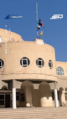
The flag of South Yemen raised atop a government building in Seiyun in December 2025.

See also
 In Spanish: Consejo de Transición del Sur para niños
- Southern Movement
- Yemeni Socialist Party
- South Yemen insurgency
