
St Agnes' Church, St Agnes facts for kids
Quick facts for kids St. Agnes
|
|
|---|---|
 A map of St. Agnes, with Gugh to the east |
|

 St. Agnes
|
|
| Population | 82 (2011) |
| OS grid reference | SV881430 |
| Civil parish |
|
| Unitary authority | |
| Ceremonial county | |
| Region | |
| Country | England |
| Sovereign state | United Kingdom |
| Post town | ISLES OF SCILLY |
| Postcode district | TR22 |
| Dialling code | 01720 |
| Police | Devon and Cornwall |
| Fire | Isles of Scilly |
| Ambulance | South Western |
| EU Parliament | South West England |
| UK Parliament |
|
St Agnes (Cornish: Agenys) is an island in the Isles of Scilly, located southwest of Cornwall in the United Kingdom. It is the southernmost inhabited island in the entire country. The small settlement called Troy Town Farm on St Agnes holds the title of the southernmost settlement in the United Kingdom.
St Agnes is famous for its wild coastal scenery, fascinating rocks, ancient maze, and peaceful island lifestyle. People visit to explore sandy beaches, watch rare birds, and enjoy natural landscapes.
Contents
Geography and Landscape of St Agnes Island

St Agnes has an area of roughly 366 acres (148 ha) when combined with the neighbouring island of Gugh. Together, the two islands had a population of 85 residents in the 2011 census. Without Gugh, St Agnes is slightly smaller in area and population than Bryher.
A special natural sandbar called a tombolo connects St Agnes to Gugh. This sandbar is called the Gugh Bar. At low tide, people can walk safely across the sand between the two islands. At high tide, the ocean covers the bar completely, making Gugh a separate island again.
The southern section of St Agnes is covered by wild, heather-rich moorland known as Wingletang Down. The northern and central sections contain houses, farm fields, and green pathways.
Settlements on the Island
Most islanders live in four small hamlets spread across the central and northern areas:
- Troy Town, located in the far west near the coastline.
- Lower Town, located on the western side of the island.
- Middle Town, located right in the centre of the island.
- Higher Town, situated on the eastern side near the main quay.
Freshwater Pools
The island contains two notable freshwater ponds called Big Pool and Little Pool. These pools sit in the northwest and are essential for local wildlife.
Scientists have found geological evidence in Big Pool showing that ocean waters flooded it during the historic 1755 Lisbon earthquake. Today, Big Pool is surrounded by rush plants and green grass that doubles as a local sports field.
Historic Landmarks and Ancient Mysteries

St Agnes contains many unique geological shapes, historical ruins, and mysterious monuments created long ago.
St Agnes Lighthouse
The old lighthouse tower stands as the most famous historic building on the island. Built in 1680, it was one of the earliest lighthouses in Britain. The lighthouse guided ships away from hazardous shallow reefs for hundreds of years. The light is no longer used, and the tower now serves as private housing.
The Troy Town Maze
On the western shoreline lies the curious Troy Town Maze. Although called a maze, it is actually a labyrinth with seven winding stone rings leading to the centre.
Local tradition says the son of a lighthouse keeper laid out the maze in 1729. However, some historians believe it could be much older. It is the only stone labyrinth outside Scandinavia built purely from rounded beach pebbles. Ancient Norse tales describe Viking sailors visiting Scilly during the 12th century, suggesting a possible Scandinavian origin.
Giant Rocks and Coastal Formations
Centuries of Atlantic winds and ocean waves have shaped huge granite boulders across St Agnes:
- The Nag's Head is a massive standing stone that resembles the head of a horse.
- The Elephant Rock is a granite boulder naturally shaped like an elephant standing on the coast.
- Punchbowl Rock has a large circular hollow worn smooth by rainwater and wind.
Churches and Heritage Buildings

Religious life has played an important role in the history of the island community for centuries.
St Agnes Parish Church
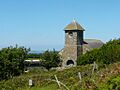
St Agnes Parish Church belongs to the Church of England and is dedicated to St Agnes. The earliest church on the site was built around the 16th century but was destroyed by severe ocean storms.
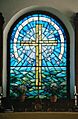
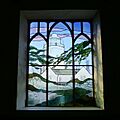
Island residents constructed the current church building during the 19th century. They funded the construction using money recovered from a shipwreck, and the church bell itself was rescued from the wrecked vessel. Beautiful stained glass windows made by local artists decorate the interior.
Bible Christian Chapel
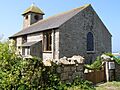
In 1874, a Christian group known as the Bible Christians built their own chapel in the northern part of the island. This chapel served the local community for over a century.
- St Agnes' parish church
-
-
-
-


Island Life and Local Economy
Daily life on St Agnes is closely connected to the sea and the changing seasons. In previous centuries, local men worked as maritime pilots. They rowed fast wooden boats out to sea to meet large international sailing ships and guide them safely through dangerous channels.
Today, the island economy relies mainly on welcoming visitors, flower farming, and local crafts. St Agnes does not have large hotels, but it offers cosy guest houses, holiday cottages, and a campsite.
Local services include:
- A small grocery shop and post office for supplies.
- A popular island cafe and a local pub named The Turk's Head.
- An island dairy making artisan ice cream.
- Flower farms growing fragrant narcissus flowers during winter and spring.
Transport and Daily Travel
There are no public cars on St Agnes. Most people walk, ride bicycles, or use small golf buggies and farm tractors. Small passenger passenger boats travel between St Agnes and St Mary's, the largest island in the archipelago, allowing residents to trade, visit friends, and buy supplies.
Cornish Pilot Gig Racing

Rowing is the most popular sport across the Isles of Scilly. Traditional six-oared wooden boats called pilot gigs race regularly between the islands during the summer months.
Men's races take place on Friday evenings, while women's races take place on Wednesday evenings. Islanders gather at the waterfront to cheer for their teams and celebrate afterwards.
Education and Schooling on St Agnes

School children on St Agnes have a unique educational journey compared to mainland students.
Primary school children attend the St Agnes Base of the Five Islands Academy. This small classroom allows local children to learn near their homes during their early years.
Secondary school students travel to the main school campus on St Mary's. They live in a boarding house during the school week and return home to St Agnes on weekends by boat.
For post-16 education, students travel to mainland colleges and universities across the United Kingdom.
Wildlife and Rare Plants
Over one-third of St Agnes is legally protected as a Site of Special Scientific Interest (SSSI) due to its rare wildlife.
Plant Diversity
The open moors of Wingletang Down are famous among botanists across the world. It is the only place in all of Great Britain where the rare fern called the least adder's-tongue grows naturally.
Other notable plants found on the island include:
- Autumn lady's-tresses (Spiranthes spiralis), a delicate native orchid.
- Early meadow-grass (Poa infirma), which thrives in mild island winters.
- Western clover (Trifolium occidentale) and subterranean clover (Trifolium subterraneum) growing in coastal turf.
- Saltmarsh rush (Juncus gerardi) growing near brackish coastal pools.
Rare Vagrant Birds

Because the Isles of Scilly sit far out in the Atlantic Ocean, migrating birds blown off course often stop on St Agnes to rest. This makes the island a prime spot for birdwatchers every autumn.
Notable bird sightings include:
- The Northern waterthrush found at Covean in 1958.
- The Bobolink spotted near Big Pool in 1962.
- The Blackpoll warbler seen in 1968.
- The first European sighting of a hooded warbler at Big Pool in 1972.
- The Semipalmated plover recorded at Porth Killier in 1978.
- The first European record of a magnolia warbler in 1981.
- The Wood thrush recorded on Wingletang Down in 1987.
- A Cream-coloured courser seen in 2004.
Resident ornithologist Hilda M. Quick lived at Periglis Cottage on St Agnes and wrote the well-known book Birds of the Scilly Isles in 1964.
Local Government and Administration

St Agnes is one of the five civil parishes and electoral wards forming the Isles of Scilly. The ward includes St Agnes, Gugh, and several uninhabited rocky outcrops such as the Western Rocks, Annet, Rosevear, Pednathise Head, and the famous Bishop Rock lighthouse.
The residents of St Agnes elect one councillor to represent their community on the Council of the Isles of Scilly.
Population History
The population of St Agnes has changed over the centuries as fishing and shipping industries transformed:
| City | Population |
|---|---|
| 1841 |
243
|
| 1861 |
200
|
| 1871 |
179
|
| 1878 |
150
|
| 1881 |
148
|
| 1891 |
130
|
| 1901 |
134
|
| 1911 |
102
|
| 1921 |
101
|
| 1931 |
78
|
| 1951 |
78
|
| 1961 |
85
|
| 1971 |
63
|
| 1981 |
80
|
| 1991 |
90
|
| 2001 |
73
|
| 2011 |
85
|
See Also
- List of shipwrecks of the Isles of Scilly
- List of extreme points of the United Kingdom
- St Agnes Lifeboat Station (Isles of Scilly)
